Energy security is national security – and it starts at the subnational level
- April 3, 2026
- 0
*This article was first published in Dialogue Earth.
By Champa Patel, Climate Group Executive Director for Governments and Policy
As the Gulf conflict plunges Southeast Asia into a deepening energy crisis, empowering local governments to transition from fossil fuels has never been more necessary

The war in the Middle East is being fought with weapons, but its wider consequences are economic. It is also another entirely predictable shock that exposes a deeper vulnerability: our continued dependence on fossil fuels.
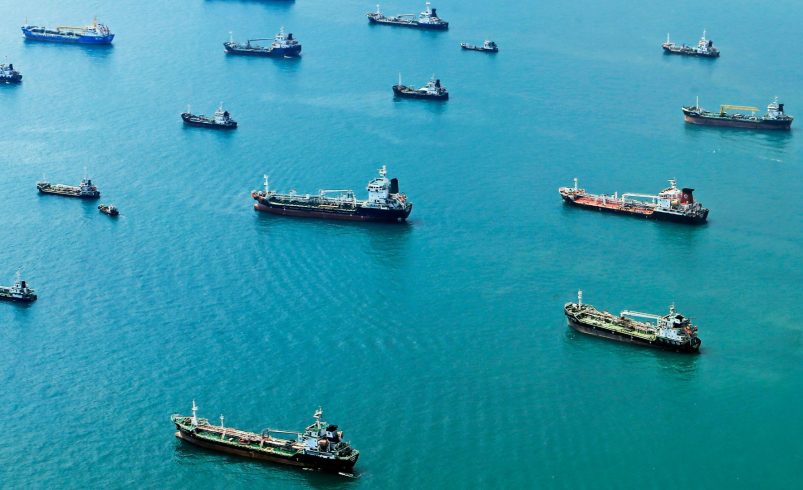
Around a fifth of the world’s oil passes through the Strait of Hormuz, now at the centre of escalating tensions. As the US called on allies to safeguard shipping routes from potential Iranian attacks and, more recently, seize control of the strait, the fragility of this corridor reiterates how exposed the global economy remains to geopolitical risk.
There is an uncomfortable contradiction at the heart of the international response. Just weeks before the world convenes in Colombia for the first major summit focused on phasing out fossil fuels, governments are mobilising to protect the very commodity driving both climate breakdown and geopolitical instability. Despite the lessons of the war in Ukraine and Covid-19, which sent energy and food prices soaring, our dependence on fossil fuels remains structurally unchanged.
The impacts across Southeast Asia are immediate and severe. Thailand is managing critically low energy reserves – around three months’ worth – forcing emergency measures such as work-from-home orders for state agencies. Fuel rationing has been introduced in Myanmar and the Philippines, where the government recently declared a national energy emergency. In some areas, essential services have been disrupted – from farmers unable to access diesel for machinery to cremations being delayed due to fuel shortages. As Philippine president Ferdinand Marcos Jr put it, countries in the region are “victims of a war that is not of our choosing”.
This is not simply a failure of climate policy – it is a failure of economic and security policy. We will not emerge from this crisis unscathed, but we can emerge from it clearer-eyed. Clean energy is no longer just an environmental imperative; it’s the only credible path to durable energy security and long-term economic resilience.
Homegrown clean power is a strategic necessity. Crises, whether geopolitical or climate-driven, are no longer exceptional events. They are becoming structural features of the global economy.
What must not continue to become structural is our exposure to fossil fuel volatility.
Why subnational governments matter
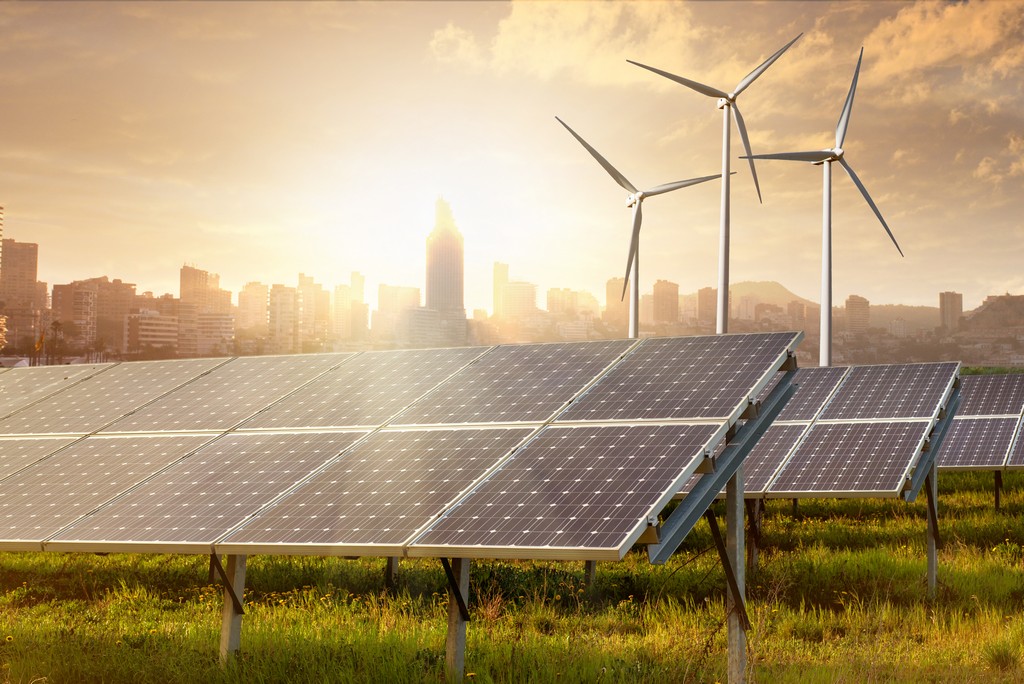
Some of the most decisive leadership is emerging below the national level. States, regions and devolved governments are increasingly treating climate policy as security policy. In the US, California has accelerated investments in renewable energy, battery storage and electric vehicles not only to meet climate targets, but to shield its economy from global fossil fuel volatility.
Across Europe, similar dynamics are playing out. North Rhine-Westphalia, long defined by coal and heavy industry, is investing at scale in wind and hydrogen as a means of reducing exposure to geopolitical shocks. In Spain, regions such as Catalonia and Navarre are pairing renewable expansion with green industrial policy, positioning clean energy as both an economic and security strategy. Scotland, with its vast offshore wind potential, is making a similar case for energy sovereignty.
These examples point to a broader shift: where national governments hesitate, subnational actors are moving ahead, reframing the energy transition as a matter of economic security as much as climate responsibility. What makes this level of governance so critical is not just ambition, but proximity to delivery.
States and regions control many of the levers that determine how energy systems actually function: planning and permitting for renewables, grid infrastructure, building standards, public procurement and increasingly, investment vehicles of their own. This is what energy security looks like in practice: not abstract commitments, but targeted investments in domestic capacity, flexibility and resilience.
It is also why financing subnational governments is so critical. Without access to capital at the level where projects are delivered, the transition will remain slower, more uneven, and more exposed to political cycles at the national level. Yet the transition remains profoundly uneven and far from just. States and regions are responsible for up to 70% of climate mitigation and over 90% of adaptation actions, and are often closest to affected communities. But they receive less than 17% of international climate finance, according to global subnational government network Regions4.
Southeast Asia: exposed and underfunded
According to the International Energy Agency, the current disruption constitutes the largest oil supply shock in history. It has exposed structural vulnerabilities in oil-dependent economies across Southeast Asia, raising the cost of transport and essential goods, straining public services, and disproportionately affecting lower-income households who face the brunt of energy insecurity. This is a stark reminder that fossil fuel dependence does not just carry environmental costs, but systemic economic and social risk.
Energy systems across the region remain highly centralised yet deeply exposed. Around 60% of the region’s oil imports come from Southwest Asia, leaving economies directly vulnerable to the kind of geopolitical disruption now unfolding. At the same time, demand is rising rapidly: electricity consumption increased by more than 60% over the past decade and is projected to grow at around 4% annually to 2035.
This demand continues to be met overwhelmingly by fossil fuels, which have accounted for nearly 80% of energy demand growth in recent years, with coal alone generating around half of the region’s electricity. What this creates is not just an emissions challenge, but a structural security risk with economies that are simultaneously growing, import-dependent, and locked into volatile global fuel markets.
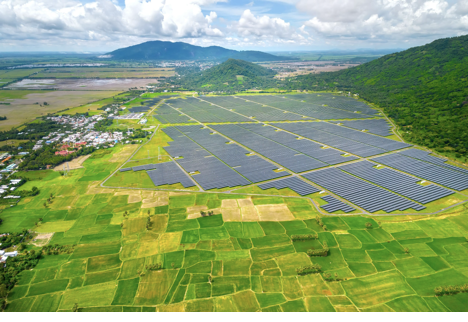
There are early signs of a shift. In Indonesia, provincial governments are beginning to play a greater role in renewable deployment, particularly in solar and distributed energy systems. In Vietnam, local authorities have been instrumental in enabling the rapid expansion of solar in recent years, even within a centrally directed system. These examples are the exception rather than the rule, but they do illustrate that even in highly centralised systems, local implementation capacity can accelerate change when it is empowered and resourced.
Yet despite this exposure, Southeast Asia attracts only a fraction of global clean energy investment – approximately 2% in 2023, highlighting a fundamental mismatch between risk and capital allocation. Financing subnational governments will be essential to closing this gap, enabling investment to reach the level where infrastructure is planned, permitted and delivered. It is at this level where, if action happens, communities feel the benefits. Whether it is multilateral or national development banks; sub-national development banks or the private sector; green bonds or blended finance, we cannot afford to underfund the frontline.
Regional cooperation as the key to energy security
Energy security in Southeast Asia cannot be achieved by countries acting alone. Initiatives such as the planned Asean Power Grid aim to connect national electricity systems, enabling countries to share renewable energy across borders and reduce dependence on imported fossil fuels. The potential is significant: a more integrated regional grid could smooth supply, lower costs and reduce exposure to global shocks. But progress has been slow, constrained by political fragmentation, regulatory misalignment and concerns over sovereignty.
The question is not whether regional energy security can translate into national resilience, but whether governments are willing to build the trust and coordination required to make it possible. In a region defined by diversity, that will not be easy. But the alternative – continued fragmentation in the face of shared risk – is so much more costly, because when one region lags, the effects are widespread. We cannot mitigate shared risks in siloes.
This is the reality of a fossil fuel-dependent system where exposure amplifies risk. The uncomfortable truth is that we are not short of warnings. We are short of political follow-through. The answer cannot be a return to the status quo; it must be a more strategic and equitable acceleration of the transition, led by all key economic stakeholders including governments and businesses.
That means investing not only at the national level, but in states, regions and cities that are already driving progress. Financing subnational governments will be essential to building resilience where it is most needed, and to ensuring that the transition delivers security as well as sustainability.
In a world of compounding crises, energy security is national security. The question is no longer whether we should accelerate the transition to clean energy, but whether national governments are willing to align finance, governance and political will behind the actors already driving it.