Garbage out, garbage in: Philippine waste-to-energy projects
- January 18, 2026
- 0
By Jose M Layug Jr., Senior Partner at DivinaLaw
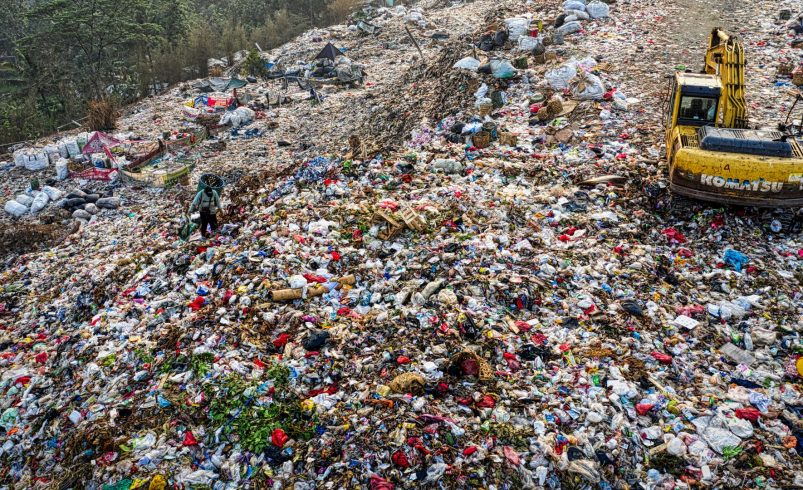
Since Republic Act No. 9003, namely, the Ecological Solid Waste Management Act of 2000 (Solid Waste Act) took effect, the Philippines has failed to efficiently contain its garbage problem, especially in the 17 local government units (LGUs) of Metropolitan Manila, which produce at least 11,000 tonnes of waste daily. Each LGU is officially required to implement a 10-year solid waste management (SWM) plan outlining its socio-economic profile, waste generation, existing and planned collection, waste diversion and disposal systems, including material recovery facilities.
Despite this requirement, only 189 of 1,700 sanitary landfills required for all these LGUs are in operation due to technical, political and financial constraints.

While the Solid Waste Act creates the institutional mechanisms for management practices, only 9% of municipal waste is recycled, 33% is disposed of in landfills and 35% leaks into the environment. As a result, the Philippines is ignominiously ranked as Southeast Asia’s fourth-largest waste generator and the world’s third-largest ocean polluter.
Legislation
In the 2002 case of Metro Manila Development Authority (MMDA) v Jancom Environmental Corporation, the Supreme Court declared that RA No. 8749, or the Philippine Clean Air Act of 1999, does not prohibit incineration of waste as a mode of disposal, except burning, which emits poisonous and toxic fumes.
In 2008, RA No. 9513, or the Renewable Energy Act of 2008 (RE Law), was approved by congress defining “biomass resources” as including “municipal solid waste that can be used in the bioconversion process and other processes, as gases and liquids recovered from the decomposition or extraction of non-fossilised and biodegradable organic materials”.
In 2016, the National SWM Commission and the Department of Environment and Natural Resources issued guidelines governing the establishment and operation of waste-to-energy (WTE) technologies for municipal solid waste as a foundation for government and private agencies venturing into WTE facilities as an alternative to sanitary landfill.
But despite the RE Law and other executive issuances, no WTE facility has been developed.
Transition to sustainable energy. With the aggressive push for energy transition as part of a 50% renewable energy (RE) installation target by 2040, the Department of Energy (DOE) has now included WTE in the green energy auction programme, integrating WTE facilities using thermal combustion of municipal solid waste (MSW) into the power mix through competitive bidding. By the first quarter of 2026, the DOE seeks to award at least 170 megawatts of new WTE projects with a 2028 delivery commencement.
DOE circular and bidding rules. Underpinning its efforts to implement clean energy under the Philippine Energy Plan 2023-2050, the DOE issued Department Circular No. DC 2025-11-0026 establishing a framework for integrating WTE facilities in the power generation mix.
The circular outlines two key provisions:
Considering the local autonomy granted by the Philippine Constitution and RA No. 7160 (the Local Government Code of 1991) – under which services and facilities related to solid waste management, disposal and collection are decentralised from the national government to LGUs – the DOE needs to legally navigate through this objective of mandating LGUs to execute feedstock supply agreements without any compulsion, and in co-ordination with the Metro Manila Development Authority. The DOE has also issued draft terms of reference for the auction with parallel provisions on such agreements.
Legislative action. Congress has also supported the energy transition goal, drafting bills that would allow treatment technologies for the disposal of MSW and hazardous wastes, or processing waste material for fuel, whether for commercial use or not.These bills also classify and confirm WTE as another RE source to qualify for incentives. They require specific standards and criteria for a fair, equitable and reasonable tipping charge for WTE facilities, taking into consideration their cost of construction, operation and maintenance, and potential revenue from the sale of energy output.
Takeaway
WTE holds significant promise as the Philippines continues to struggle with chronic waste management issues while striving to increase clean energy capacity. With the green energy auction programme and collaboration between the executive and legislative branches of government, it can become a critical component of the country’s sustainable development strategy.
What ends up as garbage can actually be useful to convert energy. Garbage out, garbage in.
This article was originally published on Law Asia.
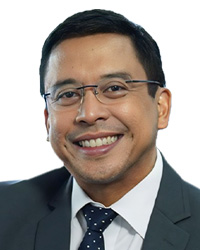
Atty. Jose M. Layug, Jr. is a Senior Partner at Divina Law, with extensive expertise spanning litigation, corporate law, energy, infrastructure, and international arbitration. A seasoned legal professional, he has held key leadership roles in both the public and private sectors, including Undersecretary of the Department of Energy and Chairman of the National Renewable Energy Board. He is a former Dean of the University of Makati School of Law and has practiced law internationally, including in New York. He holds a Master of Laws (with Honours) from Cornell Law School and a Bachelor of Laws from the University of the Philippines.
Follow Power Philippines on Facebook and LinkedIn or join our Viber community to stay up to date on the latest energy news.