One Meralco Foundation, DSWD roll out e-trike charging hubs in Valenzuela
- February 5, 2026
- 0
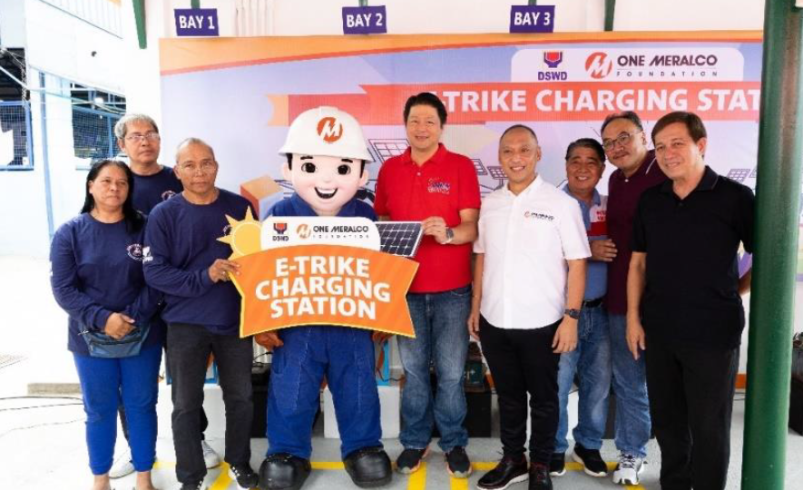
A new community-based electric vehicle charging initiative in Valenzuela City is positioning small-scale transport electrification as both an energy access and livelihood solution.
Manuel V. Pangilinan-led One Meralco Foundation (OMF), in partnership with the Department of Social Welfare and Development (DSWD) and the local government of Valenzuela, has installed coin-operated electric tricycle (e-trike) charging stations in Barangay Lawang Bato to serve 117 drivers belonging to the Mulawinan Centro E-Trike Operators and Drivers Association (MULCETRODA).
Installed at the tricycle terminal along Mulawinan Street, the facility consists of five dual-outlet, 4.4-kilowatt coin-operated charging units supplied by Meralco’s sustainable mobility arm, Movem Electric Inc. With 10 charging outlets operating for up to 15 hours daily, the station allows drivers to recharge batteries on-site instead of returning home mid-shift, increasing vehicle uptime and reducing indirect costs.

The project, implemented under DSWD’s Sustainable Livelihood Program, addresses persistent operational constraints faced by e-trike drivers, including high charging costs, long charging times, and income losses from frequent battery swaps during operating hours.
While many drivers have already shifted from internal combustion tricycles to battery-powered units—improving passenger comfort and lowering emissions—the economics of charging have continued to weigh on daily earnings.
The new charging facility is designed as a shared microenterprise. After electricity expenses are covered, projected net revenues from the station will be distributed equally among participating drivers, creating an additional income stream tied directly to charging demand.
First District of Valenzuela Representative Kenneth Gatchalian described the facility as a practical response to on-the-ground transport challenges. “This project is a huge help for our MULCETRODA, as this gave them the opportunity to have a modern charging station,” he said at the inauguration on January 10.
“On top of addressing the grassroots needs of e-trike drivers, this project is proof that partnerships forged between proactive institutions and the national government can turn ambitious visions into tangible community solutions for the MULCETRODA drivers,” OMF President Jeffrey O. Tarayao said.
For DSWD, the project also serves as a potential template for broader deployment. “This project is the first of its kind and hopefully, we can also replicate this in other areas. We hope to see this thrive as a model for other charging stations as we look towards a sustainable electric transport system,” Assistant Secretary Ulysses Aguilar said.
Can community-owned charging facilities meaningfully improve the economics of electric transport, and should this model be scaled nationwide? Join the discussion.
Follow Power Philippines on Facebook and LinkedIn or join our Viber community for more updates.