Zero-capex model gains ground as firms shift to solar without spending a peso
- January 3, 2026
- 0
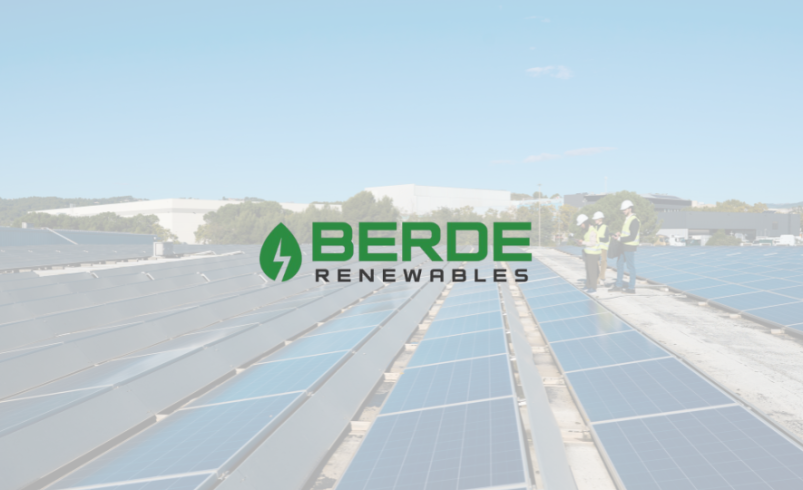
Businesses across the Philippines are embracing solar energy — without spending anything upfront. Through Berde Renewable Inc.’s zero-capex model, companies can cut electricity costs while leaving all project risks and operations to the developer.
Berde Renewables Co-founder and Group CEO Morris Zhou told Power Philippines that the model has gained strong traction among manufacturers, logistics firms, and property developers seeking long-term energy savings without capital outlay.
“The zero capex model really [is] taking off in the Philippines… the onerous, the risk, everything is on us,” Zhou said.
How it works
Under the arrangement, Berde designs, finances, builds, and operates rooftop or ground-mounted solar systems for its clients. Customers sign 10- to 25-year power purchase agreements (PPAs), buying electricity from Berde at rates lower than those charged by utilities.
Berde Renewables also shoulders all capital costs, performance risk, and maintenance responsibilities — including typhoon-related repairs. If the system underperforms, Berde pays liquidated damages based on output shortfall.
“Clients don’t have to worry about generation losses or maintenance costs,” Zhou explained. “We take care of everything from engineering to insurance.”
This model has made solar adoption easier for companies constrained by high financing costs or those wanting to preserve cash for core operations. It also removes the complexity of managing technical systems outside their expertise.
Appeal to different types of companies
Zhou said Berde’s client base falls into two groups: institutional clients and family-owned mid-market companies.
Institutional clients — including multinationals and listed firms — quickly recognize the financial efficiency of zero-capex deals. They view renewable energy as part of their ESG compliance and cost-control strategy, reducing exposure to rising grid prices.
“They understand opportunity cost and balance sheet optimization,” Zhou said. “For them, this is a way to decarbonize without diverting working capital.”
Family-owned businesses, however, often prefer to buy and own their systems outright.
Some later discover that performance and maintenance issues can erode their savings.
“So we’re now approaching some of these family-owned businesses and saying, ‘Look, Berde will come in and buy your existing asset. We’ll acquire the system even if we weren’t the ones who developed it. We’ll inspect it, see if any major maintenance or repairs are needed, and once it’s on our balance sheet, we’ll enter into a 10- to 20-year offtake agreement with you. We’ll take the headache off your hands — what’s a liability for you becomes an asset for us. We’ll maintain it and still give you a performance guarantee for the next 20 years,” Zhou said
“We’re seeing more family-backed businesses that want solar because they know it saves money, but they no longer want to spend their own capital. That’s why the zero-capex model is really taking off in the Philippines this year.”
Expanding with energy storage
As battery prices fall, Berde is beginning to integrate energy storage into new and existing sites.
This allows companies to store excess solar generation and use it during evening peaks, reducing dependence on the grid.
“Last year, batteries were too expensive. Now they’re more than 50 percent cheaper, which makes hybrids viable,” Zhou said.
For customers with heavy 24-hour operations — such as food processing, logistics, and cold storage — hybrid solar-plus-storage systems are becoming the next step toward energy resilience.
Scaling up the portfolio
Backed by I Squared Capital’s $100 million equity commitment, Berde is rolling out distributed solar projects across Luzon, Visayas, and Mindanao. The company has already committed more than 50 megawatts of capacity and targets 100 MW by year-end.
Its systems range from 2 to 5 MW, mostly built on factory rooftops or adjacent lots to serve captive loads. By focusing on distributed generation, Berde avoids long grid permitting processes and delivers faster deployment for clients.
“Distributed energy makes more sense in an archipelago like the Philippines,” Zhou said. “It’s scalable, flexible, and more resilient.”
Changing the way businesses go solar
Zhou believes the success of the zero-capex model lies in trust and performance.
By aligning incentives — where Berde earns only if systems perform — both sides benefit from reliability and long-term partnership.
“It’s not just a transaction. It’s a shared commitment to cheaper, cleaner power,” he said.
As energy costs continue to rise, more businesses are expected to shift toward the zero-capex approach, driving faster renewable adoption across the country.
Follow Power Philippines on Facebook and LinkedIn or join our Viber community for more updates.