Malampaya East-1 Discovery Can Power 5.8 Million Homes for a Year, DOE Says
- January 19, 2026
- 0
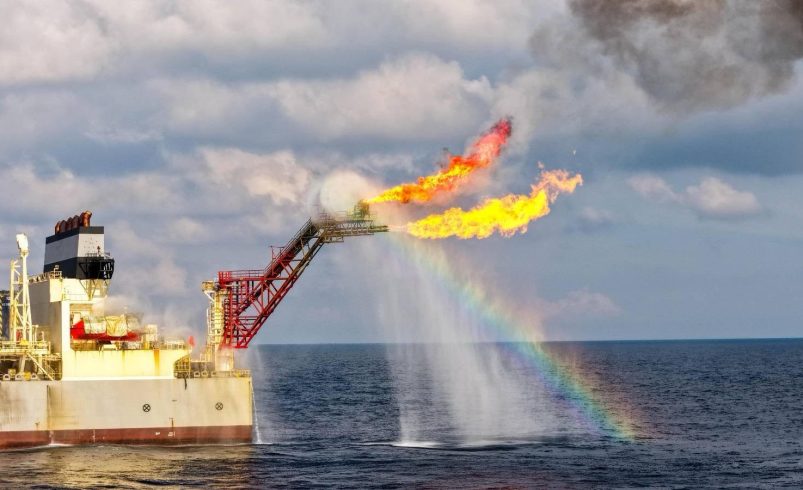
The Department of Energy (DOE) welcomed the discovery of a significant natural gas reservoir at Malampaya East-1 (MAE-1), calling it a major boost to the country’s long-term energy security and a validation of sustained, science-based exploration.
Located about five kilometers east of the existing Malampaya field, MAE-1 is estimated to hold around 98 billion cubic feet (BCF) of gas in place. Initial tests showed a flow rate of 60 million cubic feet per day, along with associated condensate—figures the DOE said point to strong development potential.
Energy Secretary Sharon S. Garin said the find highlights the strategic value of indigenous natural gas as the Philippines continues to balance reliability and affordability while expanding renewable energy. She noted that the estimated volume is equivalent to 13.9 billion kilowatt-hours (kWh) of electricity—enough to power about 5.8 million households for one year.
Beyond residential use, the DOE said the energy potential could support critical public services, including schools, hospitals, and community facilities, reinforcing the role of natural gas as a stabilizing fuel while the country scales up renewables, energy storage, and grid upgrades.
The discovery marks the first major milestone under the Malampaya Phase 4 Drilling Campaign, which also includes the Camago and Bagong Pag-asa wells. The DOE credited the Service Contract 38 consortium, led by Prime Energy Resources Development B.V. with partners UC38 LLC, PNOC Exploration Corporation, and Prime Oil and Gas Inc., for delivering the milestone safely and without environmental incident.
President Ferdinand R. Marcos Jr. earlier emphasized that the drilling was led by a Filipino team—an achievement the DOE said reflects the growing capability of local engineers in high-risk offshore operations. The department stressed that safety and environmental protection remain non-negotiable standards as exploration progresses.
Natural gas currently plays a critical role in the Philippine power mix, providing dependable baseload supply that supports intermittent renewable generation. Malampaya, the country’s only producing indigenous gas field, has historically supplied up to 20% of Luzon’s power needs, reducing reliance on imported fuels and shielding consumers from price volatility.
Following the MAE-1 discovery, the DOE said it will continue working closely with the consortium and relevant agencies to ensure transparent and timely next steps, including technical evaluation, development planning, and compliance with regulatory and environmental safeguards.
“The opportunity must be pursued with discipline,” the DOE said, adding that the goal is to convert exploration success into real, dependable supply that strengthens national interest and energy security over the long term.
Follow Power Philippines on Facebook and LinkedIn or join our Viber community for more updates.