TransCo maps next steps to support renewable energy growth
- January 28, 2026
- 0
National Transmission Corporation (TransCo) outlined a range of measures it is studying to support the country’s expanding renewable energy capacity, including improved grid planning, coordination on delayed transmission projects, and alternative funding models.
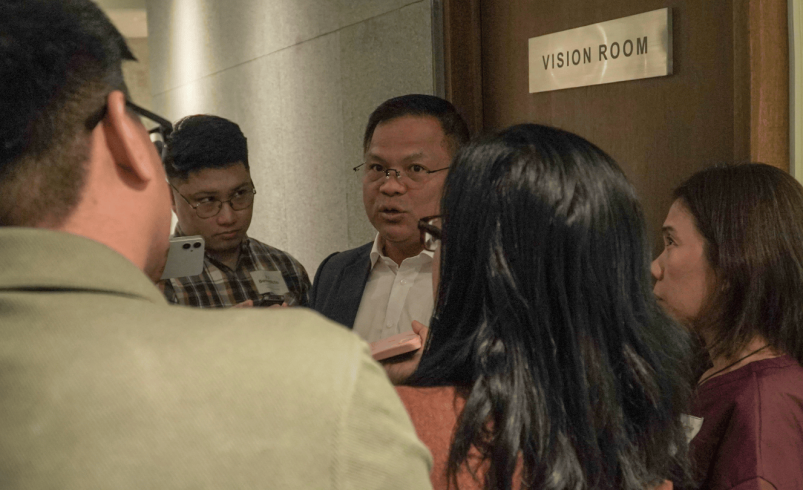
The plans were discussed by Fortunato Leynes, TransCo president and chief executive officer, at the sidelines of Energyear Philippines 2026- an event that gathered stakeholders, policy makers, and regulators.
Leynes said TransCo is closely monitoring the Feed-in Tariff (FIT) fund, which is used to pay renewable energy developers approved fixed rates. “For now, yes. It’s enough,” he said, adding that TransCo expects to be current on FIT payments to renewable energy generators “by mid of the year, by June.”

He warned, however, that future FIT levels could still change depending on market conditions, particularly movements in the Wholesale Electricity Spot Market (WESM). “Chances are it might go up,” Leynes said. “Although lately, it’s going up again.”
As part of TransCo’s longer-term response to grid constraints, Leynes pointed to the Smart Grid Development Plan (SDGP) as a key planning tool to identify transmission bottlenecks and guide where new renewable energy projects can best connect to the grid. “Doon ma-i-identify namin ano mga transmission facilities that are needed in the system for this pagpasok ng mga bagong RE facilities,” he said.
Leynes also noted that grid readiness varies by location, pointing out that bottlenecks already exist in the system. “Yung readiness kasi, meron talagang bottlenecks in the system,” he said, emphasizing why transmission development varies nationwide.
He explained that a major challenge in the energy transition lies in mismatched planning timelines between generation and transmission development. “Because it’s faster to build generation facilities. Transmission takes seven to ten years,” Leynes said.
Leynes said some renewable energy generation could end up stranded as transmission projects take longer to complete. “Unfortunately, the answer is yes,” he answered when asked about the possibility of stranded generation facilities.
He also added that large-scale solar developments illustrate why grid capacity must be assessed carefully. He noted that transmission absorption needs to be evaluated “segment by segment,” rather than relying on headline capacity figures.
Leynes said ongoing coordination with the Department of Energy (DOE) includes draft circulars issued for public consultation to address delayed transmission projects. These include lines that have already been approved but have not yet been built, as well as projects not reflected in existing transmission development plans.
To help deliver large and capital-intensive transmission projects, Leynes said TransCo is studying alternative funding options, including public–private partnerships (PPPs). “One transmission project is billions already,” he said to explain why different funding and implementation approaches are being reviewed alongside traditional sources.
Leynes finally stressed that the measures discussed remain part of ongoing planning efforts rather than fixed commitments, as transmission requirements will ultimately depend on where and when new renewable energy plants are developed.
How can improved planning and funding models help ensure the transmission grid keeps pace with the Philippines’ rapid renewable energy expansion?
Follow Power Philippines on Facebook and LinkedIn or join our Viber community for more updates.