ACEN unit seeks approval for 500-MW battery storage at Zambales solar project
- March 5, 2026
- 0
ACEN Corporation subsidiary SanMar Solar Inc. (formerly Santa Cruz Solar Inc.), is seeking regulatory clearance to install a large-scale battery energy storage system (BESS) at its solar power facility in Zambales, a development that reflects the growing role of storage in stabilizing the Philippines’ renewable-heavy power grid.
Project documents submitted to the Department of Environment and Natural Resources-Environmental Management Bureau (DENR-EMB) show the company plans to integrate a 500-megawatt / 2,000-megawatt-hour battery energy storage system within the San Marcelino Solar Power Project in Barangay Sta. Fe, San Marcelino.
The proposed battery facility will be built within the solar plant’s existing project footprint and will store electricity generated by the solar farm during periods of excess generation.

“The BESS will be charged from the Solar Plant when there is energy surplus. The stored energy will then be discharged and sold to the grid in periods of high-power demand and high electricity market prices,” the document says.
The storage facility is expected to begin construction in the third quarter of 2026, with completion targeted by the fourth quarter of 2027, and commercial operations planned by the first quarter of 2028, according to project documents.
The battery system would connect to the grid through the 230-kilovolt Castillejos substation, enabling stored solar energy to be dispatched when needed.
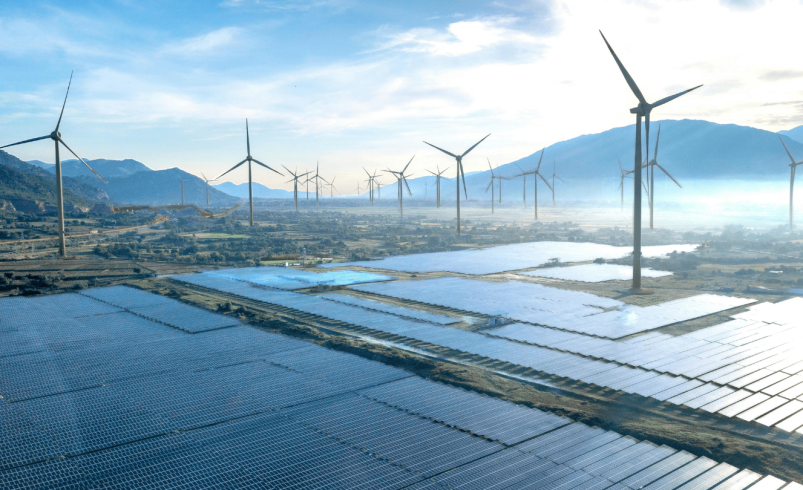
The storage project will be integrated into the SanMar Solar development, one of the largest solar developments in the Philippines. The facility has a planned installed capacity of about 585 megawatts and is located in San Marcelino, Zambales.
Built on more than 500 hectares of lahar-covered land left by the 1991 Mount Pinatubo eruption, the project converted previously unutilized terrain into a large renewable energy site supplying electricity to the Luzon grid.
The solar facility is expected to avoid around 360,020 metric tons of carbon dioxide emissions annually and generate enough electricity to power about 123,620 homes.
The development has been rolled out in phases as part of ACEN’s broader renewable energy expansion. In 2024, the project received green lane certification from the Board of Investments, allowing faster processing of permits for projects considered strategically important to the country’s energy transition.
The proposed battery storage system comes as policymakers push for stronger integration of energy storage in renewable projects.
In February, the Department of Energy issued Department Circular No. DC2026-02-0008, requiring variable renewable energy plants with 10 megawatts or more capacity to integrate energy storage systems equivalent to at least 20% of the plant’s capacity, subject to technical studies.
“Energy storage is not only about storing surplus energy, it is about strengthening the grid’s capability to absorb more renewables while maintaining reliability,” Energy Secretary Sharon S. Garin said when the policy was announced.
How do you see large-scale storage shaping the next phase of renewable energy development in the Philippines? Join the discussion.
Follow Power Philippines on Facebook and LinkedIn or join our Viber community for more updates.