Prime Infra secures PHP 273 billion financing for 2-GW pumped storage projects
- March 12, 2026
- 0
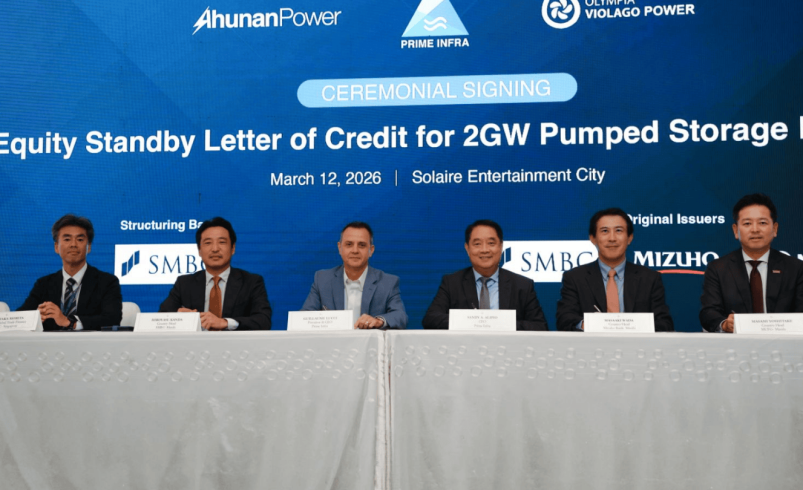
Prime Infrastructure Capital Inc. (Prime Infra) has secured PHP 273.47 billion in financing to support the development of a 2-gigawatt pumped storage hydropower portfolio, marking one of the largest energy infrastructure financing deals in the Philippines.
The funding deal will finance two pumped storage projects in Laguna and Rizal that are expected to strengthen grid stability and support the country’s advancing renewable energy transition.
The financing consists of a PHP 214.87-billion project loan arranged through an eight-member Philippine bank syndicate composed of Bank of the Philippine Islands (BPI), BDO Unibank, China Banking Corporation, Land Bank of the Philippines, Metropolitan Bank & Trust Company, Philippine National Bank, Security Bank Corporation, and Union Bank of the Philippines.

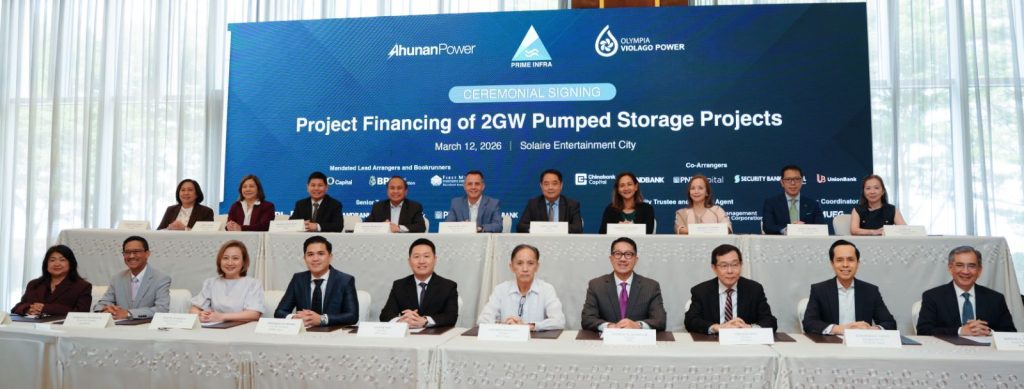
The facility will be classified as a green loan, supported by MUFG Bank, reflecting the project’s role in supporting low-carbon energy infrastructure.
On top of the local financing deal, Prime Infra also secured a PHP 58.6-billion dual-currency equity standby letter of credit facility from foreign lenders MUFG Bank, Mizuho Bank, Ltd., and Sumitomo Mitsui Banking Corporation.
The funding will support the construction of two pumped storage hydropower plants: the 1,400-megawatt Pakil Pumped Storage Hydropower Plant in Laguna being developed by Ahunan Power, Inc., and the 600-MW Wawa Pumped Storage Hydropower Plant in Rizal being developed by Olympia Violago Water & Power, Inc. Both facilities are targeted for completion by 2030.
Prime Infra President and CEO Guillaume Lucci said the financing agreements demonstrate the strong support of both local and international banks for the company’s infrastructure projects.
“This historic financing reflects the confidence of local and international banks in Prime Infra’s capability to deliver large-scale, critical infrastructure. Our pumped storage hydropower projects demand significant capital, and we are fortunate to have the trust of our banking partners,” Lucci said.
Lucci added that the projects are expected to strengthen the country’s energy system while supporting long-term economic growth.
“These agreements will accelerate critical infrastructure investments and strengthen energy security and reliability, which are the foundations of the Philippines’ sustained economic growth,” he said.
Both projects were included in the Department of Energy’s third Green Energy Auction Program and were designated as energy projects of national significance.
Pumped storage hydropower functions as a large-scale energy storage system by pumping water to an upper reservoir during periods of low electricity demand and releasing it to generate power during peak demand. This capability helps stabilize the grid and manage intermittent renewable energy sources such as solar and wind.
With billions now committed to large-scale energy storage infrastructure, how will pumped storage shape the future reliability of the Philippine power grid?
Follow Power Philippines on Facebook and LinkedIn or join our Viber community for more updates.