Financing hinges on permits as lenders tighten rules for PH wind projects
- April 4, 2026
- 0
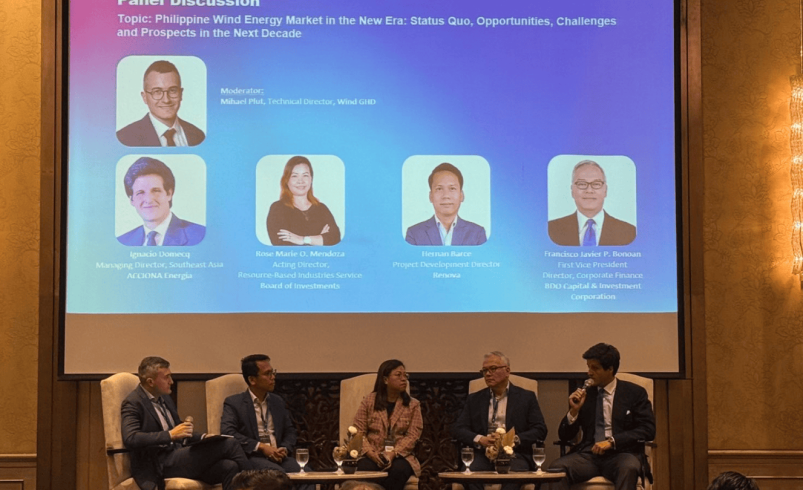
Access to financing for wind energy projects in the Philippines remains tightly linked to project readiness, with lenders requiring full regulatory and contractual compliance before releasing funds, industry players said.
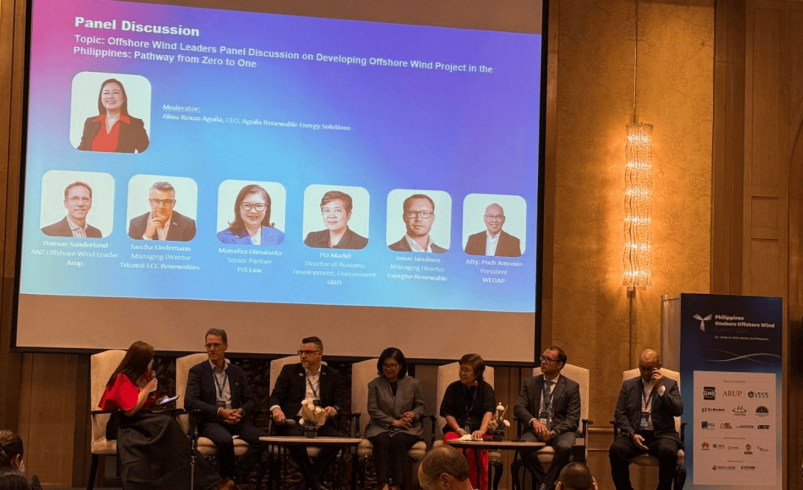
During a panel discussion at the 4th Philippines Onshore Offshore Wind Summit, speakers highlighted that while investor interest in the country’s wind sector is strong, funding is not guaranteed unless projects meet strict bankability requirements.
Francisco Javier P. Bonoan, first vice president and director of corporate finance at BDO Capital and Investment Corporation, said financing decisions hinge on whether developers have secured all necessary approvals.

“We will not release the funds unless 100 percent of the permits have been released,” Bonoan said.
He added that beyond permits, lenders also require land rights, offtake agreements, and clear construction plans before committing capital. This stresses the importance of project preparedness.
Developers echoed the need for a stable and bankable framework, noting that tariffs alone do not determine whether projects can secure financing.
Sascha Lindemann, managing director of Triconti ECC Renewables, said investors evaluate the full risk profile of a project, including regulatory clarity, infrastructure readiness, and execution risks.
“Bankability itself is driven by the overall framework, not just the tariff or the price,” Lindemann said.
Despite these requirements, the Philippines continues to attract strong interest from both local and international investors, supported by policy reforms such as the liberalization of foreign ownership restrictions and the rollout of renewable energy auctions.
Rose Marie O. Mendoza, acting director of the Board of Investments’ Resource-Based Industries Service, said renewable energy projects account for the majority of approved investments in recent years.
“In terms of total approved investments… around 80 to 85 percent of this is renewable energy projects,” Mendoza said.
However, panelists noted that delays in permitting, land acquisition, and grid access can slow down project timelines and affect their ability to reach financial close.
Developers also pointed to increasing complexity in executing wind projects in the Philippines, particularly in navigating regulatory processes and coordinating with multiple stakeholders.
Ignacio Domecq, managing director for Southeast Asia at Acciona Energia, said policy support has helped position the Philippines as an attractive market, but execution remains critical to sustaining investor confidence.
“For us, the most important is development support… there are clear targets for renewable energy capacity,” Domecq said.
Panelists also highlighted the growing role of mergers and acquisitions, as some developers seek partners or financing support to advance projects that face delays or funding challenges.
While capital is available, stakeholders said the key issue is ensuring projects meet the stringent requirements needed to unlock financing.
As the Philippines continues to build its renewable energy pipeline, can developers meet the strict conditions required to turn investor interest into actual project funding?
Follow Power Philippines on Facebook and LinkedIn or join our Viber community for more updates.