Palafox urges greener, more resilient approach to urban development
- June 4, 2026
- 0
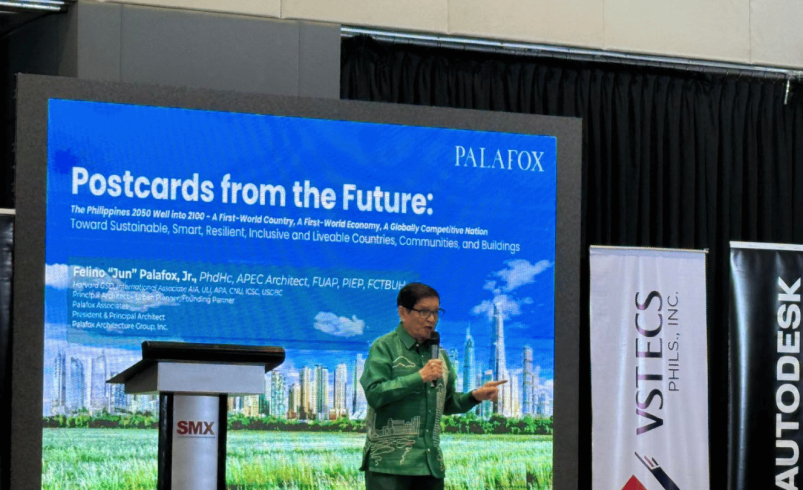
Future-ready Philippine cities must be built around sustainability, green infrastructure, and long-term planning if they are to remain resilient and livable amidst rapid urbanization, according to urban planner and Palafox Associates founder Felino Jun Albano Palafox Jr.
Palafox made these statements during the “Designing Future-Ready Cities” session at the Smart City Convention held on June 1–2 at SMX Aura in Taguig City. He emphasized that urban development must go beyond physical expansion and focus on creating communities that are environmentally sustainable, connected, and prepared for future challenges.
“We need good governance, progressive urban planning, visionary leadership, innovative architecture, responsible citizenship, sustainable design to form the foundation for the future,” Palafox said.

He stressed the importance of integrating sustainability into city planning through green buildings, climate-resilient development, renewable energy, and environmentally responsible infrastructure.
Among the measures he advocated were green roofs, sky gardens, rainwater harvesting systems, and solar technologies that can help reduce the environmental impact of urban development while improving resilience to climate-related risks.
Palafox also called for a shift away from urban sprawl toward more compact and connected communities.
He pointed to concepts such as 15-minute cities, 10-minute communities, and 5-minute neighborhoods, where residents can access essential services, workplaces, schools, and commercial establishments within a short walk or commute.
“We plan 15-minute cities, 10-minute communities, 5-minute neighborhood[s],” he said.
According to Palafox, compact development can reduce transportation demand, preserve more open space, and support more efficient use of infrastructure and resources.
Transportation planning should likewise place greater emphasis on people rather than private vehicles, he said.
Palafox proposed allocating more road space to pedestrians, cyclists, trees, and landscaping while promoting public transportation and multimodal mobility systems.
“Those with less in wheels should have more in roads,” he stressed.
Beyond physical infrastructure, Palafox underscored the importance of strong institutions and effective governance in ensuring that long-term plans are successfully implemented.
“If we don’t have the good institution to implement our plans, nothing’s going to happen,” he said.
He noted that development planning is often constrained by short political and electoral cycles, making it difficult to sustain long-term infrastructure and urban development initiatives.
Despite these challenges, Palafox expressed optimism about the country’s future, citing its young population, strategic location, biodiversity, and natural resources as advantages that could support long-term growth.
He said the Philippines has the potential to become a more sustainable, inclusive, and globally competitive economy if development is guided by effective planning and execution.
“We all like to live in an environment friendly, sustainable and well-designed green buildings and sustainable communities and cities that are smarter, resilient, livable, connected, accessible, affordable, renewable, safer to live in, better lighted, more convenient, cleaner,” Palafox concluded.
As cities continue to expand and energy demand rises, can sustainability and green infrastructure become the foundation of the Philippines’ next generation of urban development?
Follow Power Philippines on Facebook and LinkedIn or join our Viber community for more news and updates on the Philippine energy sector.