A Farmer-First Vision: MGEG Wants Idle Farmlands to Power Communities at Home and Abroad
- November 20, 2025
- 0
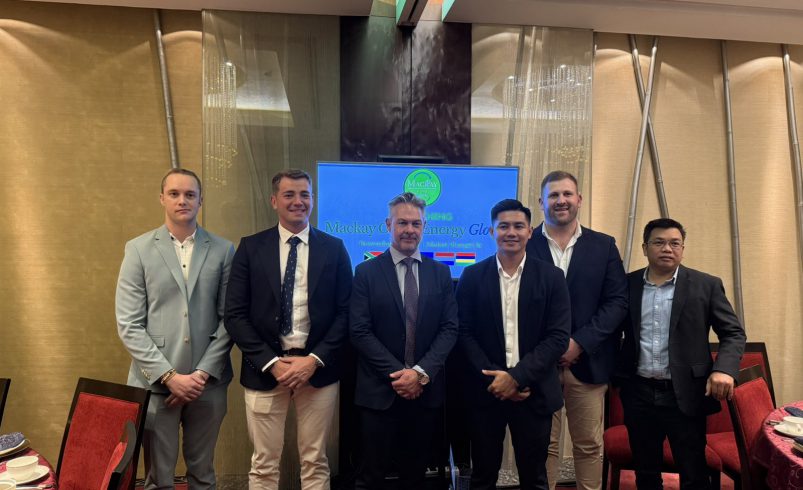
For Mackay Green Energy (MGE), clean energy begins with farmers, not generators. This belief shaped the creation of Mackay Green Energy Global (MGEG), the company’s international arm designed to bring a Philippine-developed farming-to-energy model to communities across Asia and Africa.
During the company’s launch in Manila, MGEG Group CEO Karl Siegel underscored the model’s foundation. “We want the farmer to succeed. We want to make sure that he is delivering a yield on his land that is bringing him a good income,” he said. For Siegel, the transition to clean energy must be anchored in rural prosperity, land revival, and local production.
MGEG’s platform is grounded in nearly two decades of Bana Grass R&D in the Philippines. Trials began in 2005, with extensive refinement achieved through partnerships with government agencies and local communities.

Siegel said the company undertook a global evaluation of potential crops before choosing Bana Grass as the anchor for expansion.
“We went on a sort of global search over the last year, trying to identify what would be the best product to expand into the African market. We evaluated everything from eucalyptus trees to sugar beets, and the shining star of anything you could put in the ground is Mackay Bana Grass.”
This global review, he added, confirmed that Bana Grass stood out for yield, climate suitability, and energy value.
Siegel emphasized that timing is strategic.
“The R&D has been done, so it’s the right time for us to launch. Globally, the markets are ripe for the products that we’re going to deliver.”
He also sees broader economic opportunity for the Philippines.
“Those ships need to be moving product out.”
What Mackay Bana Grass Is — and Why It Matters
Mackay Bana Grass is a high-yield, perennial hybrid grass developed by MGE specifically for biomass production. It is fast-growing, drought-resistant, and typhoon-resistant, with high biomass output suitable for producing green coal, charcoal, biofuels, and processing into animal feed and soil conditioners.
Beyond its biological characteristics, Mackay Bana Grass is supported by MGEG’s AgroIQ digital platform.
Tyronne Smit, MGEG’s Director of Global Agricultural Development said AgroIQ was built to ensure farmers—from beginners to advanced growers—can manage the crop easily.
“It’s designed to be complementary to the farmer’s existing knowledge, whether that be rudimentary or advanced. It’s effectively a farmer’s friend in your pocket.” The system helps farmers avoid losses, he said.
“The whole system is designed to assist you to not let anything slip through the cracks so you can optimise your yields, optimise your revenue, optimise the entire value chain that starts with putting the Bana Grass in the ground.”
Smit stressed that accessibility is intentional. “We try to uncomplicate it as much as possible and make it easy for the farmer.”
How Bana Grass Transforms Farmer Income and Rural Livelihoods
For MGE founder James Mackay, Bana Grass’ biggest impact lies in dramatically raising farmer income.
“A farmer right now in Negros is PHP 50,000 to PHP 60,000 per year, profit per hectare. So now you’re getting five times more.” Depending on conditions and pathways, Mackay Bana Grass can generate up to PHP 250,000 per hectare annually, making it one of the most profitable rural crops available.
It also helps restore soils. “When you harvest Mackay Bana Grass, 85% of the carbon remains in the soil,” he said.
Mackay emphasized the crop’s versatility: “One crop is not going to give you one product. There’s diversification in what you can get out of a single farm.” Communities may produce silage, biomethane, green coal, bio-oils, or feed materials — creating multiple income streams for farmers.
Local Rollouts: Idle Lands, LGUs, and the Ilocos Norte Project
Idle and underutilized lands play a central role in MGEG’s rollout strategy.
“If they’re planted on idle lands, you automatically qualify them for carbon credits. And the carbon credits on them will bring extra revenue to that LGU,” Mackay said.
One of the company’s next major deployments is in Ilocos Norte, which is evaluating more than 500 MW of additional power needs.
According to Jerson Nolasco, COO and Managing Director for Asia Pacific, MGEG is preparing an initial 1,000-hectare Mackay Bana Grass site that will supply feedstock for modular biomass power units — allowing LGUs to produce affordable, local electricity.
A PPP signing is expected soon, Nolasco said, following delays caused by Typhoon Uwan.
“These LGUs are ready to accept Bana Grass… we’ve been planting in Negros since 2016, and now is the time to expand it throughout the Philippines.”
The Energy Component: Modular Biomass Power Units
Siegel said that MGEG’s goal is not just agricultural revitalization but local energy independence.
Mackay Bana Grass feedstock will power modular biomass power units deployed to LGUs, small islands, and off-grid communities. These units can produce dispatchable, baseload renewable energy, replacing expensive diesel gensets and improving energy security.
MGEG’s modular systems let LGUs:
This is why, according to Siegel, the crop-choice decision was so critical. “We needed something that creates baseload energy and does not require fossil fuels — something we can produce from our own land.”
Global Expansion and Market Demand
MGEG is expanding internationally with projects in Eswatini (80,000 hectares), Mauritius (8,500 hectares), and new developments in Zambia, Mozambique, Botswana, and Europe through Van Kessel.
Siegel said Africa shares striking similarities with the Philippines.
“Africa is in a very similar position to the Philippines. We have a large amount of unemployed people. We have a scarcity of energy.”
He added that climate compatibility strengthens the model.
“We have a lovely band across the middle that actually has the right climate for the Mackay Bana Grass.”
And the expansion is built on shared learning: “As we expand, those lessons can then be moved across all of the countries wherever we are.”
A Filipino Model of Shared Growth
As Mackay Bana Grass adoption accelerates, Mackay emphasized the need to keep access open. “We don’t want any monopolies. Bana Grass should become a regional crop or even a national crop.”
With MGEG’s expansion, the company aims to show that a Philippine-developed farming-to-energy model can revive land, empower farmers, and supply communities with clean, reliable energy — both in the Philippines and across the world.
Follow Power Philippines on Facebook and LinkedIn or join our Viber community for more updates.