‘Bill shock’ in focus: The challenges of price volatility in Philippine power
- February 24, 2026
- 0
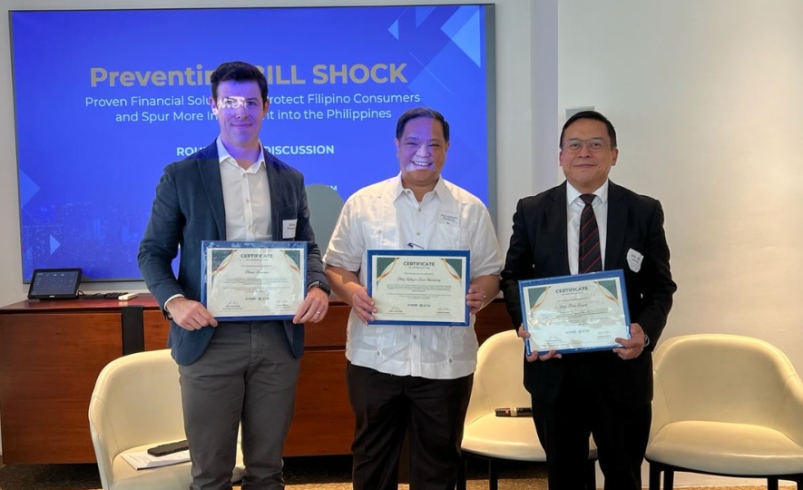
Oliver Pearson (GTM), Atty. Eph Amatong (former SEC Commissioner), and Atty. Jay Layug (DivinaLaw/DREAM) at Green Tiger Markets’ “Preventing Bill Shock” roundtable, discussing strategies to manage Philippine power price volatility and enhance consumer protection.
The debate over electricity “bill shock” in the Philippines is no longer about whether price volatility exists—it is about who absorbs that volatility, under what rules, and at whose risk.
That tension came into sharp focus during panel discussions at Green Tiger Markets’ recent Preventing Bill Shock roundtable, where legal, regulatory, and market practitioners moved past broad consumer narratives and into the structural constraints that prevent financial hedging from taking root in the Philippine electricity sector. The implication, panelists argued, is that doing nothing leaves distribution utilities (DUs), electric cooperatives (ECs), and consumers fully exposed to WESM volatility—by default, not by design.

ERC Chair Francis Juan noted the key pain point in his keynote address: “sudden increases in consumer bills reflect more than short-term price movements. They reveal underlying systemic vulnerabilities that transfer burden to end users.” The roundtable explored how a financial hedging market can mitigate these vulnerabilities and protect end users from price risk.
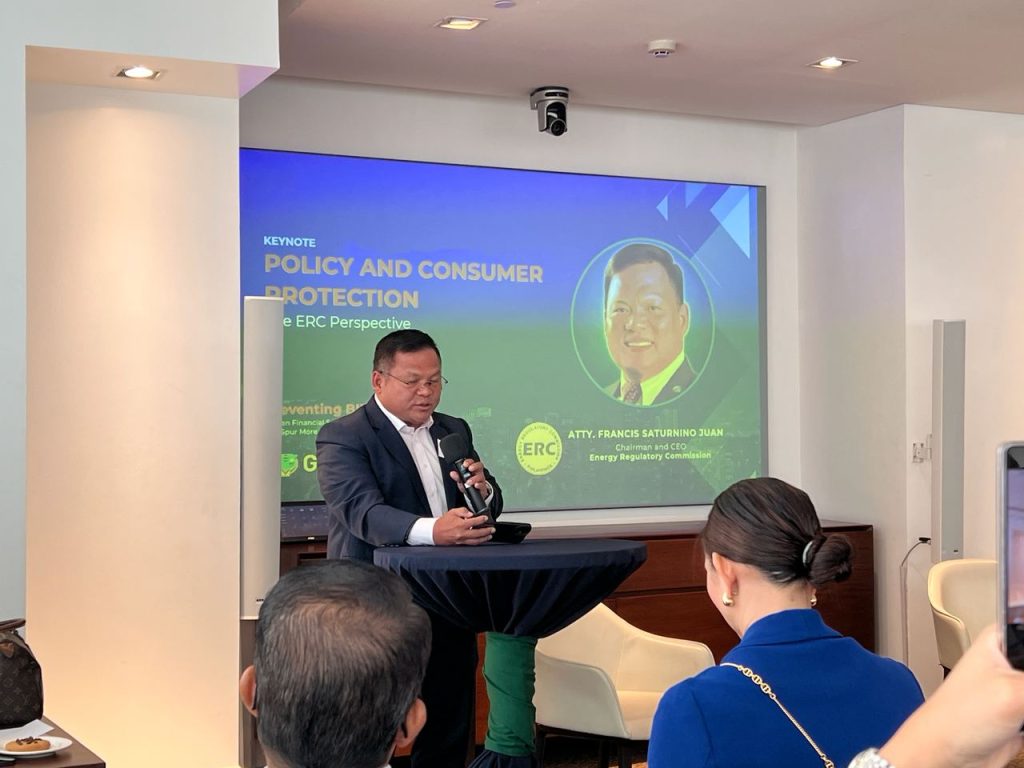
ERC Chair Francis Juan delivers his keynote at Green Tiger Markets’ “Preventing Bill Shock” roundtable, highlighting how forward contracting and financial hedging can improve price stability and investment certainty in the Philippine power sector.
Panel moderator Atty. Ina Magpale-Asirit said the crisis is not just a matter of high costs, but as a failure of predictability.
“Is bill shock really more of the unpredictability of prices rather than having a constant but high electricity price? It’s both. Unpredictability and constant fluctuation of prices,” she noted. “It’s the predictability that you would have to manage… because there’s nothing much that you can do about fluctuation in prices, especially [since] most of the fuel that we are using right now is imported”.
For years, Philippine DUs and ECs assumed that long-term power supply agreements (PSAs) already functioned as a form of hedging.
“When we were talking about hedging by DUs, actually I thought the PSAs were hedging,” Atty. Jay Layug, senior partner at DivinaLaw and president of the Developers of Renewable Energy for AdvanceMent( DREAM) said, noting that fixed-price contracts were meant to provide cost certainty over decades.
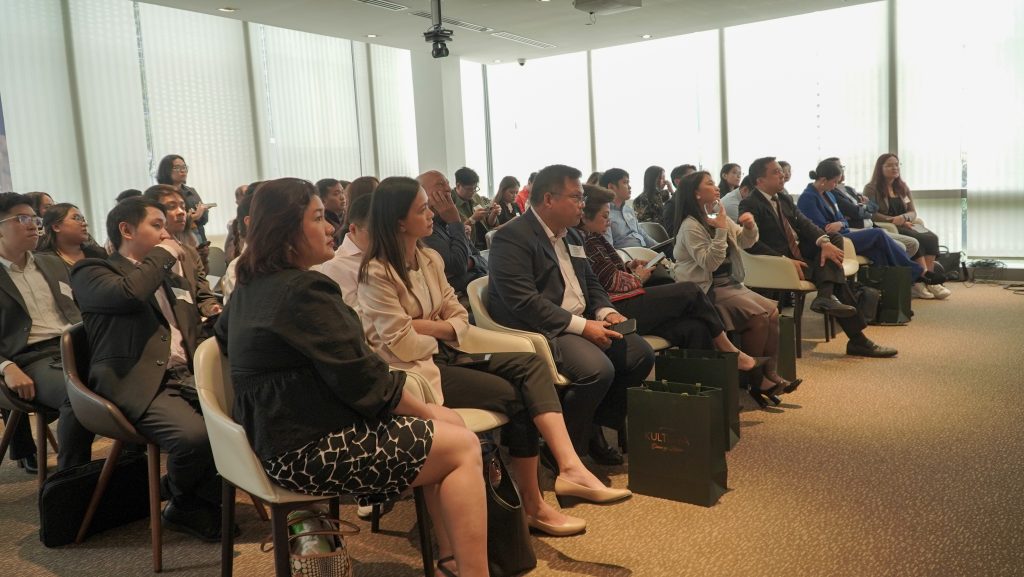
That assumption was destabilized by recent legal developments highlighted during the panel: PSAs are now legally contingent, as entering into long-term contracts does not automatically guarantee enforceability in the face of “extraordinary circumstances.”
“Now you can enter into a contract, but later on, if a supplier is affected for one reason or another, they can get out,” Layug warned. “That’s a big challenge—not just for generators, but for DUs and ECs who thought they were already protected.”
The result is a structural paradox: PSAs are still expected to shield consumers from volatility but their enforceability is no longer absolute. Financial hedging can play a critical and complementary role.
Panelists emphasized that even with PSAs, utilities remain structurally exposed to the spot market.
On average, around 25% of DU demand is sourced from WESM, particularly during peak hours or unexpected load swings. That exposure is both unavoidable and unhedged.
“That’s the part where you have no certainty,” former Securities and Exchange Commissioner Eph Amatong said. “You’re forced into the spot market, and you take whatever price is there.”
WESM itself was not portrayed as broken. Indeed, external data confirms that WESM prices fluctuate widely: system-wide average prices have oscillated significantly, rising to about PHP 4.38 per kWh in December 2025 due to tighter supply and demand imbalances.
The problem is that price volatility is passed straight through to consumers, often months after the fact, when bills arrive, reinforcing the “bill shock” narrative. Financial hedging enters the discussion not as a replacement for WESM, but as a parallel layer of risk management—a way to manage *price risk* even when physical delivery mechanisms remain unchanged.
“You don’t have certainty on the price when you’re forced to go to the spot market. But I think it was always the intention with EPIRA to have this hedge market–a financial hedge market. And I think the distinction there is, it’s decoupled. It’s not connected to the physical market,” Amatong told the panel.
Several panelists pushed back against the idea that hedging is novel or speculative.
“All of us are already somehow exposed to foreign exchange risk. And there are hedging tools that our banks provide, for instance, FOREX,” Amatong said. “I think it (hedging) is a little new to electricity, and the idea of distribution utilities tapping hedging might be new. But the concept itself is something that we’re actually used to in a different context.”
The distinction lies in structure. Financial hedging contracts—such as contracts for difference (CfDs)—are decoupled from physical delivery. Even if a typhoon disrupts generation or transmission, the hedge remains enforceable because it settles financially against a reference price.
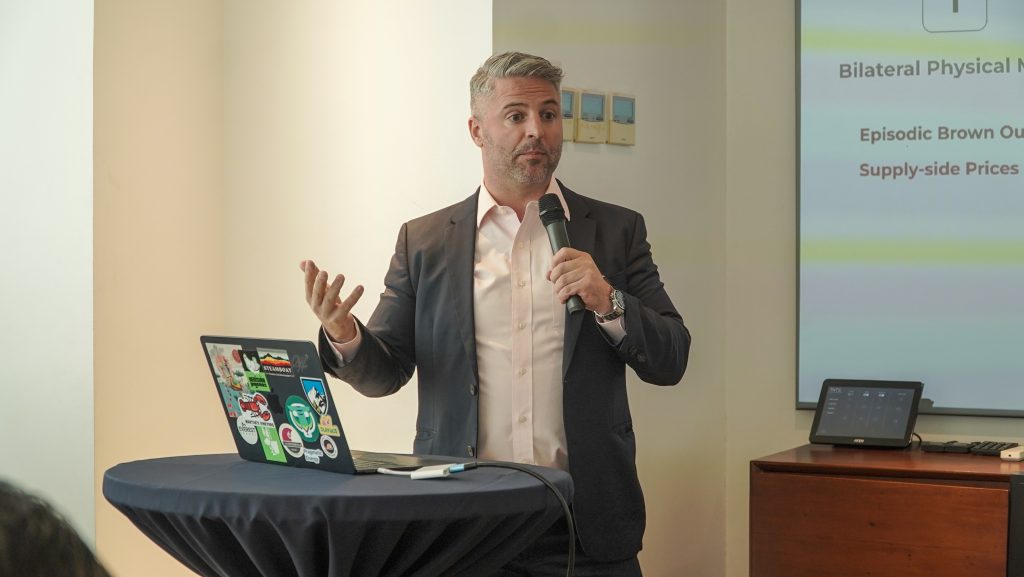
John Knorring, CEO and founder of Green Tiger Markets, speaks at the “Preventing Bill Shock” roundtable, emphasizing the role of financial hedging in mitigating Philippine power market volatility and supporting investment certainty
John Knorring, GTM’s CEO and founder, described financial hedging as a proven global risk management approach. Knorring characterized the Philippine market as being at a transition point.
“The Philippines is in this critical juncture between the spot market and financial energy. Knowing for sure your cost of power is really, really important,” he said.
His remarks underscored that while spot markets clear supply and demand efficiently, they inherently produce volatility—volatility that financial hedging can mitigate without upending the physical market.
If financial hedging provides price certainty, why aren’t DUs and ECs already using it?
The panel’s consensus was that the answer lies in regulatory asymmetry. Under current rules, generation costs are largely pass-through. That protects consumers from markups—but it also means utilities have limited incentives to hedge if losses from a bad hedge cannot be recovered, while gains must be passed on.
“I’m sure very soon the ERC will come out with (power hedging) rules. But as a basic principle, you have to pass on the benefit to the consumers. The question mark is whether you can recover your losses,” Atty. Layug said. “And if you ask me—maybe not [until a clear policy is provided by ERC] .”
This creates a one-sided risk profile: If a financial hedgeworks in one month, consumers benefit, and if it loses the following month , utilities absorb the loss despite the hedge successfully reducing volatility and uncertainty. This is not sustainable for the DUs.
Without clear guidance on cost recovery, governance, and accountability, hedging becomes a compliance risk rather than a financial tool. In other words, the regulatory framework disincentivizes risk management by utility practitioners.
Roundtable participants emphasized that this is an unfortunate status quo; while private sector Retail Electricity Suppliers are able to utilize financial hedging tools; the DUs are prevented from using the same tools to provide price stability to consumers and provincial economies.
Panelists stressed that regulatory clarity—not market interest—is the real bottleneck.

Atty. Ina Magpale-Asirit (Former ERC Commissioner) leads a discussion with panelists Myrna Velasco (Manila Bulletin), Coby Lim (YCO Cloud), and Atty. Richie Avegale Ramos-Pilares (PERPI Executive Board Member, Divina Law) at Green Tiger Markets’ “Preventing Bill Shock” roundtable, exploring structural challenges in managing Philippine power price volatility.
Industry players hedge fuel, coal, and foreign exchange, often through Singapore-based markets governed by English law—but electricity hedging remains legally ambiguous within the domestic framework. The infrastructure for risk management exists; what’s missing is a clear, organized domestic regime that defines how electricity hedging interacts with ERC oversight, SEC jurisdiction, and consumer protection mandates.
The need for inter-agency coordination was also emphasized in the discussions, particularly if derivatives are traded offshore but affect local retail rates.
Beyond consumer protection, panelists pointed to a longer-term implication: investment signaling.
Oliver Pearson, GTM Head of Asia Pacific drew parallels with U.S. natural gas markets as speakers argued that forward prices do more than manage risk—they tell investors when to build supply and when to build demand.
ERC Chair Francis Juan reinforced this point in his keynote, noting forward contracting could support financing for baseload and renewable projects by improving revenue predictability—*without relying on subsidies or cross-subsidization.”
“For consumer protection, a well-designed framework could allow utilities to mitigate extreme price spikes, contributing to greater price stability, and avoidance of bill shocks,” Juan said.
He also highlighted that forward and futures mechanisms can help improve investment certainty by providing more predictable cash flows, supporting both baseload and renewable generation.

Jen Panaligan-Taghoy (CEO, Large Electricity Marketing Consulting) with panelists Renato Z. San Jose, CPA (Board Director, PHILRECA), Giga Marie Suico (Energy Trading Manager, AboitizPower Distribution Group), Roel Castro (President, MORE Power), and Deon James (CEO, Dagupan Electric) following discussions on utility exposure to WESM volatility and strategies for financial hedging.
Panelists voiced a shared recognition that the Philippine power market is evolving faster than its risk management framework.
Preventing bill shock, they agreed, is not about guaranteeing cheap power. It is about deciding, explicitly and transparently, how volatility is managed—rather than letting it fall, by default, on consumers.
The implications extend beyond consumer protection to investment decisions. “And so if the price is high, build supply. If the price is low, build demand. But if you don’t know what the price is, how are you going to make a decision?” Pearson asked.
Without price visibility and enforceable risk-management tools, volatility does not disappear—it is redistributed to those best positioned to handle the risk. Whether hedging becomes part of the Philippine electricity market will depend less on financial innovation than on whether regulators define rules that allow it to function as infrastructure rather than speculation.