CREC energizes 125MW Pangasinan solar plant, raises capacity to 794MWp
- April 13, 2026
- 0
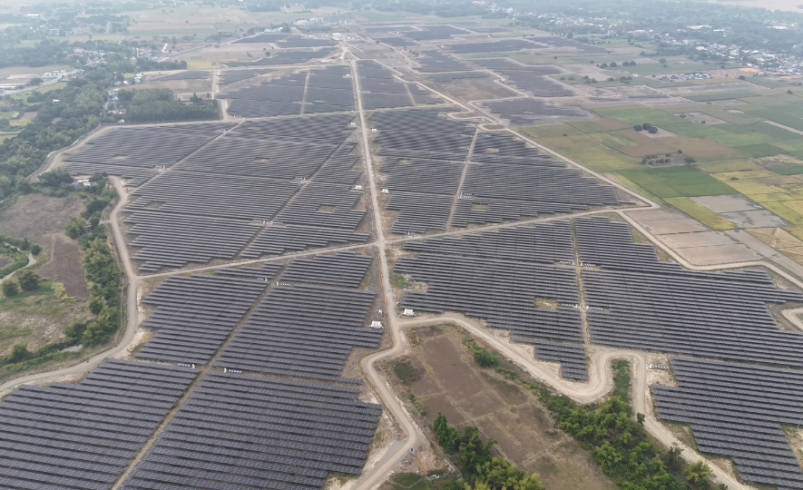
Photo credit: CREC
Citicore Renewable Energy Corporation (CREC) has energized a 125MWp solar facility in Pangasinan, expanding its total gross installed capacity to 794MWp and reinforcing its buildout momentum under the government’s renewable energy program.
The Citicore Solar Pangasinan (CS Pangasinan), located in Sta. Barbara and Calasiao, is expected to generate about 202GWh of electricity annually—enough to supply roughly 90,000 to 100,000 households. It is also projected to displace close to 120,000 metric tons of carbon emissions each year.
The commissioning comes as CREC advances a broader pipeline, with another 424MWp expected to be energized within the next three months.

The company has now delivered more than half of its commitments under the Department of Energy’s Green Energy Auction Program Round 2 (GEAP-2), a key mechanism underpinning the Philippines’ renewable energy expansion.
The Pangasinan facility is also designed with elevated solar panel structures, which CREC said were engineered to address local environmental conditions, including flooding risks. The design is intended to improve airflow and drainage while protecting critical infrastructure—an approach the company positions as part of making renewable projects more climate-resilient.
CREC is also scaling its AgroSolar initiative across its portfolio, integrating agricultural activity within solar sites by utilizing land beneath and between panels for crop production. The model is aimed at supporting local farming livelihoods while maintaining energy output.
“Our responsibility to deliver clean energy solutions includes not only sustainability, but also resilience,” CREC President and CEO Oliver Tan said. “Renewable energy can be thoughtfully designed, integrating stronger materials to mitigate external risks, while considering benefits to our other initiatives such as AgroSolar,” he added.
The project also highlights the growing role of Pangasinan in the country’s renewable energy landscape. According to CREC, the development generated close to 1,000 jobs during construction, with operational roles expected to be filled by local residents, strengthening community participation in the energy transition.
“These developments show how national policy and private-sector execution can work together to create tangible local impact,” Tan said. “With the continued support of the Department of Energy, local government units, and our host communities, we are helping ensure that Pangasinan is not only part of the energy transition, but a beneficiary of it.”
CREC’s latest energization follows its recently commissioned 69MWp solar plant in Negros Occidental and forms part of its longer-term “5GW in 5 Years” expansion target aligned with the Philippine Energy Plan.
CREC has multiple projects across Pangasinan, Batangas, and Quezon still in the pipeline, accelerating deployment as the power sector prepares for tightening demand conditions during peak summer months.
As CREC ramps up capacity additions and GEAP-2 projects come online, how do you see these large-scale solar deployments reshaping grid reliability and provincial energy development in the Philippines?
Follow Power Philippines on Facebook and LinkedIn or join our Viber community for more updates.