DOE orders NGCP full disclosure after Ilijan transmission trips trigger grid alerts
- May 15, 2026
- 0
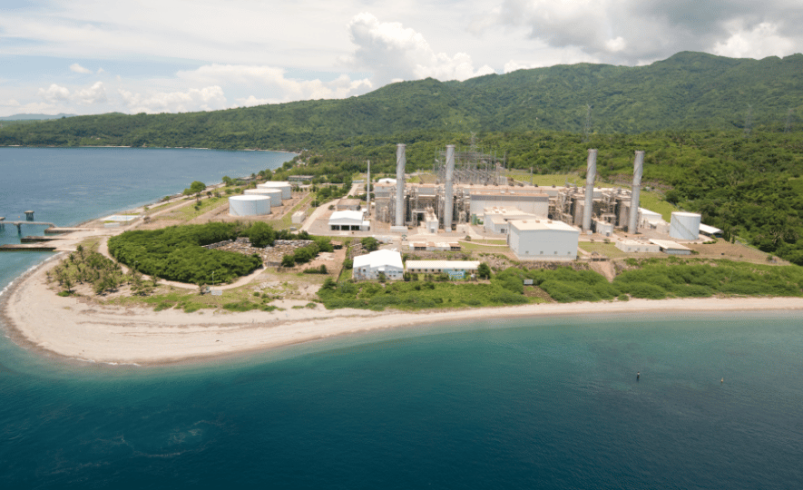
Photo credit: The Ilijan Power Plant in Batangas is the largest natural gas facility in the Philippines. / SMC
The Department of Energy Department of Energy (Philippines) has ordered the National Grid Corporation of the Philippines National Grid Corporation of the Philippines (NGCP) to submit full disclosure and explain the back-to-back tripping of 500-kilovolt transmission lines serving the Ilijan power complex in Batangas on May 13, which led to major grid disturbances across Luzon and the Visayas.
The incident began at around 6:00 AM when the Ilijan–Dasmariñas 500 kV line tripped, followed shortly by the Ilijan–Tayabas line. The successive failures resulted in the complete isolation of the Ilijan Gas to Power Complex Ilijan Gas to Power Complex from the Luzon grid, triggering a cascading supply disruption that forced the declaration of a Red Alert in Luzon and a Yellow Alert in the Visayas.

“These transmission failures had real consequences on grid stability and placed millions of consumers at risk,” Energy Secretary Sharon S. Garin said. “The public deserves full and immediate transparency from NGCP. The DOE will ensure that all operational, reportorial, and regulatory obligations are strictly enforced in protection of consumers.”
The DOE has flagged NGCP’s failure to immediately report the Ilijan–Dasmariñas line trip to regulators at the time of the incident, despite its operational significance and immediate system impact. As of reporting, NGCP has also yet to submit a formal incident report identifying the root cause of the May 13 events, raising compliance concerns under the Philippine Grid Code.
The agency said its technical teams are independently validating the status of affected generating units and transmission assets, including compliance with dispatch instructions and restoration timelines during the alert period. It is also reviewing coordination protocols between grid operator and generators amid the disruption.
Under existing rules, NGCP is required to provide detailed reporting on system disturbances, including timelines of alert declarations, affected facilities, reserve margins, demand conditions, causes of outages, corrective actions, and restoration measures.
The DOE also cited ERC Resolution No. 13, Series of 2010, which requires an initial incident report within 60 minutes of a grid disturbance.
The Energy department said it will continue close monitoring of grid conditions in Luzon and Visayas while coordinating with NGCP, the Energy Regulatory Commission Energy Regulatory Commission (Philippines), the Independent Electricity Market Operator of the Philippines Independent Electricity Market Operator of the Philippines, distribution utilities, and generation companies to ensure full restoration and system adequacy.
How should regulators balance grid stability enforcement with transparency obligations for system operators during cascading transmission events like this?
Follow Power Philippines on Facebook and LinkedIn or join our Viber community for more news and updates on the Philippine energy sector.