Energy security hinges on delivery as offshore wind rollout begins –DOE
- December 10, 2025
- 0
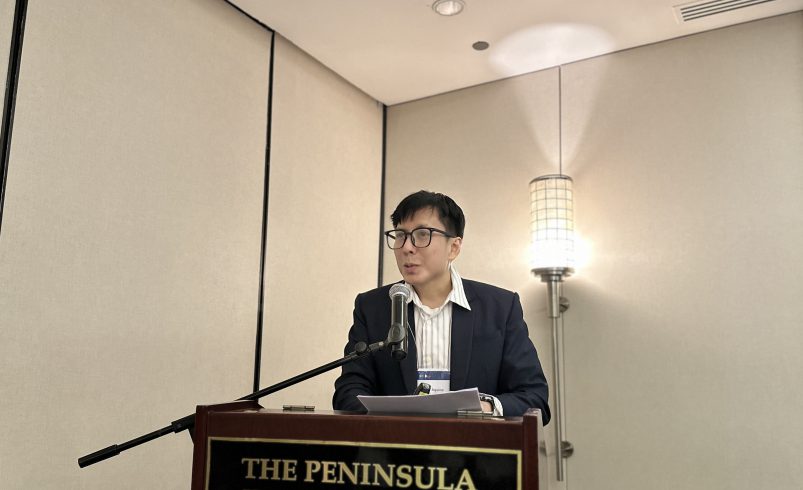
The Department of Energy (DOE) said on Tuesday that project execution—rather than approvals—is critical to securing the country’s energy future, as the government pushed aggressive renewable energy targets, offshore wind development, and grid upgrades at the 2025 Energy Security Forum in Manila.
In her opening remarks, DOE Undersecretary Mylene C. Capongcol said the forum marked a shift “from plans to project” and from commitments to deliverables, as the Philippines faces rising exposure to fuel supply disruptions and global price spikes.
“Energy security is no longer a technical aspiration- it is a national imperative,” Capongcol said, citing the country’s vulnerability to typhoons, floods, heat waves, and droughts that increasingly strain infrastructure and economic stability.

She said the Philippine Energy Plan targets a 35% renewable energy (RE) share in the power generation mix by 2030, rising to 50% by 2050, with clean energy scenarios now incorporating offshore wind (OSW), liquefied natural gas (LNG), and nuclear energy. Offshore wind alone carries 19 gigawatts (GW) of initial targets, with potential expansion to 50 GW under clean energy scenarios.
“These are not abstract figures. They represent job creation, increase economic activity and long-term supply and price stability for the Filipino consumers,” Capongcol said.
She also pointed to the government’s decision to allow up to 100% foreign ownership in renewable energy projects, which she said has boosted investor confidence. Based on a report from the Board of Investments, power and energy accounted for 58.74%, or about P479.78 billion, of the country’s 2025 investments, she said. The DOE has also recorded over 120 megawatts (MW) of indicative and committed RE capacity.
However, Capongcol warned that strong interest alone would not translate into new power supply. “Execution does,” she said, stressing the need to synchronize ports, grid, logistics, financing, and supply chains with project development.
On transport, she said the sector remains heavily dependent on imported fuels, exposing the economy to price shocks and geopolitical risks. The government’s 10% electric vehicle penetration target by 2040, supported by the Electric Vehicle Industry Development Act (EVIDA), the Comprehensive Roadmap for the Electric Vehicle Industry (CREVI), and the Biofuels Act, was framed as both a clean transport and energy security strategy.
The DOE is also moving to position the Philippines in the battery and critical minerals supply chain, citing the country’s nickel and copper resources as strategic assets. Capongcol said coordination with the Philippine Ports Authority and international partners is underway to upgrade port infrastructure for offshore wind and large-scale clean energy equipment.
She confirmed that the terms of reference and notice of auction for 3.3 GW of fixed-bottom offshore wind projects have been issued, while the Smart and Green Grid Plan, to be embedded in the Transmission Development Plan, is intended to prepare the grid for high renewable penetration and diversified power supply.
Capongcol cited the realization of the Mindanao-Visayas Interconnection Project as a milestone in realizing a truly “One Grid Philippines,” improving system reliability, optimizing reserves, and allowing power to flow across regions.
On long-term power supply, she said the government is also pursuing nuclear energy as a complement to renewables through the Nuclear Energy Program Inter-Agency Committee, backed by the newly enacted Phil-ATOM law, which provides the regulatory basis for the safe and secure use of nuclear power.
“Energy security will ultimately be determined not only by how many megawatts we approve-but by how resilient, integrated, and investable our entire energy supply chain becomes,” Capongcol said, pointing to the need for capital in ports, transmission, energy storage, system flexibility, domestic manufacturing, critical minerals processing, and last-mile infrastructure.
She closed by calling for strategic investments that strengthen system resilience and accelerate project execution, framing the forum as “a call to deploy capital where it matters most for national stability and climate resilience.”
What do these execution-focused policy signals mean for your projects and investment strategy? Join the discussion and share how this shift could reshape power development timelines in the Philippines.
Follow Power Philippines on Facebook and LinkedIn or join our Viber community for more updates.