Focus on oil prices misses deeper issue: import-dependent power system
- April 8, 2026
- 0
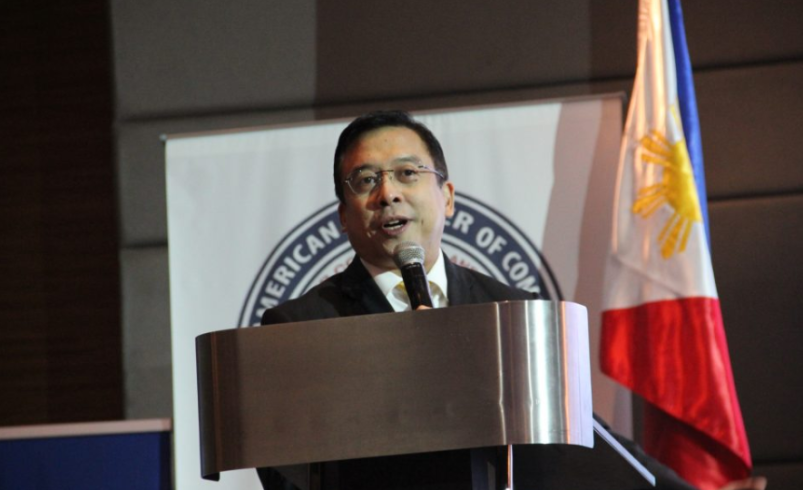
Photo credit: DivinaLaw
As Congress convenes a rare joint House and Senate hearing on the country’s ongoing energy concerns, energy policy expert Atty. Jay Layug, executive board member of the Philippine Energy Research and Policy Institute (PERPI), is urging lawmakers to look beyond immediate oil price spikes and confront a deeper structural issue: the Philippines’ continued dependence on imported fuels to power its electricity system.
While geopolitical tensions continue to drive volatility in global oil markets, Layug said the more persistent risk lies in how electricity is produced and priced locally—particularly through coal, which remains the dominant source of generation.

“We’re heavily reliant on coal… the rising prices of coal is a problem,” he said, noting that electricity costs are exposed not only to oil shocks but also to global coal market movements.
He pointed to the 2022 energy crisis as a clear example of how external coal price spikes translate directly into domestic electricity inflation.
“We experienced that in 2022 when coal prices went up by about $400 per metric ton. It was a problem. Electricity prices went up,” Layug said.
Layug added that this vulnerability has already required regulatory intervention during periods of volatility.
While oil price movements dominate public discourse due to their immediate impact on transport costs, Layug stressed that electricity pricing is structurally tied more to coal and other imported fuels.
He also highlighted the gap between renewable energy capacity and actual generation as a key constraint in reducing exposure to fossil fuel volatility.
“Right now, the share of renewable energy is at 30% installed capacity,” he said, clarifying that capacity does not automatically translate into equivalent power output.
Coal, meanwhile, continues to account for the majority of actual electricity generation.
“Coal is about 60%,” Layug said.
Beyond fuel mix concerns, Layug said the Philippines also needs to address a longstanding policy gap in upstream energy development, pointing to the need to modernize the country’s petroleum exploration framework.
He urged Congress to revisit and update the existing legal regime governing oil and gas exploration, which dates back decades.
“Our exploration law is PD87 presidential decree 1972–enhance it so that more and more people, more foreign companies will come here and look for oil and gas,” he said.
Layug said an updated framework could help attract more exploration activity and investment, potentially improving domestic supply prospects and reducing long-term import dependence.
As lawmakers deliberate during the joint congressional hearing, Layug said the discussion should extend beyond emergency price relief measures and toward structural reforms that reduce exposure to imported fuels.
On top of upstream reforms, he cited renewable energy expansion, transport electrification, and stronger energy security planning as key policy directions, to encourage local resource development.
“We need to make sure we wean away from imported fuel and utilize more renewables,” he said.
“The goal should always be energy independence—meaning we should stop at some point in time importing fuels and use our own,” he added.
Follow Power Philippines on Facebook and LinkedIn or join our Viber community for more updates.
Follow Power Philippines on Facebook and LinkedIn or join our Viber community for more updates.