Global civic groups urge insurers to halt fossil fuel coverage in SEA’s Coral Triangle
- April 24, 2026
- 0
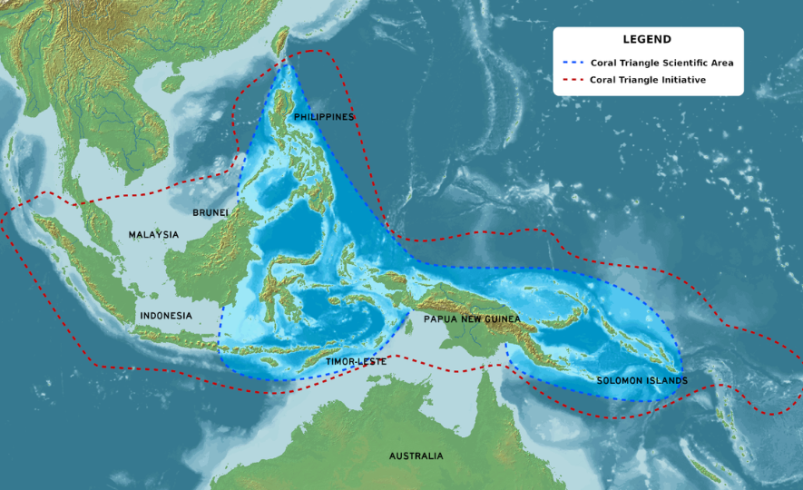
More than 70 civil society organizations from over 20 countries are calling on major global insurers and reinsurers to stop underwriting fossil fuel projects and gas expansion in Southeast Asia’s Coral Triangle, warning of escalating risks to one of the world’s most biodiverse marine ecosystems.
In a joint appeal, environmental and climate groups across the region—including the Center for Energy, Ecology, and Development (CEED), Caritas Philippines, Energy Shift Southeast Asia, Greenpeace Southeast Asia, Greenpeace Thailand, The People’s Coalition for Water Rights (KRuHA), Rimba Watch, and Trend Asia—pressed 30 leading global (re)insurance firms and Lloyd’s of London managing agents to establish what they describe as an immediate “no-go zone” for fossil gas expansion in the Coral Triangle.
The Coral Triangle, which spans Indonesia, Malaysia, Papua New Guinea, the Philippines, the Solomon Islands, and Timor-Leste, is currently facing mounting pressure from energy development. It hosts 113 operational oil and gas fields, alongside expansion plans that include 27 new liquefied natural gas (LNG) terminals, in addition to 19 already operating.

The groups warn that the region’s marine ecosystems—home to coral reefs, mangrove forests, and protected marine areas—are increasingly exposed to industrial development risks. The Coral Triangle supports the livelihoods of more than 360 million people and plays a critical role in global food systems.
“Fossil gas projects are threatening ecosystems and communities, such as those in the Verde Island Passage, including the threat of expansion of offshore oil and gas exploration in Palawan that will place our communities and food security at even greater risk,” said Gerry Arances, Executive Director of the Center for Energy, Ecology, and Development (CEED). “Insurers must recognize the compounding risks they are fueling by providing insurance to fossil fuel projects within the Coral Triangle.”
The appeal letter also cautioned that fossil gas infrastructure is increasingly located near or overlapping with sensitive marine environments, heightening ecological risks as climate impacts intensify.
“We need a living Coral Triangle where both ecosystems and communities can thrive,” said Anj Dacanay, Lead Campaigner of Energy Shift Southeast Asia. “As climate disasters intensify, protecting our marine biodiversity is a matter of survival. The insurance industry must recognize its role and stop providing insurance for environmental destruction. It is time for insurers to commit to establishing a no-go zone in the Coral Triangle, ensuring that no fossil fuel project is allowed to destroy these delicate marine ecosystems.”
The appeal was addressed to major global insurance groups including AIG, Allianz, Aviva, AXA, Chubb, Generali, Hannover Re, HDI-Talanx, Helvetia, Liberty Mutual, Lloyd’s of London managing agents, Munich Re, MS&AD, QBE, SCOR, Sompo, Swiss Re, Tokio Marine, Travelers, WR Berkley, and Zurich.
As global climate and energy transition debates intensify, the question remains: should insurers continue underwriting fossil fuel expansion in ecologically critical zones like the Coral Triangle?
Follow Power Philippines on Facebook and LinkedIn or join our Viber community for more updates.