PH dams identified as viable sites for floating solar
- March 9, 2026
- 0
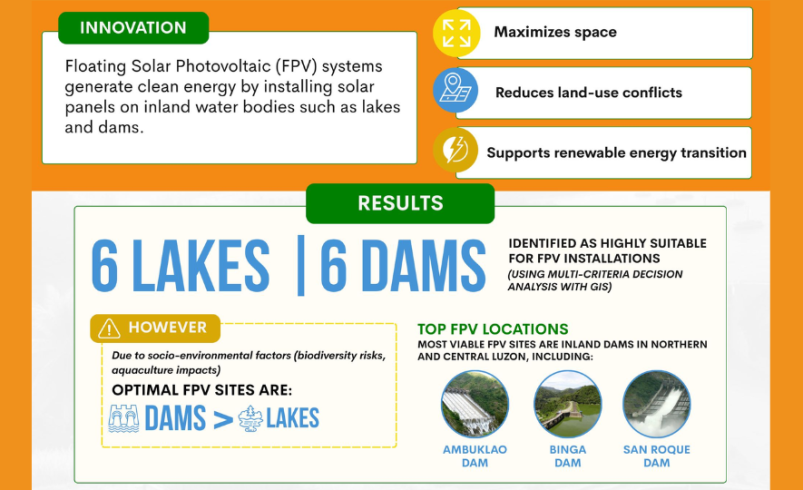
Several dams in the Philippines have been identified as suitable sites for floating solar photovoltaic (FPV) projects, according to a report recently shared by the Philippine Energy Research & Policy Institute (PERPI). The PERPI-funded study examined the potential of FPV systems in inland water bodies.
A modeled 5-megawatt FPV installation could generate 7.3 to 8.2 gigawatt-hours of electricity annually. Investment returns for such projects were estimated at nearly 28%, while Levelized Cost of Electricity (LCOE) was slightly higher than that of land-based systems, at USD 77.43/MWh versus USD 74.02/MWh.
The research assessed 12 inland water bodies across the country, identifying dams in Northern and Central Luzon—including Ambuklao, Binga, and San Roque—as the most suitable sites. Criteria included proximity to substations, road access, usable water surface area, and socio-environmental considerations. The report noted that dams generally have lower biodiversity and aquaculture risks compared with lakes.

Floating solar systems also demonstrated technical advantages, achieving higher performance ratios (84.12%) than ground-mounted systems (82.45%) due to cooling effects from water. Simulations showed some locations, such as Lake Alindayat, could provide the highest energy output.
Despite slightly higher installation costs, the projects remain financially viable. The internal rate of return (IRR) for FPVs was estimated at 27.98%.
The report recommends additional environmental assessments for lakes and policy support to encourage FPV deployment on dams, including financial incentives and regulatory frameworks that safeguard biodiversity.
The study, titled “Technoeconomic and Site Suitability of Floating Solar PV Farms in the Philippines,” was released in 2024 and prepared by Louis Angelo M. Danao, PhD, with Kent Vincent Q. Catenza, Mario Lorenzo Q. Inzon, Lucia Maria S. Sacro, and Kristian Daniel Y. Tiu, as part of PERPI’s research on emerging energy technologies.
How do you think floating solar technology could contribute to the Philippines’ renewable energy goals? Share your perspectives and join the conversation.
Follow Power Philippines on Facebook and LinkedIn or join our Viber community for more updates.