PH offshore wind faces long timelines, execution hurdles despite policy gains
- April 5, 2026
- 0
Offshore wind projects in the Philippines could take up to a decade to develop, highlighting a growing gap between ambitious rollout targets and the complex realities of building large-scale projects.
Industry leaders said that while policy progress has accelerated in recent years, turning offshore wind plans into operational projects will require sustained coordination across government, developers, and the broader supply chain.
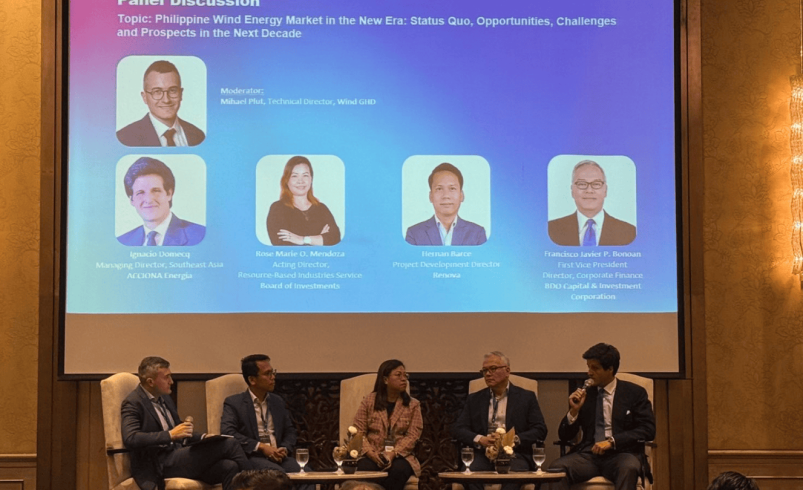
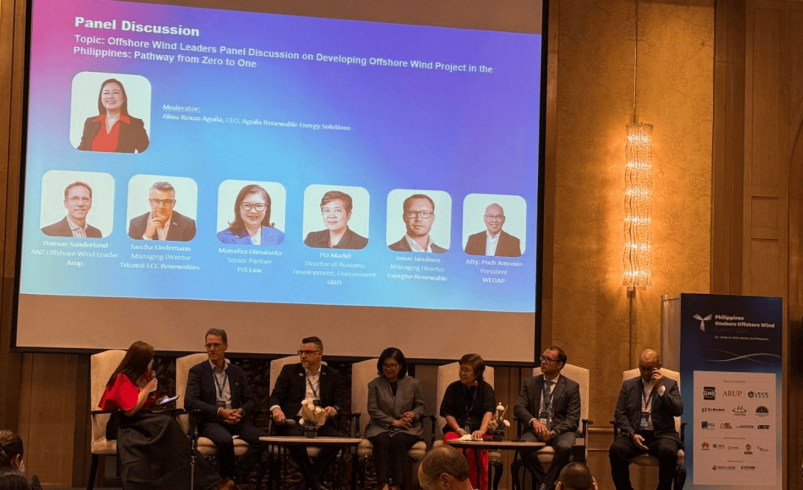
Speaking at the 4th Philippines Onshore Offshore Wind Summit, panelists traced the sector’s progress from early renewable energy policies to the rollout of the Green Energy Auction Program for offshore wind, which they described as a key milestone.

“[GEA] is a very strong and important step in moving the Philippines market from project ideas to real projects,” said Sascha Lindemann, Managing Director of Triconti ECC Renewables. “It creates structure, it creates visibility… but it’s a starting point.”
Despite these developments, panelists emphasized that offshore wind projects are inherently long-term undertakings.
Based on global experience, projects typically take seven to ten years from early development to commercial operation, with emerging markets like the Philippines likely facing longer timelines due to infrastructure gaps and regulatory complexity.
“We’re building the plane while we’re flying,” said Monalisa Dimalanta, Senior Partner at PJS Law and Former Chairperson and Chief Executive Officer of the Energy Regulatory Commission, underscoring the evolving nature of the sector and the need to develop systems and processes alongside project execution.
Supply chain constraints were also identified as a major challenge, particularly for emerging markets competing for limited resources.
Jonas Jacobson, Managing Director of Energise Renewables, said established manufacturers and service providers often prioritize mature markets, making it difficult for newer markets like the Philippines to secure equipment and expertise.
“Especially for emerging markets… it can actually often be difficult to get the attention of these established players,” Jacobson said.
Infrastructure readiness—particularly ports—was also highlighted as a critical requirement, with facilities needing to be in place before offshore wind projects can proceed with large-scale construction.
Environmental permitting adds another layer of complexity, with new guidelines introducing a two-stage approval process that requires extensive data collection and coordination with multiple agencies.
Pia Madid, Director of Business Development for Environment at GHD, said developers should begin studies early rather than wait for regulations to be finalized.
“Do not wait for the laws, regulations, rules to be perfect… we will learn along the way,” Madid said.
Financing and bankability were also discussed, with panelists emphasizing that tariffs alone are not sufficient to attract investment.
Instead, investors assess the full risk profile of projects, including regulatory stability, infrastructure readiness, and execution risks.
Panelists also pointed to opportunities to develop local capabilities, noting that the Philippines has a strong base of skilled workers that can be further developed to support offshore wind projects.
Damon Sunderland, ANZ Offshore Wind Leader at Arup, said the country already has experience in offshore engineering through projects such as Malampaya, which could serve as a foundation for offshore wind development.
“I think we can replicate that in offshore wind… there’s no reason why that couldn’t happen,” Sunderland said.
Beyond technical and financial considerations, stakeholders emphasized the broader value of offshore wind, including its contribution to energy security, job creation, and regional economic development.
Dimalanta said offshore wind projects could deliver benefits beyond the power sector, particularly in transforming local communities.
“There’s still so much value creation… not just in energy, but in economic development,” she said.
While the country has made significant progress in laying the groundwork for offshore wind, industry leaders said success will ultimately depend on how quickly it can build the supporting ecosystem needed to deliver projects at scale.
As offshore wind development moves forward, can the Philippines bridge the gap between ambitious timelines and the complex realities of project execution?
Follow Power Philippines on Facebook and LinkedIn or join our Viber community for more updates.