Philippines’ Lifeline Rate program gets long-awaited reset
- February 18, 2026
- 0
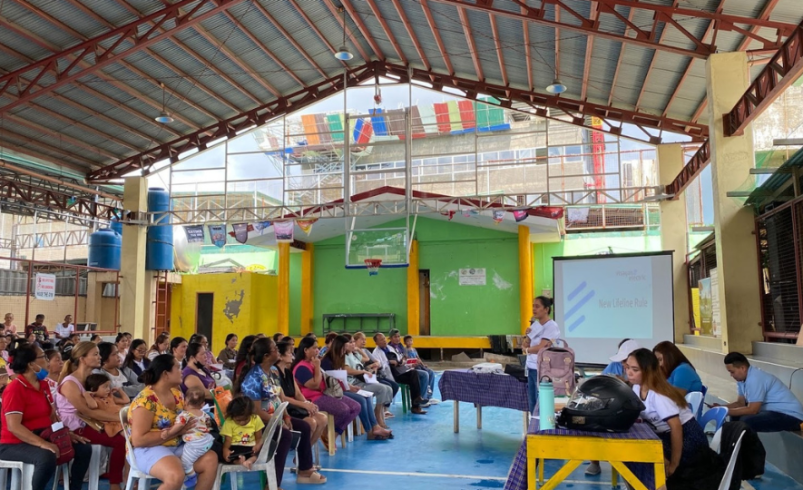
Distribution company Visayan Electric conducts a Lifeline Subsidy Caravan in barangays in Mandaue, Mambaling, Inayawan, Kalunasan, and Liloan, Cebu to orient 4Ps beneficiaries and other marginalized end-users
For more than two decades, the Philippine government has implemented a built-in electricity subsidy for the poorest households. Written into law, embedded in power bills, and funded through the regulatory system, the Lifeline Rate Program functions through cross-subsidization within the electricity market. Yet for millions of Filipinos who should have benefited, the program has often existed more as a promise than a reality.
In 2025, the government attempted its most aggressive reset yet—transforming an opt-in subsidy into an automatic social protection tool embedded directly in the electricity billing system.

The government’s electricity subsidy for marginalized consumers moved unevenly through the system—well-funded, well-intentioned, but inconsistently delivered. Millions of households technically qualified for the Lifeline Rate Program, yet only a portion were formally enrolled and saw the discount reflected on their monthly bills. That disconnect is what the Department of Energy (DOE) is now trying to address.
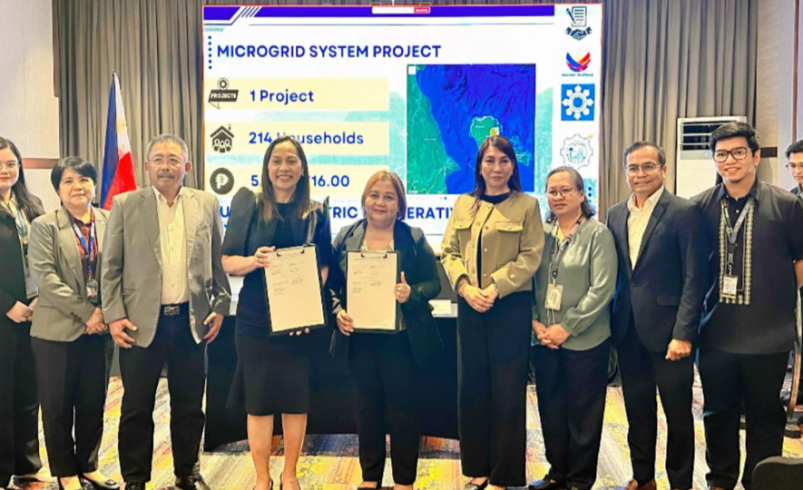
The DOE then started working with the Department of Social Welfare and Development (DSWD), the Energy Regulatory Commission (ERC), other government agencies, and power distribution utilities (DUs) to expand access to the Lifeline Rate Program by dismantling long-standing administrative barriers. The effort aligns with DOE directives and ERC operational reviews to integrate social welfare data directly into the electricity billing system.
At stake is whether one of the country’s longest-running power subsidies can finally operate on a national scale.
The Lifeline Rate Program is anchored on the Electric Power Industry Reform Act (EPIRA) of 2001, which institutionalized the “socialized pricing” for marginalized electricity consumers. The program was strengthened by Republic Act No. 11552, which amended Section 73 of EPIRA, extending its validity until 2051 and reinforcing the state’s commitment to subsidizing electricity for low-income households.
Under the law and ERC rules, the Lifeline Rate Program provides discounted electricity charges to qualified low-income households consuming 100 kilowatt-hours (kWh) or less per month.
On paper, the framework is straightforward. In practice, access has long been constrained by administrative hurdles.
Before the enactment and implementation of Republic Act No. 11552, all electricity consumers with monthly consumption of 100 kWh or below were automatically treated as Lifeline customers, regardless of income. This meant that some high-income users—including owners of apartments or condominium units with infrequent usage—were able to receive the subsidy without undergoing income validation.
Following the implementation of RA 11552, eligibility was tightened to focus on 4Ps beneficiaries and other marginalized households, who are now required to undergo enrollment and validation through their local distribution utilities or social welfare offices.
As a result, even 4Ps households—already income-qualified under DSWD rules—have traditionally been required to manually enroll with their local DUs, while non-4Ps households must secure certifications from local social welfare offices, a process that often involves repeated visits, document submissions, and extended waiting periods.
In 2023, the DOE acknowledged that only a portion of eligible 4Ps households nationwide were actually enrolled in the Lifeline Rate program. Of roughly 4.2 million 4Ps beneficiaries, only about 191, 399 households (around 4.6%) were registered to receive the subsidy. This meant that the vast majority of qualified households continued paying full electricity prices despite being legally entitled to discounted rates, highlighting the persistent gap between policy intent and program delivery.
Looking at the broader population, as of June 2025, around 4.5 million households were identified as eligible for the Lifeline Rate, yet only about 330,000 (or 7.3%) had registered with their distribution utilities. The figures highlight the gap between policy intent and actual program access, both for 4Ps beneficiaries and the wider set of marginalized households.
The government’s current reform push is focused on expanding coverage and simplifying access to the Lifeline Rate Program.
Following President Ferdinand R. Marcos Jr.’s directive in his fourth State of the Nation Address to extend the benefit beyond existing 4Ps beneficiaries to include low-income families who meet the consumption threshold, the DOE has moved to streamline the enrollment process for both 4Ps beneficiaries and other eligible marginalized consumers. This was formalized in January 2026 through a joint resolution by DOE, DSWD, and ERC.
Under the revised process, qualified 4Ps households are now automatically registered based on DSWD beneficiary lists and will no longer be required to personally submit documentary requirements. Beneficiary validation will use the DSWD official beneficiary lists. Eligibility is validated through data matching with DUs, while non-4Ps households may still apply through manual registration and field validation. Automatic registration remains valid as long as households stay on the DSWD’s 4Ps list.
The DOE, in coordination with ERC, also reassessed the electricity consumption cap under the Lifeline Rate Program and has adopted a uniform national threshold of up to 50 kilowatt-hours (kWh), entitling qualified households to a full discount within this level, while allowing existing higher thresholds approved by the ERC to continue.
At the regulatory level, the ERC has adopted supplementary rules to implement Republic Act No. 11552, supported by a data-sharing agreement among the DOE, DSWD, and ERC to enable automated registration and standardize the lifeline subsidy mechanism.
The reforms position the Lifeline Rate Program as more closely aligned with the government’s broader social protection and welfare initiatives, rather than as a standalone regulatory mechanism within the power sector.
Davao Light conducts a Lifeline Subsidy enrollment in Gem Village, Barangay Ma-a, Davao City.
Despite the policy reset, the Lifeline Rate Program will still rise or fall at the level of implementation—and that responsibility rests with the DUs .
Under DOE and ERC rules, the DUs are responsible for applying validated Lifeline Rate discounts to customer accounts, integrating eligibility data into billing systems, and ensuring that qualified households consistently receive the correct subsidy each month. The success of the automated framework therefore, depends heavily on coordination with social welfare agencies and the operational readiness of each utility.
This dynamic is already visible in franchise areas operated by AboitizPower’s distribution units, including Visayan Electric Company, Inc. in Cebu and Davao Light and Power Co., Inc. in Davao.
Both utilities work closely with the DOE, ERC, DSWD, and local City or Municipal Social Welfare and Development Offices (CSWDOs and SWDOs) to identify and validate eligible Lifeline Rate Program beneficiaries.
As of November 2025, Visayan Electric recorded 1,933 Lifeline Rate beneficiaries within its franchise area. Of these, 1,454 were 4Ps beneficiaries, while 479 were validated as marginalized end-users through social welfare offices. To boost awareness and registration, Visayan Electric conducted Lifeline Subsidy Caravans in barangays across Mandaue, Mambaling, Inayawan, Kalunasan, and Liloan, Cebu.
In Davao City, Davao Light reported 3,037 Lifeline Rate Program beneficiaries as of November 2025. This included 2,900 4Ps households and 137 marginalized end-users validated through social welfare offices. The utility conducted targeted Lifeline Subsidy enrollment activities, including on-site registration in Gem Village, Barangay Ma-a.
While these initiatives predate the full implementation of the automated enrollment, they illustrate how DU-level coordination, field validation, and outreach remain critical—even as the system transitions toward data-driven eligibility.
The timing of the Lifeline Rate Program reset reflects mounting pressure on household energy affordability.
Electricity prices remain exposed to global fuel costs, exchange rate movements, and domestic supply conditions. While electricity price movements are often less visible than fuel or food inflation, power remains a fixed monthly expense for low-income families. For households already navigating elevated living costs, even small changes in electricity bills become a trade-off for spending on other essentials such as food, education, and healthcare.
The renewed push also reflects a growing policy consensus that energy poverty directly undermines wider development goals—from learning outcomes and livelihood productivity to household health and safety.
In this context, the Lifeline Rate Program is no longer viewed purely as a regulatory feature embedded in EPIRA, but increasingly as part of the country’s social protection architecture.
Despite renewed inter-agency coordination, several challenges persist.
First, implementation capacity varies widely across distribution utilities, particularly between large private distributors and smaller electric cooperatives. Without consistent regulatory enforcement, technical support, and operational readiness, regional disparities in access could persist even under the automated Lifeline Rate system.
Second, structural and financial constraints continue to complicate the program’s nationwide effectiveness. There is no consolidated public record of how much the Lifeline Rate has delivered in peso terms, as the subsidy is embedded in electricity bills and administered by individual utilities rather than funded through a single national budget. This fragmented delivery, combined with the political and public sensitivity surrounding proposals for a centralized national subsidy fund supported by a consumer-wide charge, makes it difficult to evaluate the program’s historical performance or to implement funding reforms smoothly.
At its core, the Lifeline Rate Program uses the electricity billing system as the mechanism for delivering subsidies to eligible low-income households.
The policy adjustments made this year focused on simplified enrollment, inter-agency coordination, and updated regulatory rules will serve as a key test of whether the program can reach a larger share of its intended beneficiaries.
For DUs such as Visayan Electric, Davao Light and other power distributors nationwide, implementation will depend not only on system readiness but also on the consistency of beneficiary validation, data-sharing arrangements, and regulatory guidance.
If these processes are implemented as intended, eligible households would no longer need to undergo repeated manual application, and the Lifeline subsidy would be reflected directly in monthly power bills as part of regular utility operations.
—
Sources:
https://pia.gov.ph/press-release/lower-electricity-bill-for-marginalized-consumers-pushed-doe-moves-to-expand-lifeline-rate-program/
https://powerphilippines.com/doe-rallies-agencies-to-expand-lifeline-rate-power-subsidy-access/
https://www.doe.gov.ph/lifeline-rate-program
https://company.meralco.com.ph/news-and-advisories/lifeline-rate-faqs
https://lawphil.net/statutes/repacts/ra2021/pdf/ra_11552_2021.pdf