Philippines likely to miss 2030 RE targets amid grid and financing hurdles -S&P Global
- January 23, 2026
- 0

Vince Heo, Director for Southeast Asia Power and Renewables Research at S&P Global, said the Philippines is unlikely to meet its renewable energy (RE) targets by 2030 under current conditions, citing grid limitations and high financing costs as major constraints.
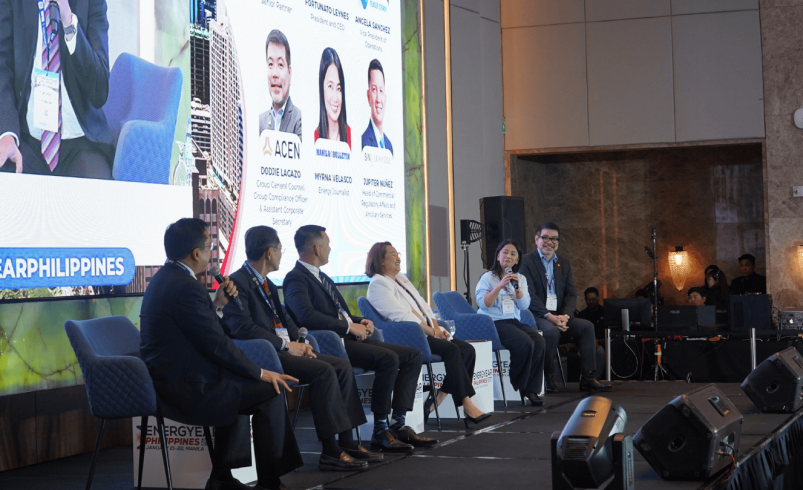
Speaking on the sidelines of Energyear Philippines 2026 at The Westin Manila, Heo clarified that S&P Global’s view is based on its own forecasting model and not a policy assessment. “We are actually making a forecast. It’s our own view. It’s not based on our base case,” he said.
Based on this forecast, Heo said the country is likely to reach only about 27% to 28% renewable energy share by 2030, below government targets of 35%. By 2050, renewable energy could account for around 50% of the power mix, which he noted aligns with the Philippine Energy Plan’s base case but not with its clean energy scenario.

Heo pointed to grid planning as the biggest obstacle to scaling up renewables. “There’s a big gap between the government target and what actually can be installed,” he said, adding that even if several gigawatts of solar projects become operational, system balance remains a concern due to intermittency and limited storage.
“There’s not enough storage in the power grid,” Heo said, explaining that modeling shows the system would struggle to manage large volumes of solar generation without stronger transmission planning and balancing capacity.
Permitting challenges also continue to delay projects, creating a disconnect between announced capacities and actual buildout. These uncertainties, Heo said, contribute to hidden costs that ultimately affect project timelines and investor confidence.
Financing remains another major hurdle, with Heo citing higher capital costs in the Philippines compared to other markets. “We have a WACC (Weighted Average Cost of Capital) estimation of about 10 to 11% for solar projects, which is about three to four percent higher than other markets,” he said, noting that financing costs make up a significant portion of overall project expenses.
Heo attributed this to country risk premiums and regulatory uncertainties, which make international banks more cautious. “It’s much more clear and visible in other advanced markets than the Philippines, so there is some discount because of that,” he said.
On the cost side, Heo said falling technology prices are a positive development. “For the next five years, our LCOE (Levelized Cost of Electricity) forecast is about 23% reduction on solar and 26% for battery storage,” he said. However, he cautioned that lower costs alone will not solve project challenges if green energy auction rates are not commercially viable.
Heo also weighed in on recent policy moves, including the termination of delayed renewable energy service contracts. “Instead of hiding this potential risk, they came out and made it public,” he said, adding that this could help clean up timelines and open space for new developers.
Looking ahead, Heo said easing foreign ownership restrictions has already attracted interest from international investors, but stressed that reforms should focus on permitting and transmission. He also noted that while the Renewable Portfolio Standard helps drive demand, domestic renewable energy certificates need better alignment with international standards to meet the requirements of data centers and hyperscalers.
With grid readiness and financing conditions shaping the pace of renewable deployment, what reforms should the Philippines prioritize to narrow the gap between its clean energy targets and what can realistically be delivered?
Follow Power Philippines on Facebook and LinkedIn or join our Viber community for more updates.