PHILRECA seeks clearer rules, funding review as lifeline rollout moves forward
- February 20, 2026
- 0
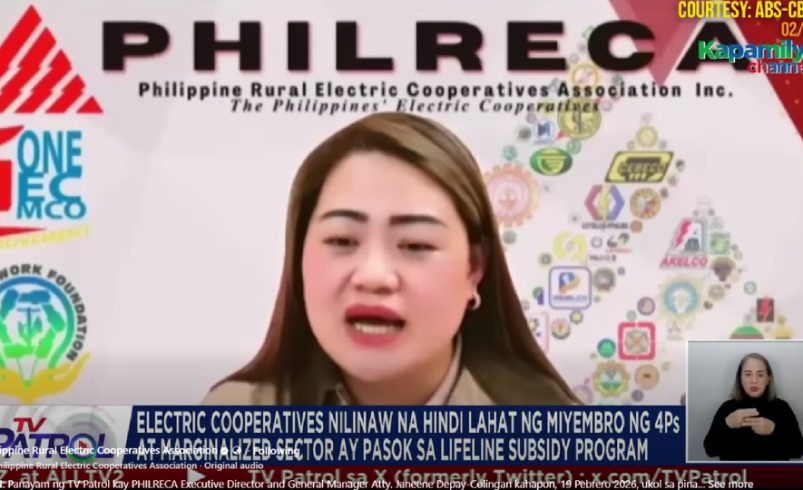
Electric cooperatives (ECs) have backed the government’s move to extend the Lifeline Rate subsidy but warned of implementation bottlenecks, citing tight timelines, verification hurdles, and funding sufficiency concerns.
In an interview with TV Patrol aired on ABS-CBN News on February 19, Philippine Rural Electric Cooperatives Association (PHILRECA) Executive Director and General Manager Atty. Janeene Depay-Colingan said ECs are aligning with the recent resolution of the Energy Regulatory Commission (ERC) on the expanded subsidy program.
Under the ERC resolution, she clarified that beneficiaries must still keep monthly consumption within the 50 kilowatt-hour (kWh) threshold to qualify for the 100% discount even if they are listed under the 4Ps program of the Department of Social Welfare and Development (DSWD). The name of the 4Ps beneficiary must also match the registered account name with the EC.

“Buong suporta ang mga ECs sa bawat hakbangin ng pamahalaan upang paunlarin ang mga kababayan nating nasa laylayan ng lipunan,” Colingan said, adding that cooperatives are seeking “sapat, malinaw, at karapat-dapat na alituntunin” (adequate, clear, and appropriate guidelines) to ensure smooth implementation.
PHILRECA said that during recent inter-agency coordination, ECs raised concerns over the detailed validation process for 4Ps beneficiaries, which may take longer than the two billing cycles prescribed under the policy. The group noted that verifying beneficiary lists and reconciling account names require extensive cross-checking at the cooperative level.
Aside from time constraints for technical adjustments in billing systems, PHILRECA also flagged preliminary simulations indicating that the uniform charge of one centavo per kWh — to be collected from non-lifeline consumers to fund the subsidy — may be insufficient to cover the projected subsidy requirement.
Despite these issues, PHILRECA said ECs have started modifying their billing systems and intensifying consumer information drives in preparation for the rollout.
The position of ECs adds an operational layer to the broader policy push backed by President Marcos and implemented through the DOE and ERC, as regulators and distribution utilities balance social protection objectives with system readiness and cost recovery.
How should regulators calibrate timelines and funding mechanisms to ensure the expanded lifeline program remains both targeted and financially sustainable?
Follow Power Philippines on Facebook and LinkedIn or join our Viber community for more updates.