PNRI showcases next-gen nuclear tech for farms, factories, and health care
- November 13, 2025
- 0
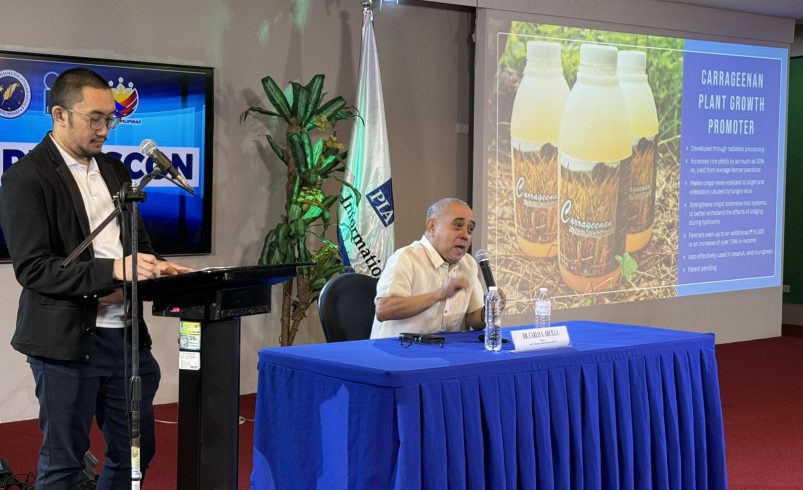
The Philippine Nuclear Research Institute (PNRI) is advancing several nuclear-based technologies that aim to improve waste handling, strengthen crop production, and offer lower-cost medical solutions, Director Dr. Carlo A. Arcilla said in a press conference at the Philippine Information Agency Auditorium, this Thursday.
Arcilla said one of PNRI’s most promising initiatives is PREx Plastic Technology, which uses electron-beam irradiation to upgrade discarded polyethylene materials from common household plastics. The process improves thermal and mechanical properties and allows the plastic to be extruded into tiles, bricks, and construction boards. Prototype batches produced in Davao City showed more than 35% higher strength and over 3,000 psi in flexural performance. The technology is currently at TRL 4, with a collaborating manufacturer preparing for further scale-up.
For the medical sector, PNRI also showcased its radiation-processed hemostat, a patent-pending material that stops bleeding within one to five minutes. The product comes in granular form, gauze infused with granules, and gel dressing. Arcilla said it is made from biocompatible materials that avoid burning or tissue damage, and may be used in emergency care or surgical procedures. A licensed toll manufacturer has been identified, and adopters are preparing the product for registration.

Another innovation presented was PNRI’s radiation-processed CMHA hydrogel, designed for wound care, cosmetic applications, and early-stage drug delivery research. The hydrogel is made from carboxymethylated hyaluronic acid modified through radiation to adjust crosslinking and branching. Initial studies show it is safe and has strong potential for anti-aging formulations and wound healing products.
In the agriculture sector, Arcilla highlighted the carrageenan plant growth promoter, which has increased rice yields by up to 30% in field applications. The radiation-treated seaweed extract strengthens root systems, helps crops resist lodging and tungro-related infestations, and can raise farmer income by as much as PHP 16,000 per hectare. The material is also effective for peanut and mungbean crops.
PNRI also continues to expand its Sterile Insect Technique program, which uses radiation to sterilize male Aedes mosquitoes before they are released into communities. Because sterile males do not bite and cannot transmit viruses, Arcilla said the technique offers a chemical-free way of suppressing dengue-carrying populations.
Arcilla said the technologies reflect PNRI’s goal of making nuclear science accessible across industries and local governments. “Ang sinasabi namin palagi: nuclear science is not just about power plants. It’s about solving everyday problems using radiation technology,” he said.
Which of these nuclear-powered innovations do you think could have the biggest impact if adopted nationwide?
Follow Power Philippines on Facebook and LinkedIn or join our Viber community for more updates.