Private-led e-transport program launched to help curb fare hikes amidst rising fuel costs
- April 10, 2026
- 0
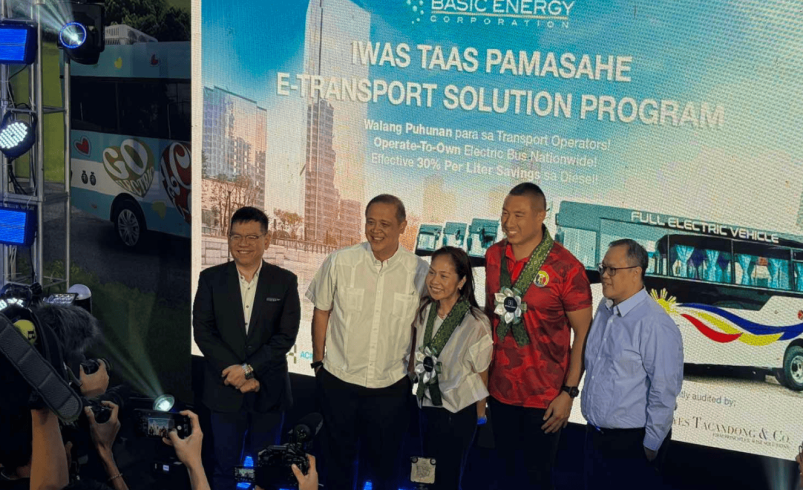
An electric transport initiative, led by Basic Energy Corporation, has been launched to provide commuters with a more affordable alternative amidst rising fuel prices, introducing locally assembled electric buses under the “Iwas-Taas Pamasahe” E-Transport Solution Program.
The program, in partnership with other corporations such as the Lopez-led First Gen and Ayala’s ACMobility, aims to reduce the impact of fuel price volatility on public transport fares by shifting to electricity-based mobility, which offers more stable and predictable operating costs.
During the program launch, organizers emphasized that the initiative was designed to directly address the burden of rising transport costs on commuters.

“Ang goal po natin dito ay maiwasan ang patuloy na pagtaas ng pamasahe… kung hindi tayo nakaasa sa diesel o gasolina, mas magiging stable ang cost ng transport,” said Baba Javier, project lead of the program, during the briefing.
The initiative deploys electric buses intended for group transport services, positioning them as a viable alternative to traditional fuel-powered vehicles that are more exposed to fluctuations in global oil prices.
By relying on electricity instead of imported fuel, the program seeks to offer a more predictable cost structure for operators, which could help stabilize fares for passengers over time.
The Department of Energy (DOE) welcomed the launch, noting that the program aligns with broader efforts to reduce the country’s dependence on imported fuels.
“This initiative shows that we can protect commuters from rising fuel costs while advancing a cleaner and more sustainable transport system. Through strong public-private collaboration, we are making affordable and reliable mobility a reality for every Filipino,” said Energy Secretary Sharon S. Garin.
The DOE said the timing of the initiative is critical, as developments in the Middle East continue to put pressure on global oil markets, which in turn affects domestic fuel prices.
Electric transport is being positioned as a practical response to these external pressures, particularly for the Philippines, which relies heavily on imported fuel.
The department added that the program supports existing policies such as the Electric Vehicle Industry Development Act and the Comprehensive Roadmap for the Electric Vehicle Industry, which aim to accelerate the adoption of electric vehicles and expand charging infrastructure nationwide.
Data from the DOE show that electric vehicle adoption in the Philippines continues to grow, with over 60,000 registered units as of 2025, alongside a growing network of charging stations across the country.
Electric vehicle charging rates also offer relatively stable costs compared to fuel, with national averages at PHP 24.03 per kWh for AC charging and PHP 30.15 per kWh for DC fast charging.
Early operations of electric transport initiatives have already demonstrated demand, with thousands of passengers served in initial runs, indicating the potential of e-transport solutions to support both commuters and operators.
As fuel prices remain volatile, initiatives like the “Iwas-Taas Pamasahe” program highlight the role of electric mobility in helping manage transport costs while supporting the country’s broader energy transition.
Can electric transport solutions help stabilize fares amidst rising fuel prices?
Follow Power Philippines on Facebook and LinkedIn or join our Viber community for more updates.