Small ripples, big power: Filipino startup Saltric lights up remote communities
- February 19, 2026
- 0
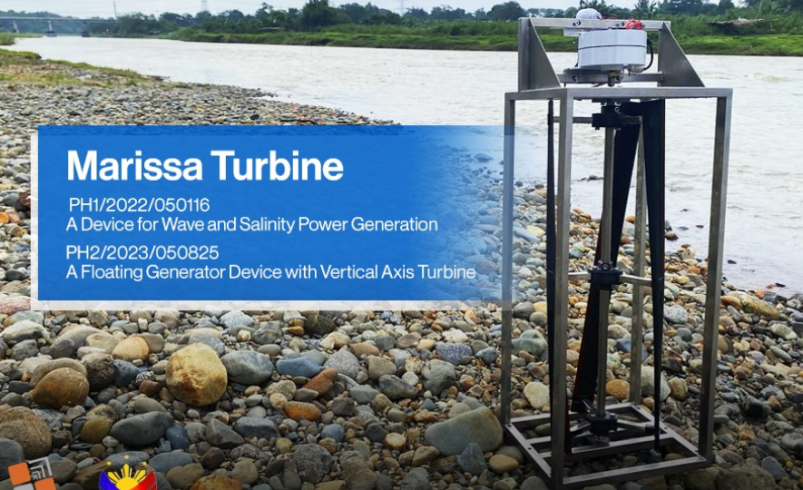
Where water flows, power could follow. Filipino innovator and entrepreneur Patrick De Guzman is turning this idea into reality with his startup Saltric, which develops the Marissa Turbine—a hydrokinetic system that generates electricity directly from flowing water without dams or large-scale infrastructure. The technology is designed to bring practical, renewable energy solutions to off-grid communities and complement the country’s broader energy transition.
The Marissa Turbine is anchored to riverbeds and built to withstand strong currents and typhoons, with a corrosion-resistant steel frame and durable foundations. Its blades are 3D-printed from recycled single-use plastic bottles to minimize environmental impact. Each unit generates up to 500 watts of continuous electricity as long as the current flows.
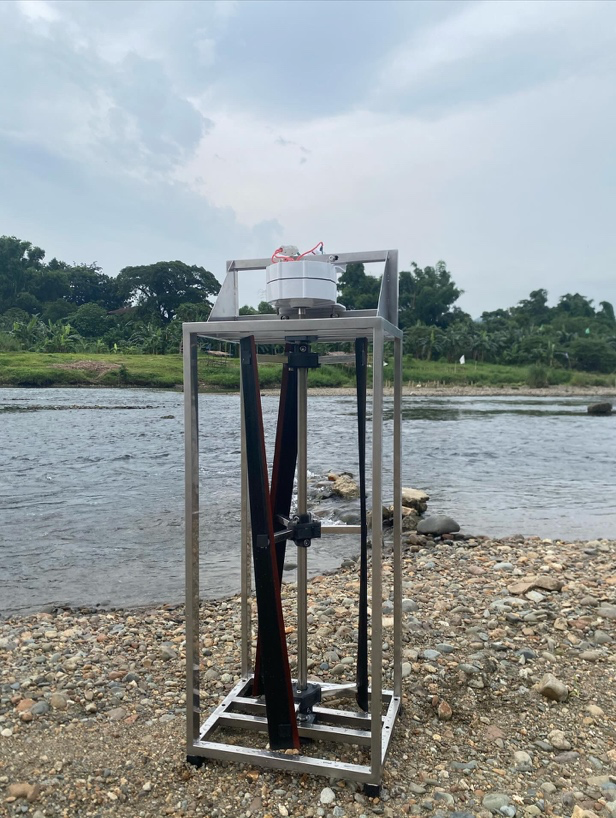
A Marissa Turbine before being tested in the Meycauayan River in Bulacan

De Guzman has spent more than a decade developing the system, refining five iterations, and investing hundreds of thousands of pesos into research and development.
“My vision is to establish the Philippines as a leader in ocean renewable power,” he said, reflecting a long-term ambition to expand the technology from rivers to ocean currents.
The technology enters the conversation at a time when the country is pushing to expand renewables to 50% of the power mix by 2040, under the roadmap of the Department of Energy. Hydropower is identified as a key contributor to that target.
As an archipelago of more than 7,600 islands, the Philippines has thousands of rivers with untapped small-scale hydro potential. Mapping studies by the Japan International Cooperation Agency have identified 252 sites in select areas suitable for small hydroelectric projects.
“We are an archipelago. But why haven’t we developed our own technology to harness water for power?” De Guzman asks.
Unlike conventional hydropower dams, Saltric’s model focuses on in-stream systems that avoid large-scale impoundment and the associated social and environmental impacts. If deployed at scale, hydrokinetic systems could also help mitigate exposure to imported fuel volatility, foreign exchange risks and geopolitical disruptions that affect generation costs.
Saltric’s first pilot ran in the Meycauayan River in Obando, Bulacan, in partnership with SM Cares and the Global Peace Foundation. Local fishers quickly found the turbines useful for lighting night fishing operations and powering ice storage for their catch.
A second prototype was installed in the Angat River with funding from the Department of Science and Technology and technical support from the University of the Philippines–Los Baños. It successfully powered two households, supporting laptops, mobile phones, and electric fans entirely from river flow.
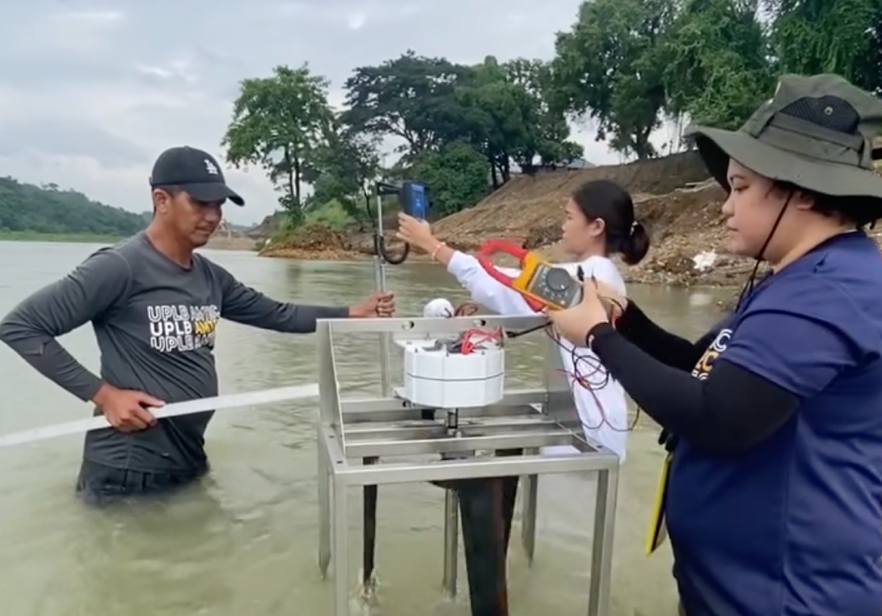
The Saltric team is setting up the turbine in the Angat River for a second test run
These early results have led Saltric to propose installations in cities pursuing smart energy initiatives. Catbalogan City in Samar, for example, is exploring the use of turbines to power street lighting along bridge corridors where strong currents converge.
This year, Saltric plans to deploy 180 units in Northern Luzon, aiming for a cumulative 500-kilowatt capacity over five years. The company is also developing turbine variants for resorts, hotels, and agricultural applications.
Saltric envisions fully submersible turbines not just in rivers–but also in oceans–capable of powering cities at scale, reflecting the company’s broader ambition to harness saltwater currents across the archipelago.
However, De Guzman acknowledged that scaling deployment will depend not only on engineering performance but also on regulatory frameworks covering permitting, tariffs, grid integration and investment incentives.
“The technology is already there. All of it now comes down to policy. That’s why I’m studying law. As an entrepreneur, you really have to understand what you’re doing,” he says.
The Marissa Turbine is protected as a utility model and industrial design, with Saltric as a registered trademark with the Philippine Intellectual Property Office. De Guzman, who is also a law student, views intellectual property as a tool to support commercialization and collaboration, not just as a legal safeguard.
“Protection also allows you to share the technology with the world without losing it. This is how innovation happens because it doesn’t start with one person,” he said.
As Saltric moves from pilot validation to wider deployment, the company’s progress will test whether small-scale hydrokinetic systems can find a lasting place in the Philippines’ distributed and renewable energy landscape—particularly in off-grid and remote communities.
With thousands of rivers across the Philippines, do you think small-scale, dam-free hydrokinetic power is the key to reaching 100% electrification in our remote islands? Share your thoughts.
Follow Power Philippines on Facebook and LinkedIn or join our Viber community for more updates.