The road to 1 gigawatt: how UGEP plans to grow from rooftops to utility-scale renewables
- January 4, 2026
- 0
In the Philippine renewable energy sector, growth rarely happens overnight. It is built project by project, milestone by milestone—often starting small before moving into scale. In our recent conversation on Power Podcast, Ruth Yu-Owen, President and CEO of Upgrade Energy Philippines (UGEP), traced how the company’s steady expansion from rooftop solar installations is now shaping its ambition to reach 1 gigawatt (GW) of renewable energy capacity by 2028.
Rather than chasing scale early, Yu-Owen described a growth path rooted in execution discipline—one that allowed UGEP to build credibility before moving into larger, more complex developments.
Starting small: building capability through rooftops

UGEP’s early years were defined by modest rooftop solar projects, many measured in just tens or hundreds of kilowatts. These installations may have been small, but Yu-Owen emphasized that they were critical in building the company’s technical foundation and operational confidence.
“When we started, we started in rooftop,” she said. “Our first project was very small.”
By delivering these projects consistently, UGEP was able to refine its engineering, procurement, and construction processes while proving its ability to execute—an essential step in a sector where track record matters as much as ambition.
Turning scale into a turning point
A major inflection point came when UGEP began aggregating multiple small rooftop projects into larger, bankable portfolios, supported by financing structures that recognized the company’s growing track record. This approach eventually led to much larger industrial installations, including one of the country’s largest rooftop solar projects for self-use.
“Even if you only earn a little, the benefit that you will get is something bigger than what it is,” Yu-Owen said. “Because people see that you can do it.”
Completing these larger projects did more than add capacity—it positioned UGEP as a credible partner for joint ventures and long-term collaborations, opening the door to the next phase of growth.
Strategic partnerships as growth accelerators
As project sizes increased, UGEP began forming strategic partnerships with established players in the energy sector, combining complementary strengths to scale faster and more efficiently.
“Our partnership is really strategic,” Yu-Owen said. “They’re the largest retail electricity supplier. We are an engineering, procurement, and construction company.”
These joint ventures allowed UGEP to deepen its presence in the commercial and industrial market while preparing for more capital-intensive developments, reinforcing the idea that scale in renewables is often achieved through collaboration rather than competition.
Moving into utility-scale solar
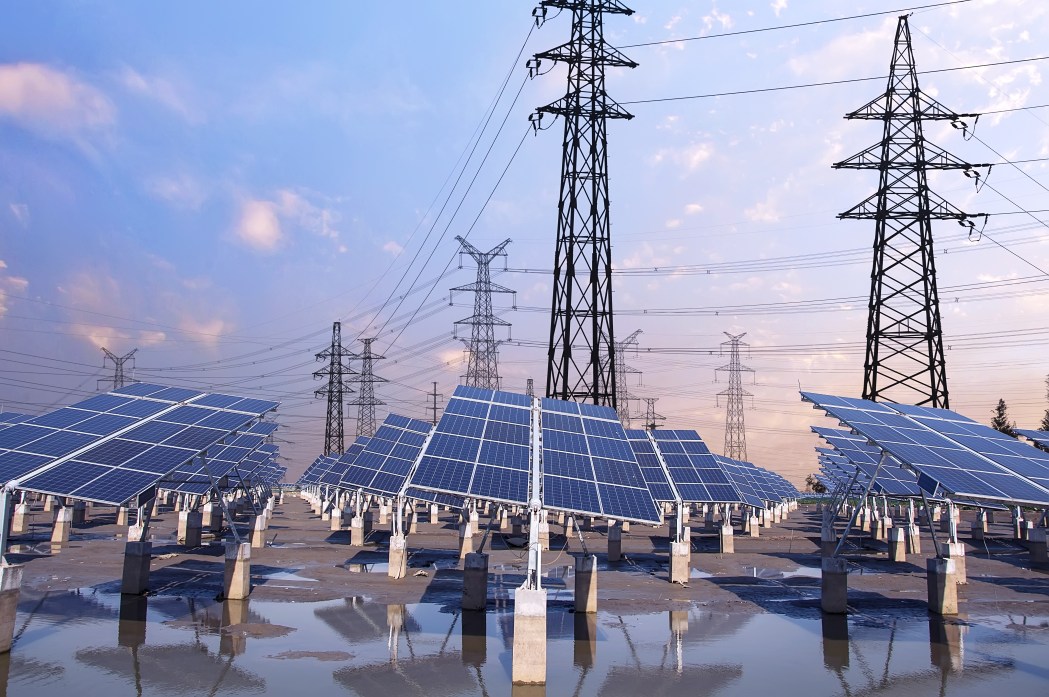
With a solid rooftop portfolio and partnerships in place, UGEP is now shifting decisively into utility-scale renewable energy. Yu-Owen said the company has more than 100 megawatts of solar projects ready to build, alongside several hundred megawatts in the development pipeline.
“To hit one gigawatt, we need to increase utility-scale projects,” she said. “That’s where the growth will come from.”
Unlike rooftop projects, utility-scale developments bring new challenges—from land acquisition and permitting to grid connection—but Yu-Owen framed this transition as a natural evolution rather than a departure from UGEP’s core strengths.
Batteries and flexibility at scale
Alongside larger solar farms, UGEP is expanding its focus on battery energy storage systems, which Yu-Owen described as increasingly viable as costs decline and system needs evolve.
“The price two years ago was so expensive,” she said. “Now, it has fallen.”
Batteries, she explained, are essential to managing intermittency as renewable capacity grows, enabling solar and wind to play a more reliable role in the energy mix—particularly as UGEP moves into larger, grid-connected projects.
A deliberate path to one gigawatt
Throughout the discussion, Yu-Owen stressed that UGEP’s 1-GW ambition is not driven by speed alone, but by sustainability—both financial and operational.
“We’re barely scratching the surface,” she said, referring to the Philippines’ renewable energy potential. “If we work together and remove the barriers little by little, we can achieve it.”
For UGEP, the road to one gigawatt is less about a single breakthrough and more about cumulative progress: starting with rooftops, earning trust through delivery, forming the right partnerships, and scaling carefully into utility-scale renewables.
As the country pushes toward higher renewable energy targets, UGEP’s journey offers a clear example of how disciplined growth—grounded in execution and collaboration—can turn small beginnings into gigawatt-scale ambition.
What lessons can other renewable energy developers draw from the path from rooftops to utility-scale projects as the Philippines accelerates its clean energy transition?
Follow Power Philippines on Facebook and LinkedIn or join our Viber community for more updates.
You can catch the full episode over on our official Youtube channel!