Marcos admin sees Malampaya gas surge as key buffer vs global fuel shocks
- March 27, 2026
- 0
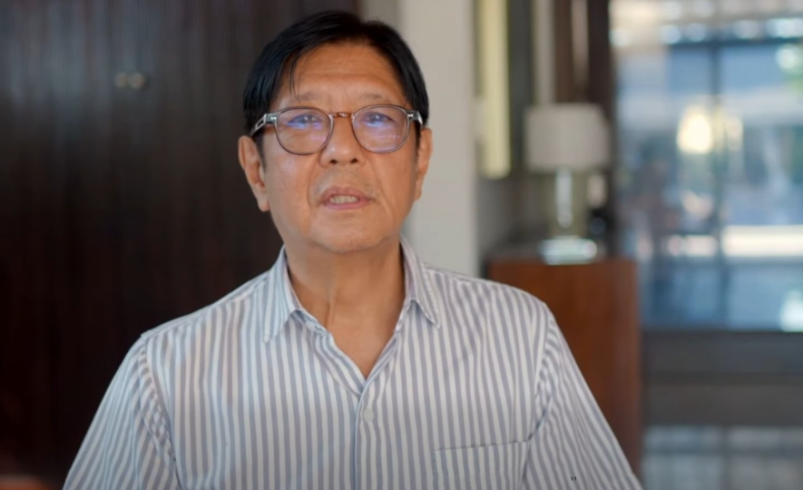
The Marcos administration and the Department of Energy (DOE) have hailed the latest Malampaya gas development milestone, describing it as a critical buffer against global fuel volatility, following the successful testing of the Camago-3 well offshore Palawan.
In a media release on March 26, DOE said Camago-3—part of the Malampaya Phase 4 (MP4) campaign under Service Contract 38—recorded tested production of up to 60 million standard cubic feet of gas per day (mmscf/d), reinforcing the country’s reliance on indigenous gas at a time of persistent geopolitical tensions affecting global energy markets.
President Ferdinand R. Marcos Jr. described the development as a reinforcement of the country’s energy security strategy anchored on domestic resources.

“This is a historic milestone for Filipino-led engineering and the country’s energy security,” Energy Secretary Sharon Garin said. “Amid the Middle East conflict, this gas discovery strengthens our domestic gas program: keeping supply dependable, reducing exposure to global fuel markets, and helping ensure that our energy transition remains affordable and secure for the Filipino people.”
DOE highlighted Camago-3 as the second successful milestone under the USD 893-million Malampaya Phase 4 program, following the earlier Malampaya East-1 (MAE-1) well. It also noted that Camago-3 points to a larger resource base, with estimated recoverable gas volumes about 2.5 times higher than MAE-1.
Energy officials said the development strengthens the policy direction of expanding domestic production to reduce dependence on imported fuels, particularly liquefied natural gas (LNG), which remains exposed to international price swings.
The department cited the widening cost gap between fuel sources, citing indigenous Malampaya gas at around PHP 4.80 per kWh compared with roughly PHP 10.30 per kWh for imported LNG. It said this differential translates into more stable pricing for consumers and industry.
The DOE also pointed to broader upstream momentum, noting the award of nine service contracts covering production and exploration areas, including the Galoc Field and prospective blocks in the West Philippine Sea and the Sulu Sea, with over USD 200 million in pledged investments.
The agency has issued a notice of bidding for the Philippine Gradiometry and Seismic Survey Project, a nationwide geoscientific initiative aimed at improving data quality for future bidding rounds and upstream development, to sustain exploration activity.
DOE said it will continue refining regulatory policies to support evolving technologies and investment conditions in the upstream petroleum sector, as it seeks to strengthen long-term supply security through indigenous resources.
With Malampaya Phase 4 advancing and new exploration rounds opening, how strongly can domestic gas realistically anchor the Philippines’ energy security strategy under the Marcos administration?
Follow Power Philippines on Facebook and LinkedIn or join our Viber community for more updates.