Philippines at forefront of Southeast Asia’s energy storage buildout –Fluence
- May 8, 2026
- 0
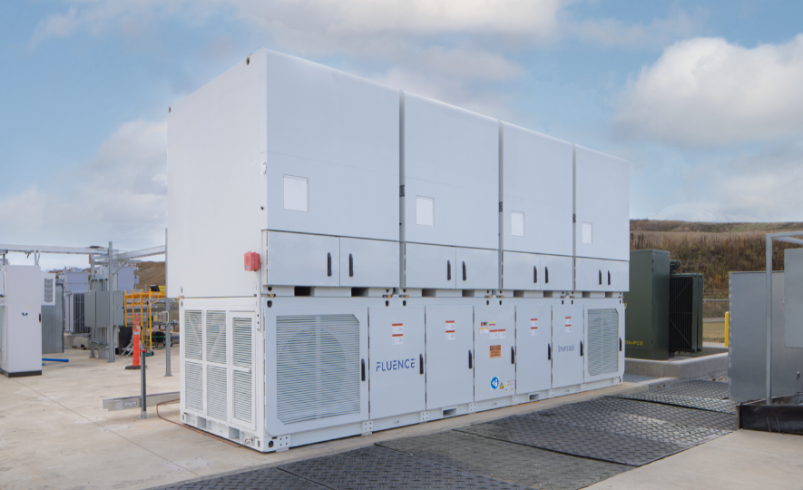
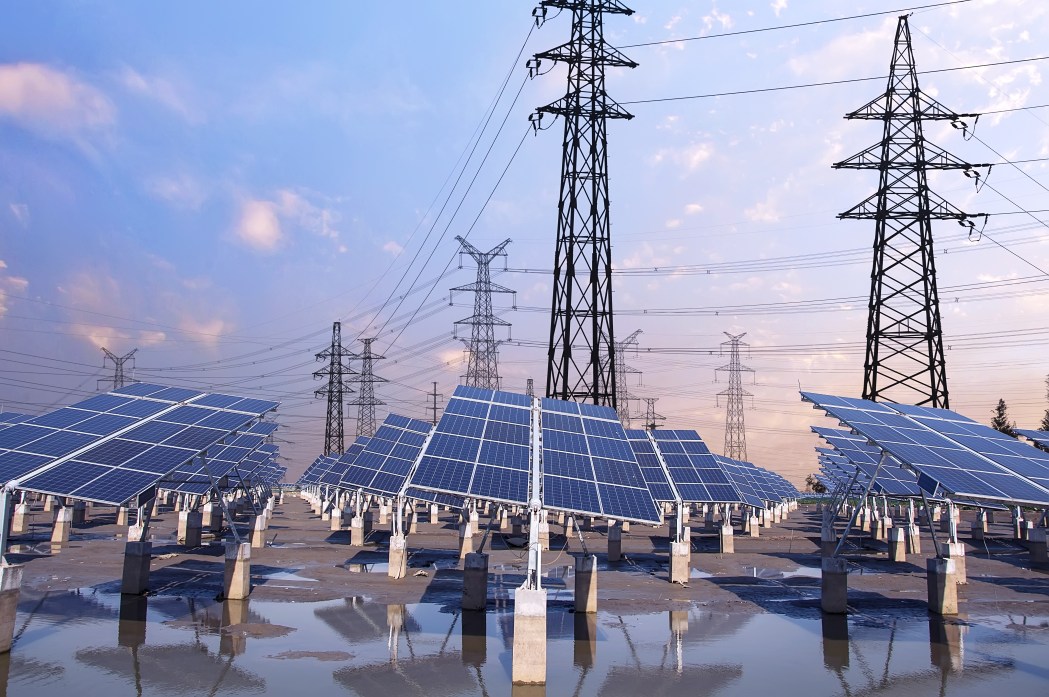
The Philippines’ renewable energy transition is beginning to expose a more complex challenge beyond generation buildout: how to integrate rising volumes of variable renewable energy into an already constrained and fragmented grid without compromising system stability.
For Fluence, one of the world’s major battery energy storage system (BESS) providers, the answer lies not only in deploying more batteries, but in fundamentally rethinking how energy storage systems are designed, deployed, and integrated into the Philippine grid.
Dennis Lee, business development manager for Fluence, said the Philippines is already emerging as one of Southeast Asia’s most advanced energy storage markets — driven by growing renewable energy ambitions, increasing grid instability concerns, and evolving government policy that now increasingly links renewable energy projects with storage capacity.

“The Philippines is leading,” he told Power Philippines. “We are more advanced as compared to our neighboring countries. The Philippines started adopting BESS in a grid forming manner, where in fact other markets or other regions or territories are just exploring or having their pilot sites for ancillary service programs.”
Across Southeast Asia, battery energy storage deployment is accelerating but remains uneven, with most markets still in early-stage buildout. According to the International Energy Agency (IEA) and BloombergNEF, grid-scale BESS installations in the region are being driven primarily by renewable integration needs, with Australia (often included in Asia-Pacific comparisons) and China dominating global capacity.
ASEAN markets remain comparatively nascent but fast-growing. Countries such as the Philippines, Thailand, Vietnam, and Indonesia are all expanding storage pipelines tied to solar and wind expansion and grid stability requirements.
In the Philippines specifically, recent Department of Energy (DOE) policy directions mandating variable renewable energy (VRE) projects to integrate storage is expected to accelerate project development, particularly for ancillary services and grid support applications.
Why batteries are suddenly becoming essential
The government has set ambitious renewable energy targets, aiming for renewables to account for 35% of the power generation mix by 2030 and 50% by 2050.
At the same time, the country continues to face recurring transmission constraints, curtailment issues, and grid instability, particularly in island regions such as Visayas and Mindanao.
“We are reacting based on what the Philippine market is asking for,” he said. “The strongest demand for BESS are in the utilities, in the ancillary service market, and also in the renewable developers.”
That shift reflects a broader trend across Asia-Pacific, where grids with rising renewable penetration are increasingly relying on storage to stabilize fluctuating power supply. Markets such as Australia, Taiwan, and parts of Europe have already begun treating battery systems as critical grid infrastructure rather than optional add-ons.
In the Philippines, the economics are beginning to point in the same direction.
“If there is a solar plant, there should be batteries,” Lee said. “The economics dictate that it is so much better for the developer to have batteries in their solar farm.”
Beyond storage: stabilizing the grid
While batteries are often discussed in terms of storing excess solar energy for nighttime use, Lee stressed that storage systems are becoming equally important for maintaining grid stability itself.
“It is useless having multiple or surplus of energy if your grid is unstable,” he said.
One of the industry’s growing focus areas is “grid-forming” capability — battery technologies capable of helping stabilize frequency and voltage fluctuations and even restarting sections of the grid after outages.
Lee described the need for grid-forming systems in the Philippines as “very urgent,” especially as renewable penetration accelerates.
“We already know there will be problems in terms of grid stability,” he said. “So we need grid-forming solutions as soon as possible.”
He pointed to recent international grid failures as warnings for markets rapidly scaling renewables without sufficient balancing technologies.
For the Philippines, an archipelagic grid with fragmented transmission infrastructure presents unique operational challenges. Different regions may require different forms of grid-forming support, from black-start capability to islanding protection and inertia support.
“It’s not a one-size-fits-all,” Lee explained. “We need to interact with NGCP (National Grid Corporation of the Philippines) and identify and pinpoint the specific problems and concerns depending on which region.”
Fluence advances modular systems
Beyond policy and grid strategy, Fluence is also betting that the next evolution in battery deployment will come from modular system design.
Lee highlighted Fluence’s modular BESS architecture as one of the company’s most significant technological developments — particularly for geographically challenging markets like the Philippines.
“We are the first organization or entity to offer a modular solution for ESS,” he said.
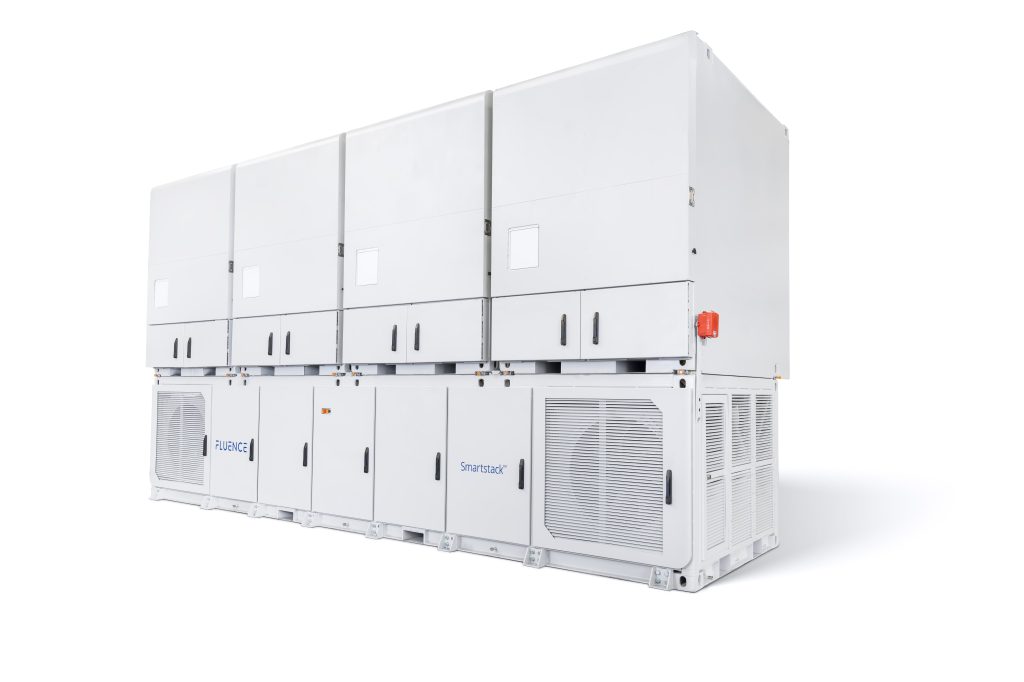
Unlike traditional containerized battery systems, modular units can be transported and assembled in smaller sections. That flexibility, Lee argued, directly addresses some of the Philippines’ biggest infrastructure bottlenecks.
“In the Philippines, it’s not always a sunny day,” he said. “There will be storms, there will be challenges in logistics, the bridge will shake.”
Traditional containerized systems can weigh tens of tons, creating transport challenges in remote or island locations with limited road and bridge capacity. Modular systems, by contrast, allow components to be delivered separately and assembled on site.
“Low-integrity bridges can accommodate modular systems,” Lee explained. “Whereas the old-fashioned solution, if you’re going to pass a bridge with a limit of 10 tons, how are you going to pass 50 tons of equipment there?”
The modular approach also changes how operators manage maintenance and operational risk.
“With modular, you are only shutting down a portion of your capacity,” Lee said. “It’s not the 100% of capacity you are losing.”
Safety is another factor driving interest in modular systems.
“We also consider fire safety,” he said. “If a whole container is burned, that whole container is burned. Whereas modular — it is contained in that specific area only.”
Fluence has already deployed the modular system in markets including Taiwan, Europe, and Chile, and Lee said the company is optimistic about introducing the technology into the Philippine market in the near term.
Philippine hub for regional operations
Beyond the technology itself, Fluence’s Philippine operations are quietly becoming a major pillar of the company’s Asia-Pacific business.
Established locally in 2019, Fluence gained entry through a partnership with San Miguel Corporation. With over 20 projects in its local portfolio, the company is expecting to double its BESS footprint in the country within the next three to five years.
Headquartered in Bonifacio Global City, Fluence’s Philippine office now has roughly 90 personnel, according to Lee, many of whom are involved in technical support, engineering, commissioning, and EPC work.
“Fluence Philippines is a powerhouse for Fluence Asia Pacific,” he said.
According to him, Filipino engineers are increasingly being deployed abroad to support projects in Taiwan, Japan, and Australia.
“Our engineers are based in the Philippines and they are being sent abroad to Taiwan, Japan, Australia to do commissioning and troubleshooting of our equipment,” he said.
For Lee, that growing technical expertise reflects the Philippines’ increasingly strategic role in the regional energy transition.
“The expertise is being imparted to Filipino people,” he said. “Fluence Asia Pacific is utilizing Filipino talents in engaging or installing, repairing, and troubleshooting energy storage systems.”
Despite strong momentum, Lee acknowledged that major hurdles remain for the Philippine BESS market, including transmission congestion, right-of-way delays, permitting bottlenecks, and evolving market rules that can complicate project bankability.
Still, he believes the long-term direction is clear: energy storage will eventually become a standard component of nearly every major energy project in the country.
“We view it as batteries will be mandatory in every energy-related market,” Lee said.
“Our focus is to make energy storage a mainstream part of the Philippine grid, especially in the Philippine energy transition,” he said. “We are highly focused on the safety, reliability, and productability of the equipment,” he added.
Follow Power Philippines on Facebook and LinkedIn or join our Viber community for news and updates on the Philippine energy sector.