New ASEAN grid modelling tool could reshape ASEAN cross-border power planning
- June 5, 2026
- 0
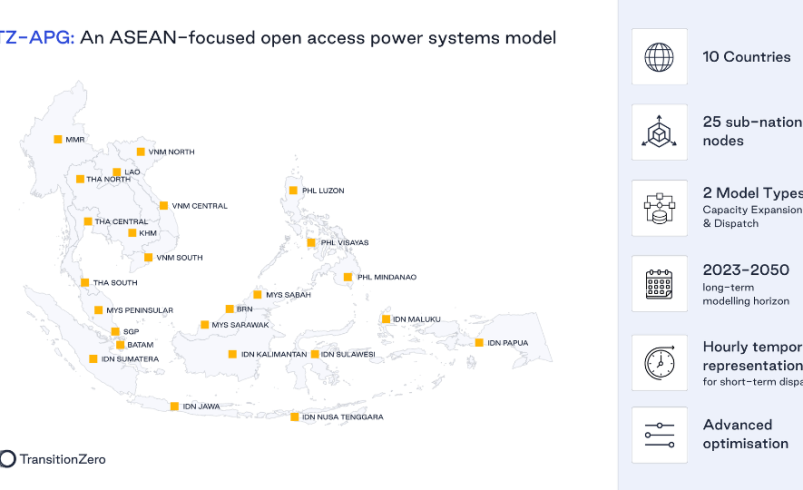
Climate tech non-profit TransitionZero has expanded its flagship platform Scenario Builder to support ASEAN-wide power system modelling, introducing a multi-country capability that integrates 10 Southeast Asian economies, including the Philippines, into a single analytical framework.
The upgrade allows energy planners to model cross-border electricity systems across ASEAN countries using one open-access platform, covering 25 nodes across the region.
According to TransitionZero, the ASEAN rollout marks the first time its no-code modelling system can simulate an interconnected regional grid at scale, reflecting growing policy and investment interest in cross-border power trade and interconnection development.

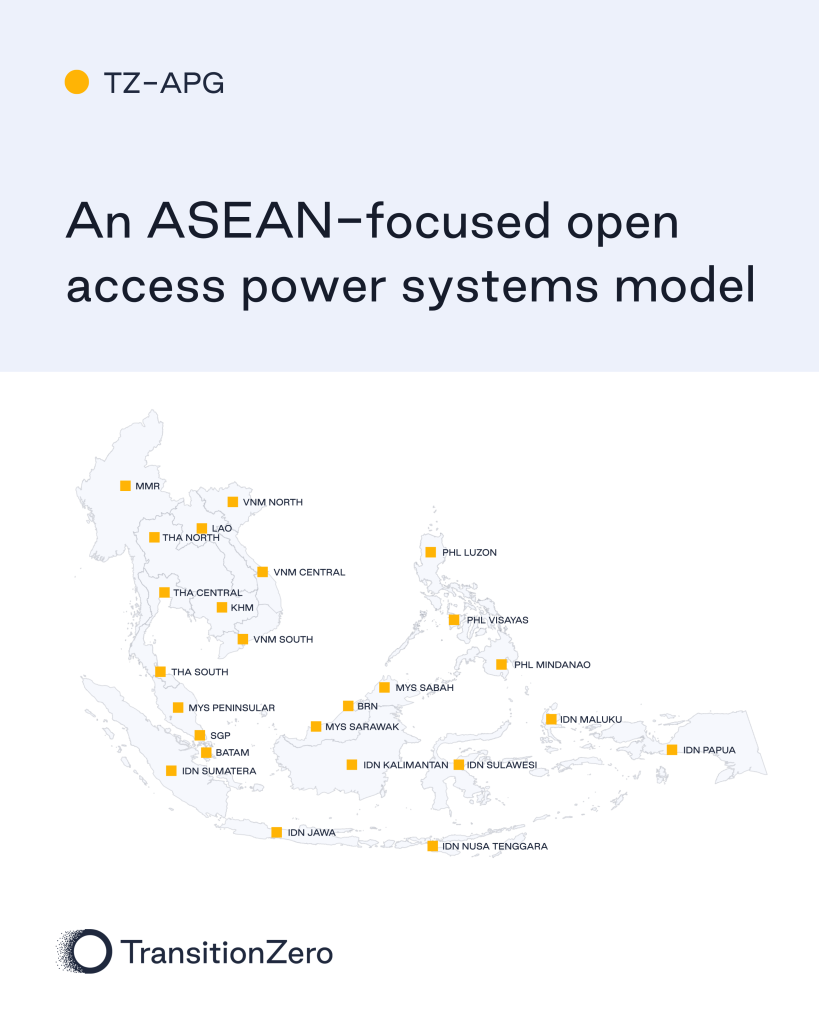
“The new multi-country modelling feature gives users in Singapore, Malaysia, Indonesia, the Philippines, Thailand, Vietnam, Myanmar, Laos, Brunei, and Cambodia an open access modelling environment for regional power-system analysis,” the organisation said.
The platform arrives as ASEAN economies move toward more complex electricity market arrangements, where long-term bilateral power purchase agreements are expected to coexist with emerging short-term cross-border electricity trading mechanisms.
TransitionZero said the capability is designed to address long-standing gaps in regional energy planning tools, which have often been fragmented, costly, or reliant on commissioned bespoke studies that limit comparability across jurisdictions.
“Regional grid planning in ASEAN has entered a new phase. The conversation has moved from whether to build interconnectors to how cross-border markets get designed, how projects get financed, and how decisions get made across jurisdictions,” said Matt Gray, CEO of TransitionZero.
“Those are complex, high-stakes questions that require tools different stakeholders can use themselves, with transparent assumptions. Scenario Builder’s multi-country modelling gives ASEAN’s energy community the tooling to build those models and test those scenarios, so capital can be committed and design discussions can be properly informed,” he explained.
The platform enables users to run integrated simulations of generation, transmission, dispatch, and trade flows across multiple national systems, allowing planners to assess how infrastructure decisions in one market affect neighbouring grids.
It also allows scenario testing for renewable energy expansion, transmission bottlenecks, and system-wide cost impacts under different cross-border trading structures—without the need for separate national models stitched together post-analysis.
“The APG model gives planners, researchers, and institutions a practical way to understand how power systems interact across Southeast Asia. By bringing generation, transmission, dispatch, and trade flows into one open modelling environment, Scenario Builder helps users compare options, understand trade-offs, and work from transparent assumptions,” said Ajita Mishra, Head of Market Development at TransitionZero.
“What we are excited to see now is how users apply this capability to their own planning questions, and how open modelling can support more practical, evidence-based conversations across the region,” she said.
TransitionZero said the system is built on open-access principles intended to reduce reliance on proprietary modelling tools and expand in-house analytical capacity among governments, regulators, and system operators.
For the Philippines, which is increasingly exploring regional interconnection opportunities and renewable energy integration pathways, the platform adds a new layer of visibility into how domestic planning decisions could interact with broader ASEAN power flows.
The ASEAN-wide model is now live on Scenario Builder and is accessible via TransitionZero’s platform.
What role should open-access regional modelling tools play in shaping the Philippines’ power system planning and its participation in an integrated ASEAN grid?
Follow Power Philippines on Facebook and LinkedIn or join our Viber community for more news and updates in the Philippine energy sector.