Baguio advances digital transformation with 2030 net-zero roadmap
- June 5, 2026
- 0
Baguio City is preparing a net-zero roadmap for 2030 as part of its broader effort to become a smarter, more sustainable, and resilient urban center, according to Mayor Benjamin Magalong.
Speaking during the “Implementing Smart City Strategies in Baguio City” session at the Smart City Convention held on June 1–2 at SMX Aura in Taguig City, Magalong said the city is also discussing a net-zero ordinance and plans to establish a Net Zero Investors Alliance to support its environmental goals.
“We are now preparing the smart city net zero roadmap for the city for 2030,” Magalong said.

The initiative forms part of Baguio’s wider smart city transformation, which seeks to use technology, data, and citizen participation to improve governance, public services, sustainability, and disaster resilience.
“We made the bold decision to transform Baguio into a smart city by 2027. And we are not yet a smart city, but we endeavor to become one,” he said.
Magalong stressed that smart cities are not solely about technology. Instead, they require the integration of governance, infrastructure, data, and community participation to improve the quality of life of residents.
To support this effort, Baguio has invested in a Cisco-powered Smart City Command Center that consolidates data from multiple city systems into a single platform.
The command center supports disaster response, traffic management, environmental monitoring, flood early warning systems, public safety operations, and emergency response services. According to Magalong, the integrated platform allows operators to manage city systems through a unified dashboard rather than multiple standalone applications.
The city is also relying on data-driven planning through initiatives such as Project Minerva, which gathers information on population trends, air quality, water quality, and other key urban indicators.
“We’re using data analytics and sensing systems to constantly update us on the state of the city’s environment,” Magalong said.
Another major component of Baguio’s smart city strategy is the development of a digital twin—a virtual model of the city that can be used to simulate future scenarios and support planning decisions.
Magalong said the digital twin will help guide transportation planning, land use decisions, economic development strategies, disaster preparedness efforts, and community engagement.
The mayor noted that Baguio’s transformation was driven by mounting urban pressures. Originally designed for only 25,000 to 30,000 residents, the city now has a population of more than 400,000, with a daytime population of approximately 650,000.
Over the years, the city has faced growing challenges related to traffic congestion, water supply shortages, waste management, pollution, shrinking open spaces, and environmental degradation.
“In 2002, our demand for water exceeded supply,” Magalong said as he outlined the city’s resource constraints.
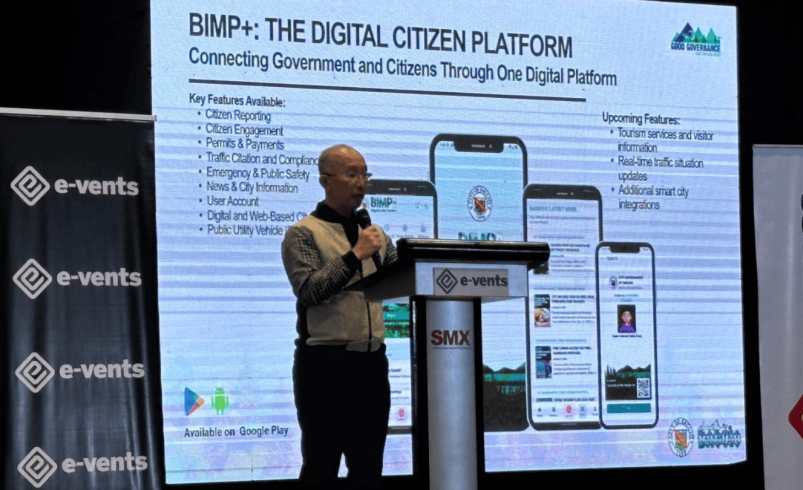
The city has also expanded citizen-facing digital services through the Baguio In My Pocket Plus (BIM Plus) platform, which provides access to permits, payments, emergency services, reporting tools, and other government services.
According to Magalong, citizen participation remains a key component of the city’s smart city vision.
“But its real value is participation and inclusion,” he said.
As Baguio advances its smart city ambitions, the city is increasingly linking digital transformation with sustainability objectives, positioning data, environmental monitoring, and net-zero planning as key tools in addressing future urban challenges.
As more Philippine cities grapple with rising populations, environmental pressures, and infrastructure constraints, can data-driven governance and net-zero strategies help build more sustainable urban communities?
Follow Power Philippines on Facebook and LinkedIn or join our Viber community for more updates.