Rapid restoration teams deployed as Mindanao quake cuts power to 864,000 households
- June 8, 2026
- 0
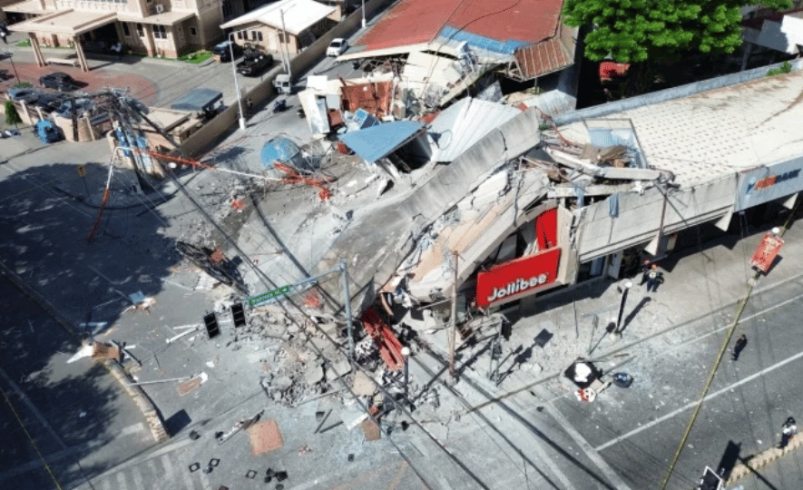
Photo credit: Reuters
A magnitude 7.8 earthquake that struck Southern Mindanao on Monday triggered widespread power interruptions across several franchise areas, prompting the Department of Energy (DOE) and partner agencies to deploy rapid response teams and emergency restoration measures.
Initial assessments show outages affecting an estimated 864,000 households, spanning the service areas of multiple electric cooperatives and distribution utilities, including SOCOTECO I and II, SUKELCO, NORDECO, as well as Davao Light and Power Company (DLPC) and Cotabato Light and Power Company (CLPC).
Field inspections remain ongoing as utilities work to determine the full extent of damage to generation, transmission, and distribution infrastructure.

The DOE, working with the National Electrification Administration (NEA) and the National Power Corporation (NPC), activated coordinated emergency protocols immediately after the quake. The response also involves the National Transmission Corporation (TransCo), the National Grid Corporation of the Philippines (NGCP), electric cooperatives, and generation companies to assess system integrity and support restoration planning.
To accelerate field operations, the DOE and NEA mobilized “Task Force Kapatid,” a mutual aid mechanism that deploys lineworkers and technical personnel from unaffected cooperatives to assist heavily impacted areas. The task force is intended to augment manpower and equipment in locations where infrastructure damage and safety risks slow local restoration efforts.
Authorities have instructed distribution utilities to prioritize energization of critical facilities, particularly hospitals and evacuation centers, as part of immediate recovery operations. Agencies are also monitoring backup power systems to ensure continuity of essential services while full grid assessments continue.
Restoration work is being staged cautiously due to ongoing aftershocks, which continue to pose risks to field personnel and infrastructure. Teams have been directed to proceed only when conditions are deemed safe for inspection and repair activities.
“The safety of our communities and our energy workers remains our foremost priority. Our teams are on the ground working closely with electric cooperatives, critical sectors, and other energy sector stakeholders to assess conditions and restore electricity services safely, responsibly, and at the soonest possible time,” Energy Secretary Sharon S. Garin said.
DOE has advised the public to remain alert for aftershocks, avoid damaged electrical infrastructure, and report hazards such as downed power lines to local utilities or authorities. Coordination with the Philippine Institute of Volcanology and Seismology (PHIVOLCS) continues for seismic updates that may affect restoration timelines.
The magnitude 7.8 offshore earthquake hit early Monday morning off Sarangani province, with tremors felt across multiple Philippine provinces and as far as Manado in Indonesia’s Sulawesi island, about 420 kilometers away. Tsunami warnings were raised across parts of the southern Philippines, northern Indonesia, and Malaysia’s Sabah state.
Philippine authorities were still validating initial reports of casualties and injuries, with early figures indicating 129 people hurt, mostly from falling debris, as disaster response agencies continue damage assessments across affected areas.
How resilient is Mindanao’s power infrastructure in the face of major seismic events—and what gaps in coordination or redundancy should be addressed moving forward?
Follow Power Philippines on Facebook and LinkedIn or join our Viber community for more news and updates on the Philippine energy sector.