Trinasolar sees solar-plus-storage and weather resilience driving Philippine market growth
- June 25, 2026
- 0
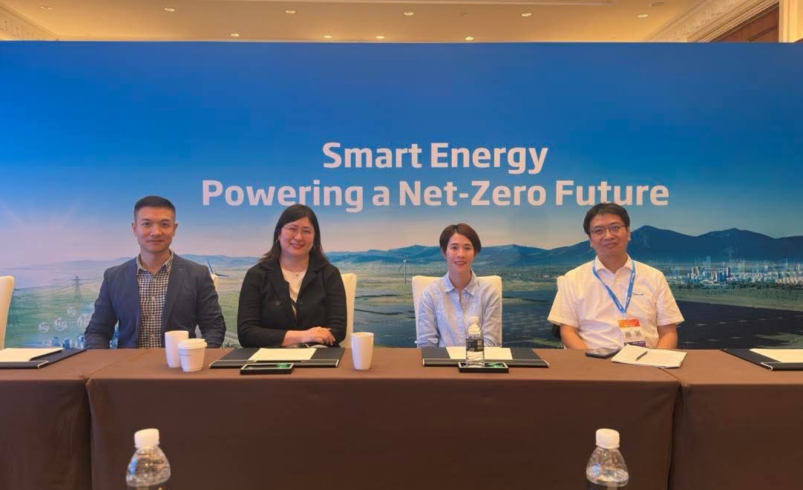
Trinasolar sees growing opportunities in the Philippines as the market moves beyond standalone solar projects and increasingly adopts battery energy storage systems (BESS) to improve reliability and long-term performance.
Speaking to Power Philippines during the SNEC PV Power Expo in Shanghai, Elva Wang, Group Director for South, Southeast, and Central Asia at Trinasolar, said the Philippines remains one of the company’s key markets in Southeast Asia due to its strong solar potential and expanding renewable energy sector.
“As a smart energy provider, Trinasolar serves customers globally. For Southeast Asian markets, it’s definitely considered a rapid growth market,” Wang said.

She noted that while solar deployment continues to expand across the region, developers are increasingly looking at storage solutions to improve dispatchability, grid readiness, and long-term system performance.
“Currently, BESS is a very popular topic and it has really increased quite fast globally. And of course, in Southeast Asia and the Philippines, the most immediate relevance is the PV plus storage,” Wang said.
According to Wang, the combination of solar photovoltaic (PV) systems and battery storage is becoming increasingly important as project developers seek higher energy yields, improved project economics, and more reliable power delivery.
She pointed to Trinasolar’s latest Vertex N G3 solar modules and Elementa 3 energy storage platform as examples of technologies designed to support integrated solar and storage deployments. Wang said suppliers with both PV and BESS capabilities can also help developers reduce vendor complexity and support more coordinated project delivery and after-sales service.
Beyond growing demand for storage, Wang emphasized that the Philippines presents unique operational challenges that require localized solutions.
She said renewable energy projects in the country must be designed to withstand typhoons, strong winds, and other weather-related risks that can affect long-term performance.
“For the Philippines, it’s a very good example. It has very strong solar potential, and the renewable energy projects also need to be designed for local operation conditions, including typhoons, strong winds, and other challenging weather risks,” she said.
To address these conditions, Trinasolar has introduced products such as its Shield module, which was developed to withstand harsher weather environments and support reliable operations in markets exposed to extreme wind conditions.
Wang said this localized approach reflects Trinasolar’s broader strategy across Southeast Asia, where energy markets differ significantly in terms of grid conditions, regulatory frameworks, climate risks, and project requirements.
She added that as the industry evolves, developers should increasingly evaluate projects based on long-term value rather than upfront equipment costs alone.
While Trinasolar remains widely known for its solar modules, Wang noted that the company has expanded its focus beyond PV manufacturing and has invested in energy storage research and development since 2015.
Today, she said, Trinasolar positions itself as a provider of integrated PV, energy storage, and smart energy solutions as renewable energy markets continue to mature.
As renewable energy deployment accelerates in the Philippines, will developers increasingly prioritize storage and climate resilience alongside generation capacity when selecting technologies for future projects?
Follow Power Philippines on Facebook and LinkedIn or join our Viber community for more updates.