ADB pledges up to USD 1.75B support for Philippines as global fuel shocks bite
- May 16, 2026
- 0
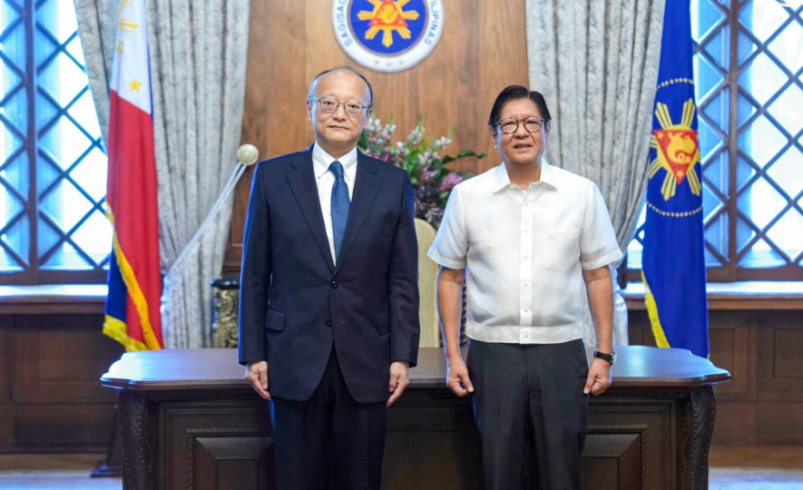
Photo credit: PCO
The Asian Development Bank (ADB) has expressed readiness to provide up to USD 1.75 billion in additional financing to the Philippines to help manage the economic fallout from the ongoing Middle East conflict, following a courtesy call between ADB President Masato Kanda and Philippine President Ferdinand R. Marcos Jr. at Malacañang Palace on Friday.
Kanda was accompanied by other ADB executives during the visit, where the Manila-based multilateral lender reaffirmed its role in supporting the Philippines through external shocks.

“The Philippines is ADB’s home, and we see the strain this crisis is placing on Filipino families, workers, and businesses,” Kanda said. “ADB will act swiftly to support the government to protect vulnerable communities, manage fiscal pressures, and strengthen the economy’s resilience.”
The financing offer forms part of a broader support package that includes policy-based and countercyclical lending, as well as possible trade finance assistance.
It is on top of around USD 2 billion in policy-based loans already being prepared for the Philippines this year, underscoring the scale of multilateral support being mobilized amid global uncertainty.
The Philippines has been significantly exposed to the impact of the Middle East conflict due to its reliance on imported oil, fertilizers, and other global commodities. The pressure has already prompted the government to declare a state of national energy emergency under Executive Order No. 110 signed on March 24.
EO 110 cited “the ongoing conflict in the Middle East, and the resulting imminent danger posed upon the availability and stability of the country’s energy supply,” and laid out measures to ensure “the uninterrupted delivery of essential services, the continuity of economic activity, and the welfare of all citizens, particularly vulnerable sectors.”
It also adopted the Unified Package for Livelihoods, Industry, Food, and Transport (UPLIFT) as the government’s coordinated response framework. The UPLIFT Committee, chaired by President Marcos, has been convened to oversee implementation of the program, which includes fuel subsidies, excise tax reductions on select petroleum products, and targeted cash assistance for transport workers, farmers, fishers, and repatriated overseas Filipino workers.
ADB said its support is intended to help the government manage fiscal pressures while protecting vulnerable sectors and strengthening longer-term resilience. Its strategy includes advisory work with key agencies such as the Department of Agriculture on domestic fertilizer security and the Department of Social Welfare and Development on social protection systems.
It also covers support for energy security, clean energy development, energy efficiency, and mass transit investments aimed at reducing the country’s exposure to fuel-price shocks.
ADB’s broader development priorities focus on human development, economic competitiveness, and quality infrastructure, alongside disaster resilience, climate adaptation, and skills development for employment recovery.
Founded in 1966 and owned by 69 members—50 from the region—ADB describes itself as a leading multilateral development bank supporting sustainable, inclusive, and resilient growth across Asia and the Pacific.
How should the Philippines balance immediate energy security pressures with longer-term investments in resilience and clean energy under rising external shocks?
Follow Power Philippines on Facebook and LinkedIn or join our Viber community for more news and updates on the Philippine energy sector.