PIDS study: PH remains energy insecure despite efficiency gains
- July 8, 2026
- 0
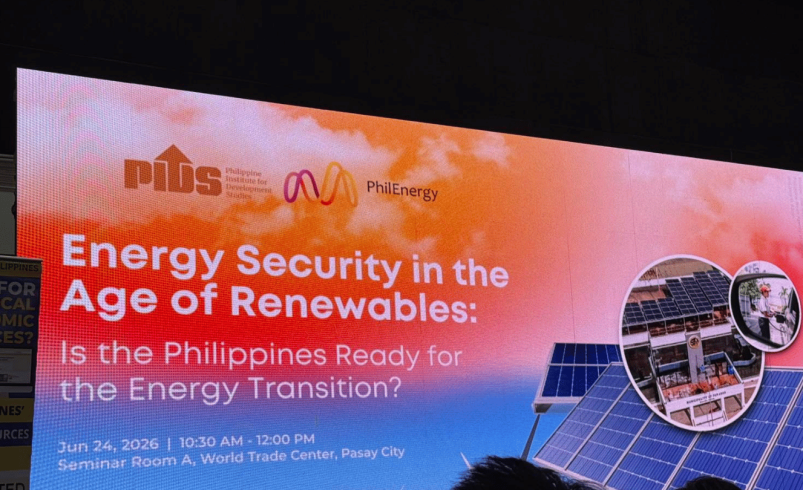
The Philippines remains energy insecure despite improvements in energy efficiency, as the country faces growing exposure to global fuel supply disruptions and tightening power reserves, according to a study presented by the Philippine Institute for Development Studies (PIDS).
Presenting the findings of “How Energy Secure Is the Philippines?” PIDS Senior Research Fellow Adoracion Navarro said the country continues to face several weaknesses across the energy system.
“The short answer to how energy secure is the Philippines—we are insecure,” Navarro said.
The study assessed the country’s energy security across six dimensions: sufficiency, reliability, resilience, affordability, accessibility, and sustainability.
It found that fossil fuels still accounted for around 70% of the country’s total primary energy supply in 2024, while the country’s energy self-sufficiency ratio continued its long-term decline to around 45%.
Crude oil imports have also become increasingly concentrated in the Middle East, with nearly all of the country’s crude supply now coming from the region. The study said this leaves the Philippines exposed to geopolitical tensions, global price shocks, and possible supply disruptions.
The study also pointed to growing strain on the country’s power system.
While electricity demand continues to grow, reserve margins have steadily tightened due to aging power plants, transmission constraints, and grid congestion.
In 2024, the Wholesale Electricity Spot Market was suspended 2,401 times due to red-alert conditions, highlighting the pressure on the country’s electricity system. WESM is the country’s spot market where electricity is traded to meet real-time supply and demand.
The study also found that the Philippines continues to have one of Southeast Asia’s highest electricity prices, while many households still lack reliable access to electricity.
Despite these challenges, Navarro noted that the country has steadily improved its energy efficiency, with households and businesses using less energy for every unit of economic output than in previous years.
“Where the government needs more insights are our own risks and requisites, requirements, and hopefully our private sector stakeholders would be able to give insights to the government as well, like the necessary investments and policy challenges,” Navarro said.
In response, the Department of Energy (DOE) said many of the study’s recommendations are already being incorporated into the Philippine Energy Plan.
DOE Supervising Science Research Specialist Marietta Quejada said one of the government’s priority initiatives is the establishment of a Strategic Petroleum Reserve to strengthen the country’s preparedness against global supply disruptions.
She said the DOE is also studying measures such as increasing mandatory private-sector oil inventories and establishing government-controlled reserves to improve the country’s emergency fuel buffer.
The DOE is also pursuing upstream resource development, smart grid modernization, household-based electrification, and its target of increasing the share of renewable energy in the power generation mix to 35% by 2030 and 50% by 2040.
“We plan to institutionalize the monitoring of energy security. Actually, the main goal for the Philippine Energy Plan is energy security,” Quejada said.
The Energy Regulatory Commission (ERC) said battery energy storage systems will be critical as more renewable energy capacity enters the grid.
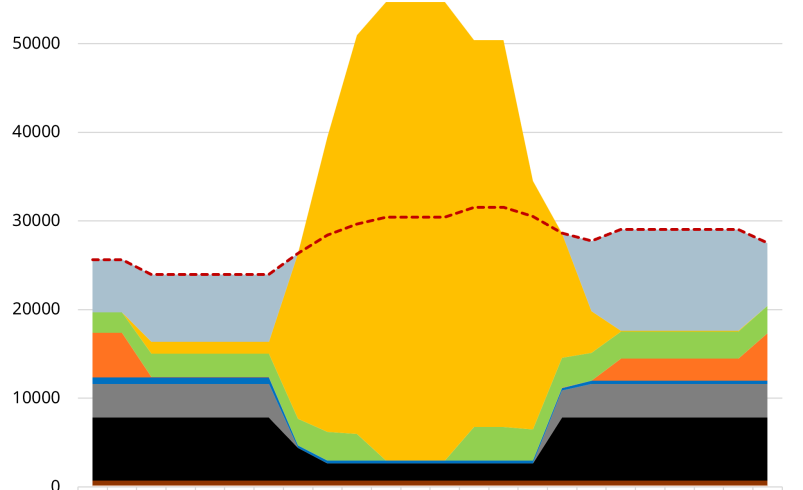
ERC Market Operations Service Director Sharon Ocampo-Montañer said the challenge is no longer simply generating more solar power, but having enough storage to capture excess daytime generation and use it during evening peak demand, when red alerts are more likely to occur.
“If we have batteries—enough batteries—we could shift this overgeneration to the evening peak. So, I think flexibility will be a big challenge when we push for more renewable energy,” Ocampo-Montañer said.
From the private sector, First Gen Corporation Vice President and Head of Strategy and Planning Jay Joel Soriano said the country’s energy transition should focus not only on expanding renewable energy, but also on developing indigenous resources capable of providing reliable 24/7 electricity.
Soriano identified geothermal energy as one of the country’s strategic advantages because it can provide continuous, weather-independent power while reducing dependence on imported fuels.
“By combining the state’s power to de-risk exploration, and the private sector’s speed, capital, and operational efficiency, we can transition from a vulnerable, import-dependent grid to an indigenous, secure, and green energy economy,” he said.
The discussion was held during the PhilEnergy Expo 2026, where policymakers, regulators, industry leaders, and researchers examined the policy and investment priorities needed to ensure that the country’s clean energy transition also delivers affordable, reliable, resilient, and secure electricity for Filipino consumers.
Can the Philippines strengthen energy security while keeping its clean energy transition affordable and reliable for consumers?
Follow Power Philippines on Facebook and LinkedIn or join our Viber community for more updates.