When engineering becomes the bottleneck: How digital tools are reshaping Philippine solar development
- February 12, 2026
- 0
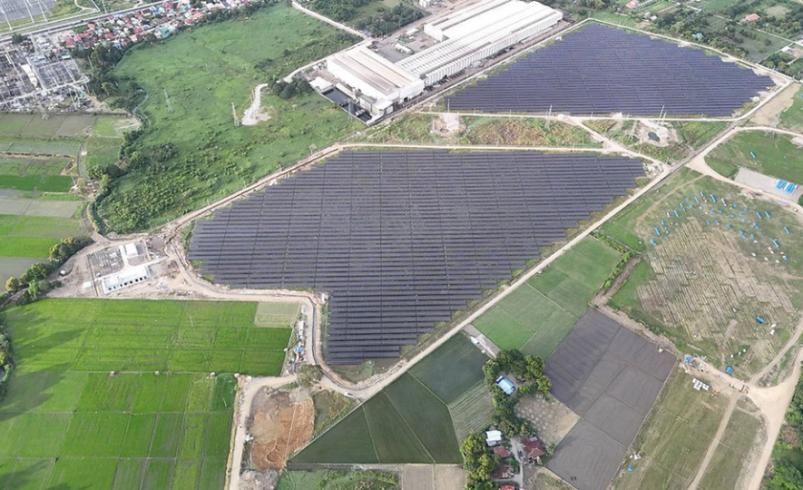
Solar projects are multiplying across Luzon, Visayas, and Mindanao, all of which are pushed by aggressive capacity targets and a shifting energy mix. But as pipelines expand, the constraint facing developers is no longer just land acquisition or permitting. Day by day it is increasingly obvious that the bottleneck lies in engineering speed, grid readiness, and the ability to make confident design decisions early.
For Gillian Oh, Account Executive for Southeast Asia at RatedPower, the Philippine market represents a case study in how geography and scale are redefining what it means to develop solar efficiently. In an exclusive interview with Power Philippines, she explains how digital engineering tools are becoming a silent but critical layer in the country’s renewable build-out.
Designing for an archipelago

The Philippines’ archipelagic geography creates engineering variables that differ from site to site. Uneven terrain, fragmented land parcels, and feeder-level grid constraints vary not just by province, but by each island.
“To address these conditions, project teams need to test multiple layout configurations quickly,” Oh explained. RatedPower automates layout generation across different topographies, allowing developers to simulate shading scenarios and compare tracker systems against fixed-tilt designs. These are tracker systems that follow the sun throughout the day to increase output, while fixed-tilt systems remain stationary and are typically simpler and cheaper to install.
The platform also helps teams optimize AC/DC ratios – which are the balance between a plant’s panel capacity (DC) and its inverter or grid export capacity (AC). That ratio directly affects energy yield and equipment sizing. “What used to take weeks of back-and-forth engineering cycles can now be done in just a few hours,” she said, enabling project developers to move faster into permitting and grid compliance submissions.
From feasibility to financing
Early-stage engineering has implications for project financing. Lenders require clear, standardized documentation before committing capital, especially in the Philippine market where grid concerns and interconnection risks are common.
RatedPower generates single-line diagrams (SLDs) – drawings that show how electricity flows from solar modules to the grid – along with energy estimates, loss reports, and Bills of Quantities (BoQs), to showcase the materials and components lists required to move onto construction.
Across the Asia-Pacific region, including the Philippines, the company works with utilities, independent power producers (IPPs), and EPC firms. Oh noted collaborations with Filipino developers such as AboitizPower and Upgrade Energy, alongside regional players in Japan, Australia, and Southeast Asia.
“Developers trust tools that produce transparent, lender-friendly outputs,” she said. “When you’re securing financing from international institutions, comparability and traceability become critical.”
Reducing risk before the first shovel hits the ground
For Engineering, Procurement, and Construction (EPC) contractors, the biggest cost risks often surface during construction. Geotechnical surprises, substation integration issues, and inefficient cable routing can trigger change orders – which then leads to increased cost and delayed timelines.
RatedPower’s modeling tools allow teams to simulate slope tolerances, exclusion zones, and equipment spacing early in the process. Cable routing can be automatically optimized to minimize trench lengths, while power flow simulations provide visibility into inverter loading, voltage drops, and medium- and high-voltage configurations.
“This upstream precision significantly reduces late-stage redesigns,” Oh explained. In a market where terrain can vary dramatically and grid interconnection conditions are ever-changing, early technical clarity translates into fewer execution surprises.
Digitalization as competitive advantage
As solar pipelines scale, Oh believes the bottleneck is shifting from land acquisition to engineering throughput.
“Digitalization is no longer optional — it’s a competitive advantage,” she said.
RatedPower enables portfolio-level scenario analysis, allowing developers to compare dozens upon dozens of layout permutations across islands and select the designs that maximize yield while minimizing Levelized Cost of Electricity (LCOE). LCOE refers to the average lifetime cost of generating electricity from a project. It remains a key benchmark for competitiveness in energy markets.
The software also supports faster Notice to Proceed (NTP) timelines by improving decision quality and reducing the need for last minute redesigns. As the Philippine market moves toward larger-scale solar and hybrid solar-plus-storage projects, this ability to iterate quickly may determine which firms can scale without overextending capital.
Looking Ahead
Solar panels and substations are the visible markers of the energy transition. Less visible is the digital infrastructure that shapes them, these include the modeling tools, simulations, and engineering workflows that compress months of planning into mere hours.
As Philippine developers navigate increasingly complex terrain and grid realities, the next phase of the solar build-out may depend not just on megawatts installed, but on the speed and precision of the software guiding them.
Follow Power Philippines on Facebook and LinkedIn or join our Viber community for more updates.