Philippines, Saskatchewan advance nuclear and clean energy workforce cooperation
- February 25, 2026
- 0
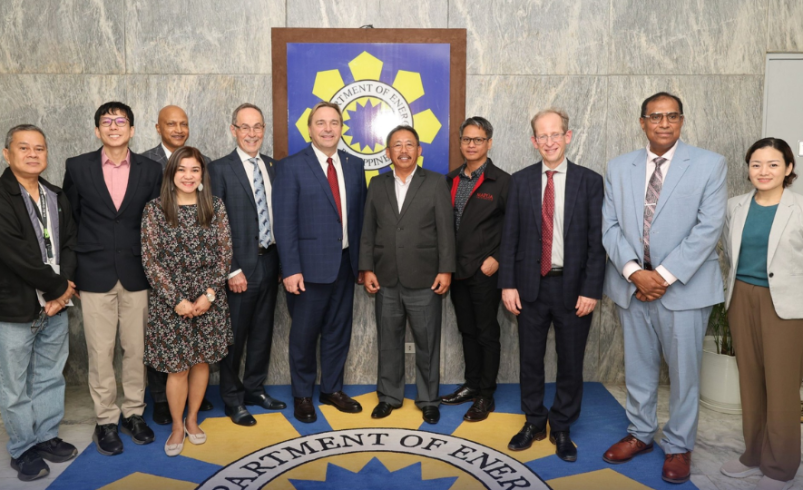
Photo credit: DOE
The Philippines and the Province of Saskatchewan, Canada are moving forward on joint initiatives to support workforce development and the country’s clean energy transition.
Officials from the Department of Energy (DOE) and Saskatchewan convened a Joint Working Group (JWG) meeting on February 24 at the DOE office in Bonifacio Global City to implement the June 2025 Memorandum of Understanding (MOU) on cooperation in clean energy technologies, nuclear workforce training, and research.
“The Joint Working Group meeting allows us to move from shared intentions to coordinated actions,” Energy Undersecretary Mario C. Marasigan said. “Our priority is to ensure that the Philippines’ transition is supported by capable institutions, a prepared workforce, and sustained engagement with communities, including Indigenous peoples.”

Key outcomes from the meeting include the formation of a joint task force to develop localized Nuclear Engineering and Safety Management curricula, specialized Train-the-Trainer programs for Philippine educators, and coordination with the Technical Education and Skills Development Authority (TESDA) on micro-credentialing and skills development for emerging clean energy sectors.
On the technical side, the JWG discussed potential studies on Small Modular Reactors (SMRs) and microreactors for island grids, as well as strategies for retiring or repurposing aging coal plants.
“A nuclear program is only as strong as the people and institutions behind it. This cooperation with Saskatchewan helps us build the skills pipeline and academic partnerships we need from engineering and safety management to technical training and micro-credentials while reinforcing the standards and public engagement required for responsible energy development,” Energy Secretary Sharon S. Garin said.
“A skilled workforce is essential for long-term sustainability,” Saskatchewan’s Minister for Advanced Education, Ken Cheveldayoff said, highlighting the University of Saskatchewan, University of Regina, and Saskatchewan Polytechnic, as well as the Global Institute for Energy, Minerals and Society (GIEMS), which supports collaboration among academia, industry, government, and Indigenous groups. Representatives from Canadian universities participated in the session.
The partnership complements other international engagements to strengthen Philippine workforce and institutional readiness for nuclear and clean energy sectors, DOE said. Last week, Philippine and U.S. officials signed an MOU supporting specialized vocational and higher education pathways for the civil nuclear industry.
The DOE and Saskatchewan agreed to continue coordination through the JWG, identifying priority deliverables and timelines for the next phase of cooperation.
The Joint Working Group meeting was co-chaired by Marasigan, representing the Energy Secretary. Philippine participants included Engr. Ashier Calulot of the Commission on Higher Education (CHED), Dr. Alvie Astronomo of the Philippine Nuclear Research Institute (PNRI), Dr. Edgar Vallar of De La Salle University, and Dr. Aldrin Calderon of Mapua University.
How can partnerships like the Philippines–Saskatchewan cooperation help accelerate workforce readiness and infrastructure development for the country’s clean energy transition?
Follow Power Philippines on Facebook and LinkedIn or join our Viber community for more updates.