Global wind capacity hit record 165 GW in 2025 —GWEC
- April 20, 2026
- 0
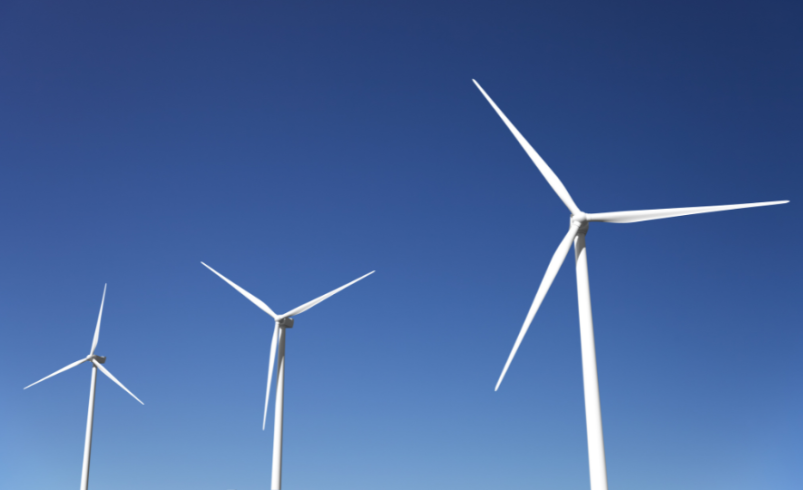
The global wind industry added a record 165 gigawatts (GW) of new capacity in 2025, marking a 40% year-on-year increase and underscoring wind power’s expanding role as a stabilizing force amid volatile fossil fuel markets, according to the Global Wind Energy Council (GWEC).
Data from GWEC’s 2026 Global Wind Report show total installed wind capacity reached 1,299 GW by end-2025, with 138 countries now using wind energy to power their economies. The surge comes as governments accelerate investments in domestic renewable energy to cushion against supply shocks and price spikes in oil and gas.
“The steep increase we have seen in global wind installations sets a new benchmark for an industry which is rapidly accelerating and responding to heightened demand for homegrown, affordable and resilient renewable energy,” said Ben Backwell, CEO of GWEC.

Asia drove the bulk of new installations, accounting for 131 GW or 80% of global additions, led by China and India. China alone installed over 120 GW, while India nearly doubled its annual additions to 6.3 GW.
“At a time when skyrocketing oil and gas prices and supply shocks are once again causing disruption to economies around the world, the wind sector has demonstrated its ability to scale at speed,” Backwell said.
“Accelerated growth led by Asia is enabling the rapid transition of fast-growing energy markets to electro-state economies, and showing that, where wind is built at scale, it can successfully compete with all alternatives, from coal to nuclear,” he added.
Europe installed 19.1 GW—its second-highest annual addition—bringing total capacity past 300 GW.
The United States also posted gains, with onshore installations increasing by nearly 7 GW, reflecting what GWEC described as strong underlying economic fundamentals.
Globally, 28,395 wind turbines were installed across 57 countries in 2025. The top five markets—China, the United States, India, Germany, and Brazil—accounted for 86% of new capacity additions and nearly 75% of total installed wind capacity.
“A 40% phenomenal growth across 138 countries demonstrates the accelerating role of wind in the global energy transition. The top five markets – China, the United States, India, Germany and Brazil – accounted for 86% of new capacity additions in 2025 reflecting a powerful convergence of policy alignment, scale and investment,” said Girish Tanti, Vice Chairman of Suzlon Group and Vice Chair of GWEC.
“These markets also represent nearly 75% of the world’s total installed wind capacity, reinforcing their leadership in shaping the future of the sector. With this sustained momentum, we are firmly on track to potentially surpass wind’s global potential of 2 TW by 2030,” he added.
Despite record growth, GWEC flagged structural bottlenecks that could slow momentum, including permitting delays and grid constraints.
“Bureaucratic red tape and slow roll-out of grids is stopping badly needed projects from being built in many areas of the world. However, by acting decisively to address the blockages, policymakers can quickly access a huge pipeline of ready to invest projects,” Backwell said.
GWEC projects 969 GW of new wind capacity to be added globally between 2026 and 2030, averaging 194 GW annually. The industry is on track to surpass 2 terawatts (TW) of total installed capacity by 2029, driven by continued expansion in Asia and emerging growth in Southeast Asia, Central Asia, and Africa.
For the Philippines, the report points to a widening gap—but also a clear growth runway. While global wind capacity reached 1,299 GW in 2025, the Philippines is still in an early-stage buildout, with capacity measured in hundreds of megawatts rather than gigawatts.
Based on GWEC data, the country is part of a group of emerging Asia-Pacific markets expected to scale up significantly toward 2030, alongside Vietnam and Australia.
The Philippines’ fourth Green Energy Auction round awarded over 2.2 GW of onshore wind projects for delivery in the coming years, indicating a pipeline that could materially lift capacity if executed on schedule.
The GWEC report emphasized that translating this pipeline into actual generation will depend on resolving permitting delays, grid constraints, and financing—factors that continue to define how quickly the country can close the gap with leading wind markets.
What do you think—can the Philippines accelerate wind deployment fast enough to stay competitive in the region’s clean energy shift?
Follow Power Philippines on Facebook and LinkedIn or join our Viber community for more updates.