Beyond Panels: The Rise of Solar Ecosystems
- April 19, 2026
- 0
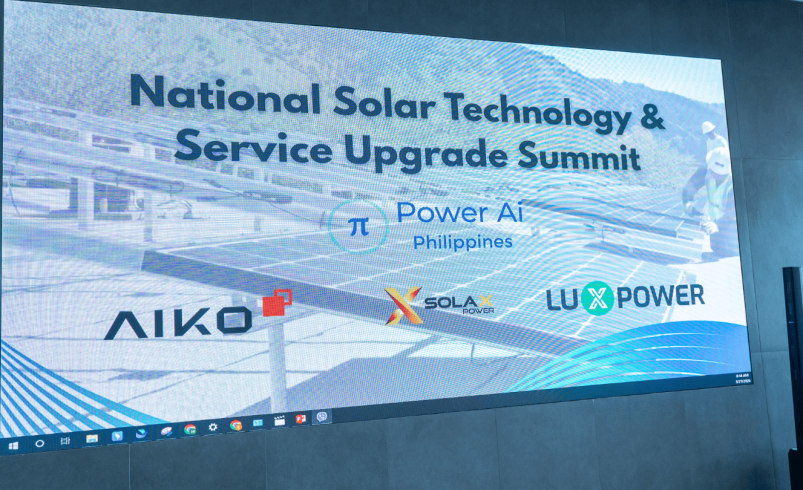
Solar companies are no longer just selling panels and inverters, instead they are building full energy ecosystems that combine hardware, software, and support services. This shift took center stage as Power Ai Philippines convened solar technology providers, installers, and industry stakeholders for the National Solar Technology & Service Upgrade Summit on March 27 at the Gallery 7 Design Center in San Juan.
With key partners including Aiko, SolaX, and LuxPower, the event highlighted how the industry is moving beyond standalone products and toward integrated, end-to-end energy solutions designed to improve performance, reliability, and long-term value.
From products to systems

As competition intensifies in the Philippine solar market, companies are rethinking how they position their offerings.
“We are not only talking about pricing, but as well as in technology and service quality,” said Engr. Charming Medina, Sales and Engineering Director of Power Ai Philippines.
Rather than competing solely on cost, providers are increasingly focusing on delivering complete systems that combine multiple technologies and services into a unified solution.
Hybrid systems as the new baseline
At the center of this transition is the growing adoption of hybrid solar systems, which pair solar generation with battery storage.
“Solar installations paired with battery storage are now setting the new market benchmark,” Medina said.
In a market where electricity costs remain high, hybrid systems offer greater flexibility and stability, allowing users to store energy and manage consumption more effectively.
Building complete energy solutions
For technology providers, this shift means moving beyond individual components toward fully integrated systems.
“We don’t just make inverter… you can find a complete solution… one brand, one system,” said Elix Huang of LuxPower Tech.
By combining panels, inverters, batteries, and monitoring platforms into a single ecosystem, companies aim to simplify installation, improve compatibility, and deliver more consistent performance.
Data and monitoring at the core
As systems become more advanced, software and data are playing an increasingly central role in solar deployments.
“You can monitor the system… real-time through your phone and your PC,” Huang explained during the presentation.
Real-time monitoring and remote diagnostics allow both installers and users to track performance, identify issues quickly, and optimize system efficiency over time.
Service as a differentiator
Beyond technology, companies are also investing heavily in after-sales support. This is an area that is becoming a key differentiator in a crowded market.
“The goal… is to give the fastest response and the most reliable one,” Medina said, referring to Power Ai’s planned nationwide technical service centers.
The initiative aims to improve response times for repairs, warranty claims, and technical support, reinforcing the importance of long-term service in solar adoption.
Expanding the ecosystem to people
The shift toward integrated solutions also extends to the people behind the systems, particularly installers and technical partners.
“We have training programs… you can be certified,” said Engr. Lito Rosales of SolaX Philippines.
By building certified installer networks and offering continuous training, companies are ensuring that the growing complexity of solar systems can be supported at the ground level.
Adapting to local market needs
While global technologies continue to shape the industry, companies emphasized the need to tailor solutions to the Philippine market.
“Only by deeply understanding the global market can we create a product that truly meets the Philippine market,” Huang said.
This localized approach includes strengthening distribution networks, improving technical support, and aligning products with local demand conditions.
As solar technology advances, can integrated energy ecosystems deliver the reliability and support needed to drive wider adoption across the country? Share your thoughts.
Follow Power Philippines on Facebook and LinkedIn or join our Viber community for more updates.