PH lays out AI, renewables, green manufacturing push at ABMX 2026
- May 16, 2026
- 0
The Philippines is sharpening its bid to become a regional hub for artificial intelligence, renewable energy, and resilient manufacturing, as ASEAN economies navigate geopolitical shocks and shifting investment flows.
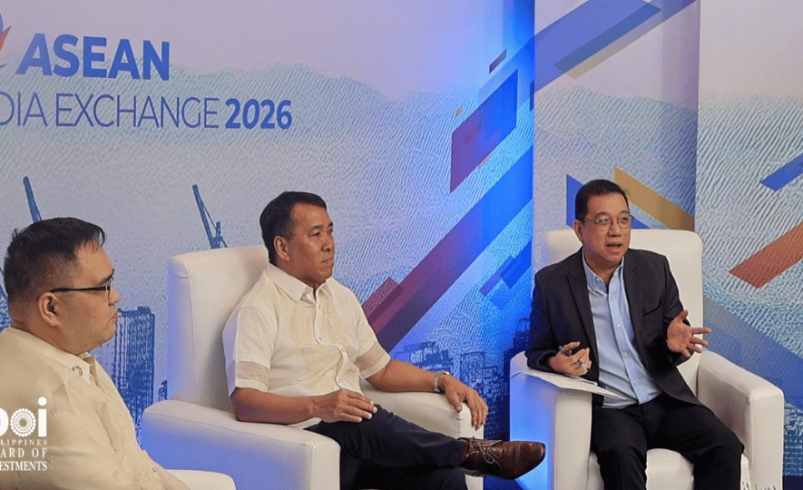
The strategy was highlighted during the ASEAN Business Media Exchange (ABMX) 2026, a side event of the 48th ASEAN Summit organized by the Department of Trade and Industry and the Board of Investments, in partnership with the Presidential Communications Office.
Officials and industry leaders said the Philippines is positioning itself at the intersection of energy transition and advanced manufacturing, leveraging its mineral base, renewable energy potential, and emerging digital infrastructure.

RE investment push tied to energy security concerns
As geopolitical tensions, including the Middle East crisis, continue to pressure global supply chains and energy markets, panelists underscored the urgency of scaling renewable energy investments across ASEAN.
Asian Development Bank Regional Lead Economist James Villafuerte warned against policy complacency amid disruption.
“Let’s not waste a crisis. This crisis is big enough that we need to work together to mitigate its impact and build a more resilient and sustainable future for ASEAN,” Villafuerte said.
He pointed to regional self-insurance mechanisms, integrated supply chains, and stronger social protection systems as necessary buffers against volatility.
Energy and infrastructure investors also stressed that renewable energy development is becoming central to competitiveness and industrial resilience in the region.
Philippines seen as emerging RE investment platform
Private sector and advisory voices described the Philippines as increasingly attractive for renewable energy deployment, particularly in wind, solar, and mineral-linked value chains.
Adam Schwarz, Founder and CEO of Asia Group Advisors, said regional momentum is shifting in favor of energy resilience investments.
“Across the region, we’re seeing countries looking to make these investments and attract investments that will help contribute to that resilience,” Schwarz said. “With its geography and its capacity to build renewable energy, the Philippines should be right at the forefront.”
He also noted that ASEAN coordination will be critical as the Philippines takes on a more visible regional role.
Localizing energy systems and expanding battery ecosystem
On distributed energy and industrial integration, NRI Singapore–Manila senior consultant Jonas Marie Dumdum said the Philippines should deepen its renewable energy value chain beyond utility-scale projects.
“We bring our energy closer to home. It is important that we harmonize and coordinate this shared vision so that we can harness what we already have here in the Philippines,” Dumdum said.
He added: “Try to see what’s important to them and address these because we have the strengths as Southeast Asia, as a Filipino, and I believe that we do have the skills, the knowledge, it’s really just more of enhancing, innovating, and really harnessing the talent we have,” while stressing investments in battery manufacturing as a key gap.
Green manufacturing and AI integration agenda
Trade Undersecretary and BOI Managing Head Ceferino Rodolfo said the Philippines is accelerating its positioning in both renewable energy and high-value manufacturing, alongside emerging AI-linked industrial infrastructure.
He cited ongoing investor interest, including plans by Mitsubishi Motors for a hybrid assembly facility in the country, and pointed to the government’s efforts to streamline investments through green lane mechanisms covering renewable energy, mining, semiconductors, and digital infrastructure.
Rodolfo also highlighted a major planned AI industrial zone in New Clark City dubbed “Pax Silica,” describing it as a foundation for deeper integration into global technology supply chains.
Manufacturing sector anchors green transition
Manufacturing leaders and economic zone officials emphasized that ASEAN industrial competitiveness will depend on deeper regional cooperation and decarbonized production systems.
Philippine Economic Zone Authority Director General Tereso Panga and industry executives underscored the importance of intra-ASEAN trade in green sectors such as automotive, steel, and electronics.
SteelAsia Vice President Bobby Batungbacal said the sector is already integrating cleaner energy inputs into production.
“We see that the government is much more involved in industrial development,” Batungbacal said.
He also noted the potential of regional coordination: “Imagine if Thailand, Indonesia, Malaysia, Singapore, and the Philippines, the manufacturers, banded together to harness their strengths to be able to compete and serve the global market. That would be a dream,” said Century Pacific Agricultural Ventures EVP and COO Greg Banzon.
SteelAsia also highlighted its use of geothermal energy in steel production as an example of lower-carbon industrial operations.
Outlook: energy transition and industrial strategy converge
Across discussions, energy security, renewable deployment, and manufacturing competitiveness were repeatedly framed as interconnected policy priorities, particularly as ASEAN responds to global shocks and supply chain fragmentation.
With renewable energy investment accelerating and AI-linked industrial zones emerging, the Philippines is positioning itself not just as an energy transition participant, but as a potential regional hub for integrated green industry development.
How viable is the Philippines’ ambition to anchor ASEAN’s AI and green manufacturing ecosystem alongside its energy transition agenda? What gaps still need to be addressed for this positioning to materialize?
Follow Power Philippines on Facebook and LinkedIn or join our Viber community for more news and updates on the Philippine energy sector.