How the Philippines is preparing its nuclear workforce for a revival
- May 19, 2026
- 0
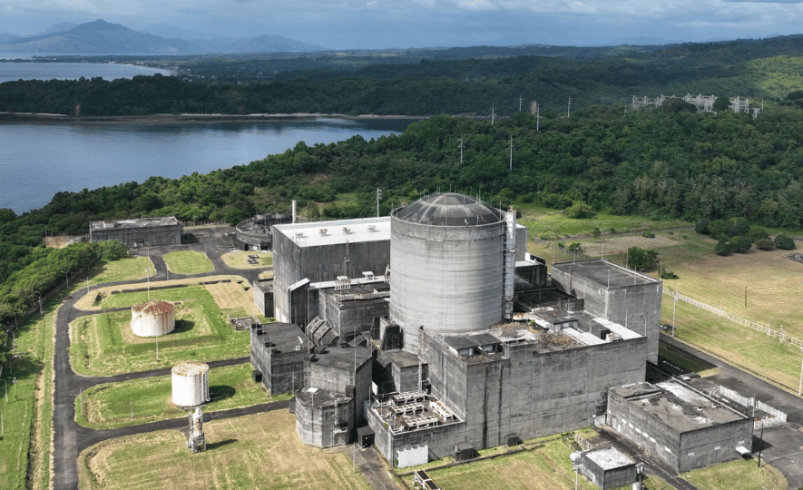
Aerial view of the Philippines’ Bataan Nuclear Power Plant, completed in 1986 but never commissioned. Today, it is being considered for rehabilitation as the country looks to nuclear amid rising electricity demand and pressure to cut emissions (Image: Sherbien Dacalanio / Alamy)
By G. K. Cabico
As nuclear energy returns, the government, universities and companies are training the next generation of engineers to operate and regulate it
When Ami Nicodemus finishes her master’s degree in energy systems at the University of Illinois Urbana-Champaign, she will return to the Philippines with expertise that her country’s energy sector largely lacks – the technical foundations of nuclear power plant design and safety.

The electrical engineer is part of a new generation of Filipinos being trained overseas in preparation for the possible return of atomic power to the country. For her, nuclear energy could help provide “reliable power while supporting the transition toward cleaner energy sources”. She had previously spent six years working in distribution operations at the Philippines’ largest electricity company, Meralco.
The revisiting of nuclear energy comes amid rising electricity demand and pressure to cut emissions from a grid still dominated by imported coal and oil. Nearly all of the Philippines’ crude oil is imported, leaving it exposed to energy shocks such as the war in Southwest Asia, a region from which the country imports 97% of that oil, according to the Institute for Energy Economics and Financial Analysis. This has driven up costs and prompted a national emergency declaration.
In 2025, President Ferdinand Marcos Jr signed a law creating the Philippine Atomic Energy Regulatory Authority, tasked with ensuring the safe and secure use of nuclear power. With this regulatory agency in place, the government is aiming to bring its first nuclear power plant online by 2032.
But building or reviving reactor projects is only part of the challenge. The Philippines must first develop a workforce with the expertise to design, regulate and operate nuclear facilities – skills that have largely disappeared since the country abandoned its nuclear program in the 1980s.
The next generation of nuclear professionals
The country’s last cohort of nuclear engineers graduated in 1984 from the University of the Philippines. It also sent Filipinos to train as nuclear operators in the United States. They were supposed to operate what was then the country’s first and only nuclear facility: the Bataan Nuclear Power Plant in the western province of the same name.
The late dictator Ferdinand Marcos Sr, father of the current president, ordered the construction of the power plant, located a three-hour drive from the capital Manila, in response to the 1973 Southwest Asia oil crisis. Completed in 1984, the next government mothballed it two years later due to safety concerns following the Chernobyl disaster as well as allegations of corruption and cronyism.
With no domestic industry to absorb these nuclear professionals, many of them went abroad, eventually helping build and operate nuclear plants in countries like the United Arab Emirates.
Four decades later, as the country’s nuclear plans are revived, so is interest among a new generation of students.
According to Aldrin Calderon, dean of Mapúa University’s School of Mechanical, Manufacturing and Energy Engineering, there is a growing number of electives and research projects focused on nuclear systems, safety and energy policy. He puts this renewed interest partly down to a global shift toward more diversified clean energy systems.
However, the country’s education pipeline remains limited. No university currently offers a full undergraduate or graduate degree in nuclear engineering. At Mapúa, ranked by some as the country’s top engineering school, nuclear engineering and related courses are folded into the broader energy engineering program.
The University of the Philippines is also exploring a revival of its master’s program in nuclear engineering. The country’s premier state university first offered the program in 1977, but it was eventually discontinued as priorities shifted away from nuclear energy. In 2025, the Mindanao State University-Iligan Institute of Technology signed a memorandum of understanding with US energy solutions provider EoS Organization to develop educational and training programs for nuclear engineering.
Beyond formal education, advocacy groups are also working to spark interest among the next generation. One such group, Alpas Pinas, gives campus talks where they introduce students to nuclear energy and career opportunities. Gayle Certeza, the group’s lead convenor, said younger audiences tend to be more open-minded, with their opinions less shaped by longstanding fears about nuclear power.
“I always tell the young people that there’s a nuclear renaissance that’s ongoing in the region and abroad, and we should be part of it,” she said. “This one is really for the young people.”
Private firms fill training gap
In the absence of a robust local training ecosystem, private companies are stepping in to build expertise.
Since 2024, Meralco has sent 12 scholars to study nuclear engineering in countries with established nuclear industries, including the US, China, Canada, South Korea and France. These scholars are expected to return and help seed a domestic workforce.
Among them is Eljhon Capili, who is currently pursuing a master’s degree in nuclear engineering at Université Paris-Saclay in France. His training covers physics, operations, radiation protection and fuel management, alongside hands-on exposure in nuclear facilities.
“The Philippines needs electricity that is reliable, affordable and sustainable. Nuclear energy can help address these challenges by providing electricity around the clock with very low carbon emissions and stable fuel costs,” he told Dialogue Earth.
“Studying nuclear technology changed my perspective because many fears about nuclear energy come from not seeing how the systems are actually designed,” Capili said. “Learning about the multiple layers of safety, the engineering behind reactors, and the strict regulations that govern the industry makes it easier to see nuclear as a credible option.”
In 2025, Meralco launched its internal program to assess the responsible deployment of nuclear power, partnering with international nuclear organisations and operators for support. It is also reportedly considering rehabilitating the Bataan Nuclear Power Plant and deploying small modular reactors, an emerging technology for which commercial availability is currently limited.
Electricity provider AboitizPower, which has also expressed interest in small modular reactors, has partnered with EoS Organization, the US State Department, the Philippines’ Technical Education and Skills Development Authority, and Fulbright Philippines to bring nuclear experts to the country and develop specialised vocational and higher education curricula.
Fulbright, a scholarship program, is also supporting exchange opportunities that would allow Filipino students to pursue advanced training in nuclear science in the US.
Thousands needed for construction
Building a nuclear power plant in the Philippines is expected to require at least 1,000 workers during construction, covering both technical and construction roles, according to Patrick Aquino, director of the Energy Utilization Management Bureau at the Department of Energy and head of the Nuclear Energy Program Inter-Agency Committee.
Once operational, staffing needs drop to around 100 to 200 personnel, including plant operators and regulators, he noted.
The Philippines can also draw on experienced Filipino nuclear workers living abroad, many of whom contributed to the Barakah nuclear plant in the UAE. “Those Filipinos want to come back and do the same great thing they did in building those nuclear power plants and they’ll be more than happy to do so,” Aquino said.
According to Aquino, the government positions nuclear power as necessary to complement renewable energy, rather than a competitor. The Philippines aims to increase the share of renewables in its energy mix to 35% by 2030 and 50% by 2040.
The Philippines is not alone in expanding the role of nuclear power in the energy system. Around the world, nuclear energy is experiencing a resurgence as countries like the US and China seek to increase use of the fuel for geopolitical security reasons and to power AI infrastructure.
Nuclear is also increasingly touted by its proponents as a climate solution: it produces low-cost, low-carbon power, unlike coal or natural gas. Unlike solar and wind, it can generate electricity consistently, regardless of weather or time of day.
Under the Philippines’ nuclear roadmap, 1.2 gigawatts of capacity is targeted by 2032, scaling up to 4.8 gigawatts by 2050.
Several potential sites have been identified for nuclear development. The Bataan Nuclear Power Plant is still being debated, but the safety concerns surrounding it when it was first built still apply – the plant remains situated near active fault lines and Mount Natib, a potentially active volcano. The town of Mariveles, also in Bataan, is also reportedly under consideration for on-grid projects as potential data centres.
Aquino said that for off-grid areas, Palawan and Masbate provinces are being considered, though these are longer-term options pending future grid interconnections.
Ambitious target
Experts say the 2032 timeline is ambitious. “That’s not realistic. It’s impossible, in fact, unless you revive the Bataan Nuclear Power Plant,” said Carlo Arcilla, director of the Philippine Nuclear Research Institute.
“If they wanted nuclear power, they should have revived it or started work on it at the start of the term of President Marcos [in 2022],” Arcilla added. Marcos, whose father commissioned US nuclear company Westinghouse to build the Bataan plant, has less than two years remaining in office. This raises questions over whether the project will move forward under a new administration. Arcilla noted that Bataan could be revived in four years, whereas constructing an entirely new plant would require seven to eight.
Despite the challenges, the energy department remains committed to the timeline. “We maintain the target of 2032, because we really want to tell everybody, the business sector, and even the international community, that we’re dead serious about bringing in nuclear for power generation,” Aquino said, adding the government will fully comply with the standards of the International Atomic Energy Agency (IAEA) and get support from host communities.
A poll commissioned by the Department of Energy found that 70% of 7,500 Filipino adults believe nuclear energy can provide reliable electricity, curb dependence on imported fossil fuels, generate jobs and help combat climate change.
When she returns to the Philippines, the Meralco scholar Nicodemus hopes to hold seminars and knowledge-sharing sessions to help the public understand nuclear energy and dispel common misconceptions. She notes that public understanding and acceptance are “important factors” in the successful development of nuclear programs.
But for Derek Cabe, an activist who leads opposition against nuclear energy projects in Bataan, clean energy is not just about being pollution-free. Residents of the province remain concerned about potential nuclear disasters, such as the 2011 meltdown in Fukushima, Japan, triggered by a catastrophic earthquake and tsunami. Beyond safety risks, nuclear plants are also costly and slow to build, typically taking six to 10 years, according to recent examples highlighted by the IAEA.
Clean energy “does not require sacrificing the rights of communities or the environment to make way for a project”, says Cabe. “It cannot be truly clean if anything or anyone is harmed in the process.”
This article was originally published on May 15, 2026 at Dialogue.Earth.