ERC says PH facing “flexibility shortage” after sunset amidst recent grid alerts
- May 26, 2026
- 0
The Philippines is facing a growing “flexibility shortage” in its power system during late afternoon to evening hours, according to Energy Regulatory Commission (ERC) Chairperson and CEO Francis Saturnino C. Juan, following the recent string of red and yellow alerts that affected parts of Luzon and the Visayas earlier this month.
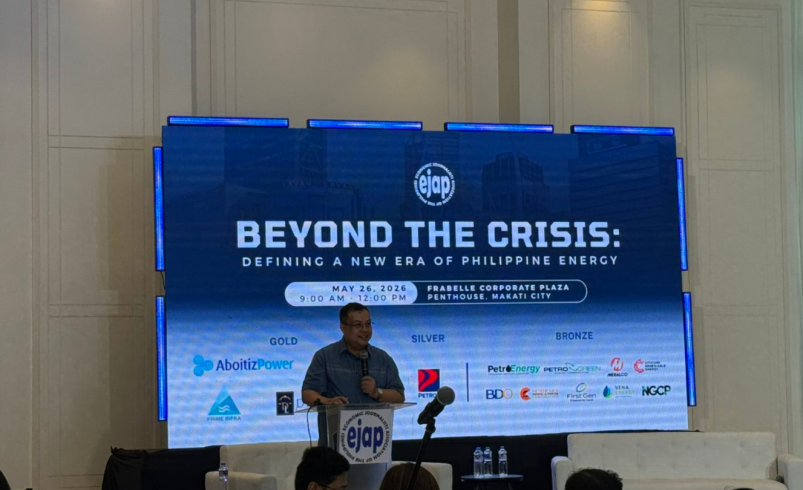
Speaking during the 3rd Energy Forum of the Economic Journalists Association of the Philippines (EJAP) held in Makati on May 26, Juan said the recent grid alerts exposed weaknesses not simply in overall power supply, but in the country’s ability to quickly respond once solar generation declines after sunset.
“We are not simply facing an afternoon and early evening shortage,” Juan said. “We are facing a flexibility shortage in hours after the sun goes down.”

Juan’s remarks came after yellow and red alerts were raised between May 13 and May 15, triggering manual load dropping in several areas across Luzon and the Visayas.
According to the ERC chief, Wholesale Electricity Spot Market (WESM) prices repeatedly hit the ceiling during the period, while households, hospitals, and small businesses experienced outages and operational disruptions.
“I will not stand here and tell you we performed well in managing that crisis,” Juan said. “I will tell you what the data is telling us and what we, as a regulator, intend to do about it.”
Based on ERC analysis, Juan said electricity demand typically peaked at around 2 p.m., which also coincided with peak solar generation.
However, the grid’s problems began emerging between 3 p.m. and 4 p.m. as solar output started declining while household electricity demand continued rising into the evening.
According to Juan, the red alerts and under-generation events observed during the period extended from late afternoon until around midnight. “The trouble begins between 3 and 4 p.m. when solar generation begins to dip,” he said.
The ERC chief said the situation highlighted the need for more fast-response and dispatchable resources capable of responding during evening peak hours.
“The right tool for a late afternoon to evening flexibility crisis is not new baseload,” he said. “With its fast, flexible, dispatchable response, energy storage, demand response, and peaking plants can be called and dispatched in minutes.”
Juan said battery energy storage systems deserve “urgent attention,” particularly because the country already experiences periods of solar overgeneration during midday hours. According to Juan, WESM prices sometimes fall into negative territory because excess solar power cannot be fully utilized or stored.
“That is, in effect, electricity we are paying to throw away,” he said. “If we had the systems to capture even a portion of that midday surplus and dispatch it during the evening peak, none of that energy would be wasted.”
Juan also said the ERC plans to revisit reserve market rules, ancillary service procurement, demand response frameworks, and the WESM secondary price cap following the recent alerts. He said the commission is studying whether reserve requirements should move beyond static reserve margins toward more dynamic weather-indexed targets.
The ERC is likewise coordinating with the Department of Energy, NGCP, generators, and other stakeholders to accelerate procurement of ancillary services and open more opportunities for battery storage, hybrid renewable projects, and aggregated demand response providers.
Juan also noted that Luzon, Visayas, and Mindanao are becoming increasingly interconnected in terms of operating stress. According to the ERC chief, Mindanao avoided alerts during the period partly because it still had around 500 megawatts of additional reserves unavailable to Luzon and the Visayas.
The ERC is also planning to modernize public-facing information systems through near real-time dashboards showing grid alerts and electricity price conditions.
“We owe the Filipino consumers the truth about that and a credible plan to make sure that the next El Niño does not ride the same headlines,” Juan said.
As renewable energy capacity continues expanding across the Philippines, can the country develop enough storage and flexible generation capacity to prevent future evening power shortages?
Follow Power Philippines on Facebook and LinkedIn or join our Viber community for more updates.