PH rooftop solar payback drops to 3 years
- May 29, 2026
- 0
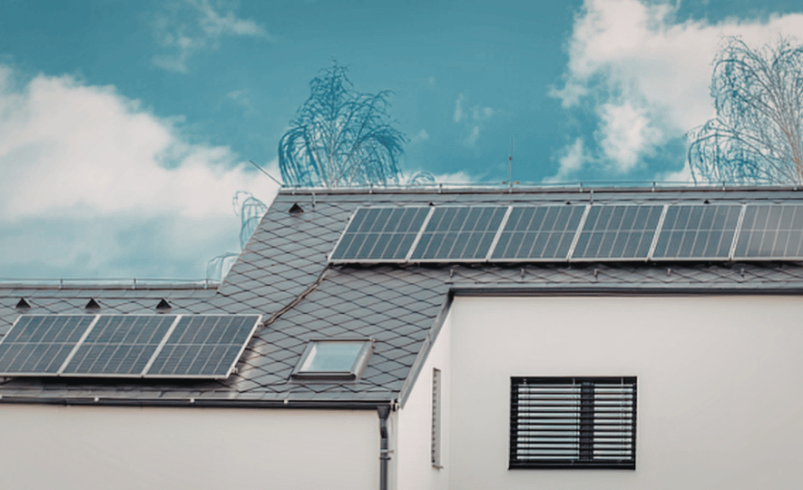
The payback period for residential rooftop solar systems in the Philippines has dropped to just over three years as electricity prices climbed and solar installation costs declined, according to a new analysis by energy think tank Ember.
The payback period refers to how long it takes for consumers to recover their solar installation costs through savings on electricity bills.
In a report released Thursday, Ember said the payback period for residential rooftop solar fell to 3.1 years in May 2026 from four years a year earlier. Commercial rooftop solar payback periods dropped to 2.3 years from three years, while industrial systems fell to 3.1 years from 3.9 years.

The shorter recovery period comes as retail electricity rates continue to rise. Ember said Meralco’s residential rates in May 2026 were 17% higher year-on-year, while commercial and industrial rates rose 18% and 14%, respectively.
“The economics of rooftop solar are more attractive than ever, and its rapid rise is inevitable,” said Dave Jones, chief analyst at Ember and lead author of the report.
“The government has an opportunity to carve its own path on rooftop solar, to pull the Philippines out of fossil dependency and onto a path of cheap, abundant electricity,” he added.
Ember said the Philippines now has the highest residential electricity prices in Southeast Asia, the second-highest commercial electricity prices, and the third-highest industrial rates in the region.
At the same time, the think tank estimated solar installation costs declined by around 10% over the past year, further improving the economics of rooftop solar adoption.
The report also pointed to accelerating rooftop solar deployment in the country. Ember estimated rooftop solar capacity nearly doubled to around 1,300 megawatts (MW) by early 2026 from 721 MW in early 2025.
The analysis cited Independent Electricity Market Operator of the Philippines (IEMOP) data showing a sharp decline in grid generation during midday hours, when solar generation peaks, as an indicator of growing rooftop solar penetration.
Imports also signaled stronger market activity.
According to Ember, the Philippines imported 5,068 MW worth of solar panels in 2025, more than five times the 800 MW of utility-scale solar connected to the grid during the same year.
The country has also emerged as one of China’s largest export markets for solar panels this year.
“In March and April 2026 alone, China exported over 3,000 MW of solar panels to the Philippines,” Ember said. “So far this year, the Philippines is now China’s second-largest solar panel export market, ahead of Pakistan.”
Jones said strong consumer interest and readily available supply could further accelerate deployment.
“The supply of panels is already on the ground. The economics are already there. Consumers are keen. Even back in 2024, 82% of surveyed households expressed some interest in adopting solar panels,” he said.
Ember said the Philippines could deploy 3,500 MW of rooftop solar paired with 4,500 megawatt-hours (MWh) of battery storage within the next 24 months, equivalent to the scale of the Meralco Terra Solar project.
The report also highlighted recent policy reforms supporting rooftop solar growth, including shorter approval timelines for net metering applications, the rollout of multi-site and aggregate net metering, and updated Retail Competition and Open Access rules that will allow customers with at least 100-kilowatt demand to enter solar power purchase agreements beginning June 2026.
“Rooftop solar has two key advantages over wind and utility solar: it is built in days, not years, and with batteries, it reinforces the grid rather than stretching it,” Jones said. “The government’s plans to speed up renewables auctions will help avoid a future energy emergency. Rooftop solar can help do that even faster.”
What do you think about the Philippines’ accelerating rooftop solar adoption? Can faster deployment meaningfully ease power prices and long-term energy security concerns?
Follow Power Philippines on Facebook and LinkedIn or join our Viber community for more updates.