GCGC taps Mabuhay Energy for multi-site retail power supply shift
- June 11, 2026
- 0
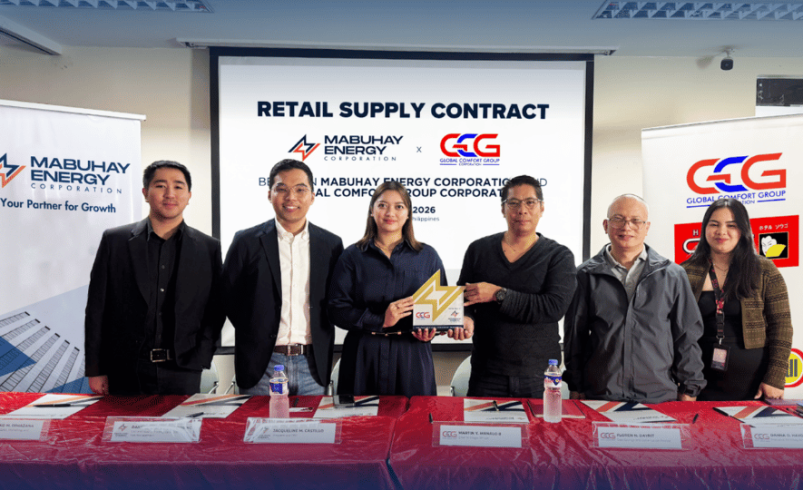
Global Comfort Group Corporation (GCGC), the hospitality and mall operator behind multiple assets and commercial properties, has signed a Retail Supply Contract with independent retail electricity supplier Mabuhay Energy Corporation (MECO), marking a strategic shift aimed at lowering electricity costs and improving operational efficiency across its portfolio.
Under the agreement, Mabuhay Energy will supply electricity to several GCGC facilities across the country, including assets from Mindanao to Luzon.
These include the Apo View Hotel and multiple Hotel Sogo properties, as well as select commercial mall operations within the group’s ecosystem.

The move places GCGC among a growing number of large energy users leveraging retail competition mechanisms under the government’s open access framework to manage rising power costs.
“Our goal is not only to generate savings but to provide better services to our customers. And, of course, with a very significant decrease in our electricity costs, we can provide competitive rates to our guests,” said Martin Y. Manalo II, Chief Strategic Officer of GCGC.
The transition was enabled through the government’s Retail Aggregation Program (RAP), which allows eligible consumers to consolidate demand across multiple facilities and participate in the competitive retail electricity market.
In Metro Manila under the Meralco franchise area, GCGC was able to aggregate sufficient cumulative peak demand, allowing it to exit the captive market and directly contract a retail supplier.
Mabuhay Energy CEO Jacqueline Castillo underscored the broader significance of retail competition and consumer awareness in the sector.
While the Retail Competition and Open Access (RCOA) framework has been in place for over a decade, she noted adoption remains partial across eligible consumers.
According to Castillo, switching to a retail electricity supplier helps protect consumers from market volatility. She explained that distribution utilities typically operate under long-term Power Purchase Agreements (PPAs), with costs passed directly to end-users.
With the government’s retail electricity programs in place, however, eligible consumers are now able to choose their own suppliers for the generation component of their electricity bill.
Castillo said Mabuhay Energy began with fewer than 10 clients in its first year and has since expanded to nearly 200 corporate customers within six years.
The signing event was attended by executives from both organizations, including Manalo and Floren Dayrit for GCGC, alongside Castillo, Daniell Mark Mangosing, and Jhon Nikko Dimazana for Mabuhay Energy.
Energy intensity remains a structural challenge for the hospitality and retail sectors. According to the Philippine Statistics Authority, energy consumption in the tourism sector surged significantly during the post-pandemic recovery period, underscoring the sector’s heavy dependence on electricity for core operations.
Hotels and malls typically operate energy-intensive systems including 24/7 air conditioning, lighting, vertical transport systems, and water and facility management infrastructure—making electricity one of the largest operating expenses.
Will retail aggregation and RES switching accelerate meaningfully in the hospitality and commercial real estate sectors—or will structural and informational barriers continue to limit broader adoption despite potential cost advantages?
Follow Power Philippines on Facebook and LinkedIn or join our Viber community for more news and updates on the Philippine energy sector.