Renewable energy leaders call for faster permits to accelerate rural electrification
- June 10, 2026
- 0

Renewable energy (RE) developers and local government leaders are urging faster permit approvals and better coordination among government agencies to help bring electricity to remote communities across the Philippines.
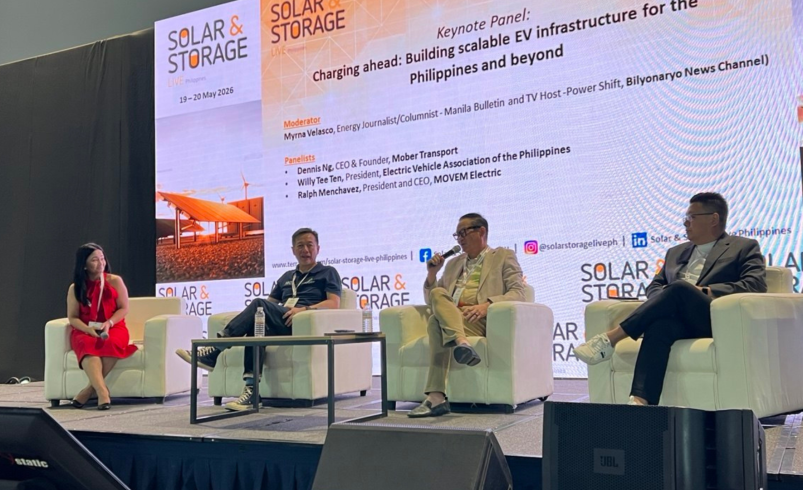
During a panel discussion on rural electrification at the recently concluded Solar & Storage Live Philippines 2026 event at the SMX Convention, speakers identified permitting and regulatory delays as some of the biggest obstacles to expanding RE projects.
They pointed out lengthy approval processes, overlapping requirements, and inconsistent coordination among government agencies as challenges that can significantly slow project development.

Quintin Pastrana, president of Archipelago Renewables Corporation, shared how permitting challenges affected their Sabang Microgrid Project in Palawan.
Developed under the old Qualified Third Party regulation, the project took approximately six years to secure approvals, including approval from the Energy Regulatory Commission.
“That’s a good case study of why there needed to be a law,” he said.
Pastrana noted that the process became much more streamlined with the passage of the Microgrid Service Provider Act in 2022, which allows private developers to compete in a centralized bidding process managed by the Department of Energy (DOE), rather than dealing separately with electric cooperatives.
A Certificate of Energy Project of National Significance will also automatically be given to winning bidders, which gives their projects priority in government processing.
“I think now the system is geared up for more private sector developers to bid, to win, and then to get the permits needed at the local and national level, including the tariff that we need to charge, and that allows us to get the project financing also for the projects,” Pastrana stressed.
Alfie Miras, president and chief executive officer of Jin Navitas Solaris, Inc. (SOLARIS), also mentioned market certainty as one of the key issues for RE project development.
He pointed out that investors and banks need a stable, structured system for where and how power will be sold.
“If you look at what happened in the previous round of GEA-4 for solar, it was actually oversubscribed. And as a result of that, the rates dropped significantly,” Miras said.
RE drives rural development
Despite these challenges, panelists emphasized that RE remains one of the most practical solutions for bringing electricity to off-grid and geographically isolated communities.
Reliable power allows schools to use digital learning tools, health facilities to improve services, and communities to access economic opportunities. For many remote areas, electrification can help improve living conditions and reduce the gap between urban and rural areas.
Iloilo Provincial Board Member Rolando Distura highlighted the role of local governments in creating an environment that supports RE investments.
He shared several provincial initiatives, including the Iloilo Provincial Ordinance for Renewable Energy (I-PORE), which promotes the development, use, and commercialization of renewable energy across the province. Distura authored the I-PORE, the first provincial-level renewable energy legislation in the country.
Representatives from the private sector also discussed how renewable energy projects are benefitting communities.
Miras shared that SOLARIS is developing about 500 megawatt (MW) of solar projects, including utility-scale rooftop, ground-mounted, and microgrid systems. Around 100 MW are rooftop solar projects.
He highlighted rooftop solar as a practical solution for rural and off-grid electrification because it uses existing rooftops instead of agricultural land.
Meanwhile, Marife Tulalian of Zenith Renewable Holdings Corporation emphasized the importance of working closely with communities.
She mentioned the Mabini Solar Project, which was developed quickly because of strong partnerships with landowners, local governments, and residents.
Pastrana then discussed the role of microgrids in bringing electricity to remote areas, with the Sabang Microgrid Project in Palawan combining solar power, battery storage, and conventional generation to serve communities beyond the reach of the main grid.
Call for Inter-agency coordination
While panelists expressed optimism for the future of rural electrification, they agreed that streamlining of government processes remains critical.
They called for stronger inter-agency collaboration at the national level. They suggested multi-agency roundtables involving key institutions, such as the DOE, Department of Agriculture, and Department of Environment and Natural Resources, to resolve issues efficiently.
“We are really doing what we can do on the ground, but we also would like to ventilate this issue that the agencies upstairs also must also step up. They should be more cohesive, especially in complementary policies between two or three or more national government agencies,” Distura said.
“Wala rin kaming magagawa sa ground kung minsan sa taas, matagal ‘yung development, matagal ‘yung process in the national level,” he added.
[We can’t do much on the ground if, at times, things at the top move slowly; the development and processes at the national level take a long time.]
Speakers agreed that a “whole-of-government” approach is essential to reduce delays, improve permitting efficiency, and create a more attractive environment for investors in the energy sector.
Follow Power Philippines on Facebook and LinkedIn or join our Viber community for more news and updates on the Philippine energy sector.