Offshore wind needs scale, not just projects, to attract investment — industry leaders
- June 18, 2026
- 0
The Philippines must build a large and sustained offshore wind pipeline if it hopes to attract investments in ports, transmission infrastructure, supply chains, financing, and workforce development, according to industry leaders and development finance experts.
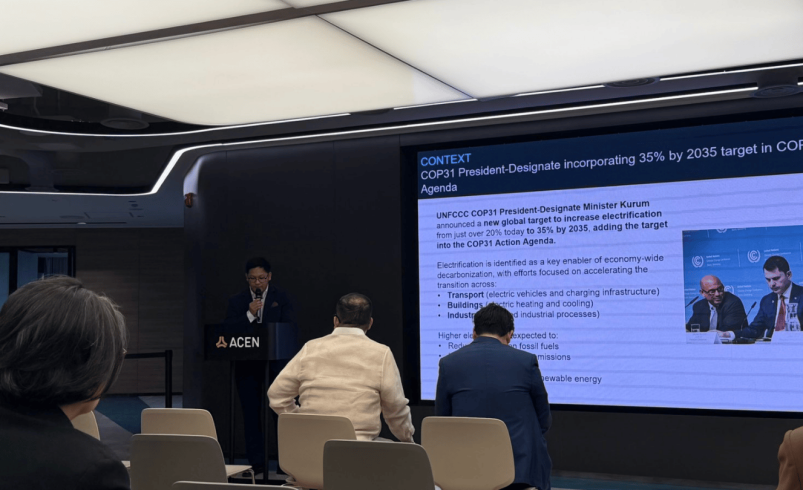
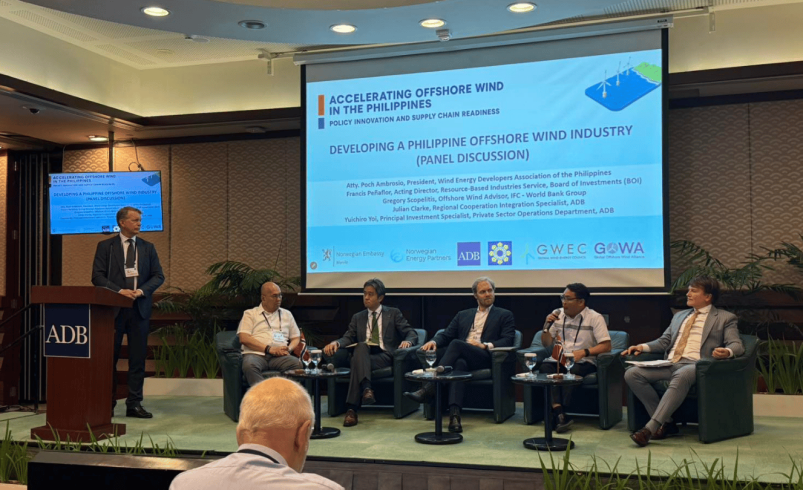
Speaking during a panel discussion on “Developing a Philippine Offshore Wind Industry” at the Asia Clean Energy Forum (ACEF), stakeholders said the sector’s success will depend not only on individual projects but on creating an ecosystem capable of supporting offshore wind deployment at scale.
Gregory Scopelitis, Offshore Wind Advisor at IFC-World Bank Group, said offshore wind differs from other renewable energy technologies because it requires extensive supporting infrastructure and long-term market visibility.

“One gigawatt is not enough. Three, four gigawatts is a good start,” Scopelitis said.
He explained that investments in ports, manufacturing facilities, workforce training, and financing capabilities become easier to justify when developers, suppliers, and investors see a clear pipeline of future projects.
“This message can be simplified. This is about scale,” he added.
Industry representatives pointed to the upcoming Green Energy Auction Program Round 5 (GEA-5) as an important milestone for the sector.
Atty. Poch Ambrosio, President of the Wind Energy Developers Association of the Philippines (WEDAP), said the industry must better communicate the broader economic benefits of offshore wind development.
“The industry has to come forward in the narrative that the PHP 11 per kilowatt-hour GEA price is not just about the energy that we produce. It’s about the manufacturing industry, the workforce, and generally an improvement in the grid,” Ambrosio said.
He also credited the Department of Energy for working closely with industry stakeholders in refining the GEA-5 framework, particularly measures aimed at improving project bankability. However, Ambrosio noted that developers remain concerned about changing macroeconomic conditions, including foreign exchange movements, interest rates, and inflation, which could affect project economics.
Financing remains another key challenge.
Yuichiro Yoi, Principal Investment Specialist at the Asian Development Bank (ADB), said offshore wind projects face unique construction and infrastructure risks, particularly those related to port and transmission readiness.
“Delay or cost overrun risk is one of them,” Yoi said, explaining why ADB is exploring blended finance structures that could help projects manage construction risks.
According to Yoi, blended finance can be structured to provide contingency funding for potential cost overruns and delays, helping improve project bankability without significantly affecting the economics of senior lenders.
Beyond financing, speakers highlighted the importance of developing local supply chains.
Julian Clarke, Regional Cooperation and Integration Specialist at ADB, said the Philippines remains heavily dependent on imported wind turbine components and intermediate goods, making trade efficiency and regional integration important considerations for the industry’s growth.
“The Philippines, at present, although a fairly open trading economy, has particular barriers to trade or technical standards which are slowing down imports and acting as an obstacle to investment,” Clarke said.
For his part, Francis Peñaflor, Acting Director of the Resource-Based Industries Service at the Board of Investments (BOI), said the government supports efforts to strengthen domestic participation in the offshore wind value chain.
“We are for local supply chain development,” Peñaflor said.
However, he acknowledged that turbine manufacturing is unlikely to emerge in the Philippines in the short to medium term, with the government’s immediate focus centered on developing supporting industries, improving competitiveness, and encouraging investments throughout the offshore wind supply chain.
While participants acknowledged that GEA-5 represents an important step forward, they stressed that sustaining momentum beyond the first projects will ultimately determine whether the Philippines can establish a competitive offshore wind industry.
Can the Philippines build a large enough offshore wind pipeline to attract the ports, supply chains, financing, and workforce investments needed to support the industry at scale?
Follow Power Philippines on Facebook and LinkedIn or join our Viber community for more updates.