COREnergy to supply 36 McDonald’s stores under RAP, RCOA
- July 22, 2026
- 0
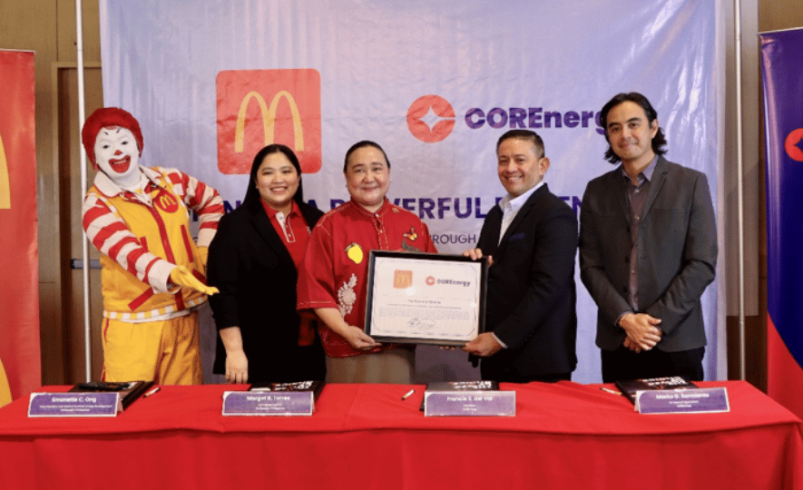
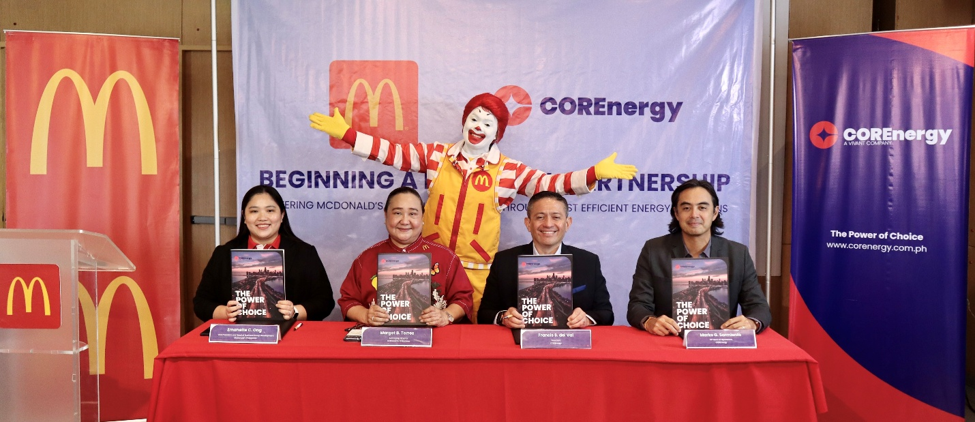
(L-R) Emanette C. Ong, VP and Head of Business Group of McDonald’s Philippines, Margot B. Torres, Managing Director of McDonald’s Philippines, Francis S. del Val, President of COREnergy, and Marko G. Sarmiento, Vice President and Head of Operations of COREnergy
COREnergy, the retail electricity supplier (RES) of Vivant Energy, will supply electricity to 36 McDonald’s Philippines restaurants in Cebu and Negros Island under the Retail Aggregation Program (RAP) and Retail Competition and Open Access (RCOA), expanding the quick-service chain’s shift to competitive power sourcing in the Visayas.
Under the arrangement, 32 restaurants—16 each in Cebu and Negros Occidental—will participate in RAP, while the remaining four stores will transition individually through RCOA.

The partnership is expected to reduce electricity costs by about 10% on average while providing fixed electricity rates for two years, giving McDonald’s greater cost predictability. Around 10% to 15% of the electricity supplied to participating restaurants will also come from solar energy.
The expansion comes as more commercial establishments tap RAP, a program that allows groups of qualified electricity consumers within the same franchise area to aggregate their demand and access competitive electricity supply from licensed RESs, even if they do not individually meet the minimum demand threshold under RCOA.
“As we continue to grow in the Visayas, we’re equally focused on improving how our restaurants operate,” said Margot Torres, Managing Director of McDonald’s Philippines.
“Electricity is one of the largest operating costs in our business. By working with COREnergy, we can better manage this expense and build more energy-efficient restaurants as we grow,” she added.
COREnergy said the partnership reflects growing interest among businesses in securing more predictable electricity costs amid evolving market conditions.
“Businesses continue to navigate a changing energy environment, making greater choice and cost predictability increasingly important,” said Francis del Val, President of COREnergy.
“Through RAP and RCOA, we are helping McDonald’s access energy solutions that respond to the needs of its growing restaurant network. This includes more competitive rates and renewable energy options that support more efficient operations and long-term business performance,” he added.
McDonald’s said the collaboration aligns with its expansion in the Visayas, where Cebu and Negros Island remain key growth markets. The company has opened seven new stores in Cebu this year.
“For us, keeping value and affordability within reach of our customers means finding efficiencies across our operations. By managing significant expenses such as electricity more strategically, we can support the long-term sustainability of both our company-owned and franchise restaurants,” Torres said.
McDonald’s Philippines expects about 64% of its restaurant portfolio nationwide to be operating under RAP by the end of 2026.
As more commercial establishments shift to RAP, will broader participation help accelerate competition and lower electricity costs for Philippine businesses? Share your insights in the discussion.
Follow Power Philippines on Facebook and LinkedIn or join our Viber community for more news and updates in the Philippine energy sector.