AI could be the missing link in solving the Philippines’ three-grid problem — SEAS
- July 10, 2026
- 0
Maintaining a reliable electricity supply has never been simple in the Philippines. Unlike other countries that rely on a single interconnected power network, the Philippines operates three major power grids: the Luzon grid, the Visayas grid, and the Mindanao grid, spread across an archipelago of more than 7,600 islands.
This geography affects how the electricity is generated, transmitted, and distributed.
But as the Philippines expands its renewable sector, aiming for renewables to make up 35% of its power generation by 2030 and 50% by 2040, maintaining a stable electricity grid has become one of the country’s biggest energy challenges.

Solar farms are multiplying across the country, wind projects are growing, and investments in battery energy storage are on the rise. Yet renewable energy cannot be simply added to the grid without transforming the grid itself.
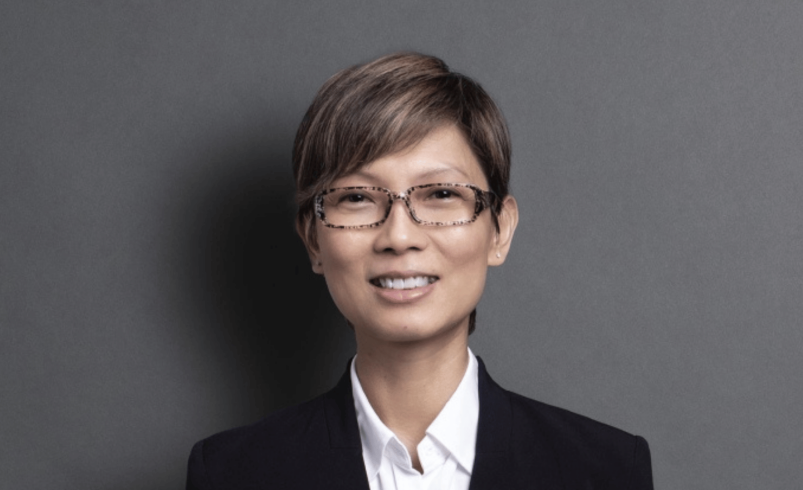
“The grid is not static; it is a living and breathing being,” Sustainable Energy Association of Singapore (SEAS) Honorary Secretary Sandra Seah told Power Philippines in an email interview. “It is at every single moment being shaped by the forces of production, distribution and consumption.”
This, she said, is where artificial intelligence (AI) may become one of the country’s most important tools in building a smarter and more resilient grid.
AI’s role in grid stability
Seah noted that AI is already changing the way the energy sector operates by helping improve how electricity is generated, delivered, and used. The technology can also help make power systems more reliable, efficient, and responsive.
For the Philippines, she said AI could be especially useful in managing renewable energy across its three separate grid systems and ensuring a more stable power supply.
According to the expert, the technology is well suited for handling complex energy challenges because it can quickly analyze large amounts of data.
She shared that based on her discussions with regulators and power grid operators across Asia about the ASEAN Power Grid (APG), there is strong interest in using AI, along with a growing understanding of how the technology can be applied to improve energy systems.
“For the Philippines to operate a grid across three largely separate systems — Luzon, Visayas, and Mindanao — with thousands of new and upcoming RE injection points is a problem of staggering complexity,” Seah explained.
Among the opportunities that AI could bring to the Philippines’ energy sector is the use of AI-powered control systems to quickly detect frequency deviations within milliseconds and automatically dispatch battery storage, adjust inverter settings, or curtail loads.
These capabilities, she stressed, could help address the reduced grid inertia.
Renewable energy needs a stronger grid
Seah emphasized that building more solar and wind projects is only part of the solution. The country’s power grid must also be upgraded.
“The introduction of more renewable energy needs to be accompanied by strengthening and smartening the grid,” she said.
This includes ensuring adequate energy storage, deploying grid forming technologies where needed, implementing thoughtful demand response programs, and using technology to better align electricity generation with areas of demand.
“The biggest risk is that regulatory intervention and investment into grid resilience have not kept pace with the growth of renewables,” Seah highlighted.
This is especially important in the Philippines, where typhoons and other natural disasters can damage power facilities and interrupt electricity service.
Data, investment, and skills remain major hurdles
Despite growing enthusiasm for AI across Asia’s energy sector, Seah said several challenges continue to slow its widespread adoption.
“The first problem is data deficit. AI is only as useful as the data it is being fed,” the expert said.
For power grids, this means having real-time information from smart meters, sensors, and communication systems, which are still being developed in many ASEAN countries.
Seah noted that this can be addressed by a gradual rollout of smart grid infrastructure, although it will take time.
Another major challenge is funding, with many companies finding it difficult to turn projects from testing to full implementation. Many ASEAN utilities also have limited budgets because they need to invest in power plants, transmission lines, and other infrastructure.
“Multilateral development banks such the Asian Development Bank, World Bank, and Asian Infrastructure Investment Bank may have to jump in with concessional financing and risk-sharing instruments (guarantees, first-loss tranches) until smart infrastructure investments become commercially viable,” Seah suggested.
The lack of updated regulations also remains a hurdle. Seah noted that many ASEAN countries still have electricity rules designed for traditional power systems, where power flows in one direction from large power plants to consumers.
She called for new policies and guidelines to support the use of AI in managing the grid, controlling electricity flows, and improving demand response.
“Regulatory sandboxes may help in the interim as regulators become more confident of regulating AI,” she said.
Seah also mentioned the shortage of skilled workers, as many countries in the region lack enough AI experts and grid professionals with the knowledge needed to apply these technologies in the energy sector.
“I would think that a formal structured partnership between utilities, universities, and technology firms to build a pipeline of digitally capable energy professionals will be helpful to resolve this problem,” she advised.
AI could reshape Southeast Asia’s energy future
Despite the challenges, Seah believes AI will become an important part of the country’s energy future. Aside from helping manage the country’s three-grid system, she said AI could change how electricity is produced, shared, and used across Southeast Asia.
“An energy sector enabled by AI is definitely worth working for,” she stressed.
According to the expert, one of the biggest benefits is that AI can make it easier to use more renewable energy by coordinating solar and wind power with battery storage, electric vehicles and flexible electricity demand to keep the grid balanced.
It can also improve energy efficiency by adjusting lighting, cooling, and electricity use in smart buildings and cities, depending on the number of occupants.
The technology could also support the growth of microgrids, which can provide electricity independently from the main grid.
“This is a personal favourite of mine,” she said. “AI-optimised off-grid systems are nimble and cheaper to develop and operate compared to traditional grids, and these can be right-sized for small communities or disaster prone areas with AI’s planning and precision.”
Lastly, AI can help connect ASEAN countries’ power systems by making it easier to share electricity across borders.
She explained that countries with extra renewable energy can send power to those that need more, helping improve energy security and reduce the use of fossil fuels in the region.
With renewable energy growth accelerating, will AI become the missing piece that transforms the Philippines’ three grid system into one that is more resilient and future-ready?
Follow Power Philippines on Facebook and LinkedIn or join our Viber community for more updates.