Industry leaders say grid flexibility now key challenge in energy transition
- May 29, 2026
- 0
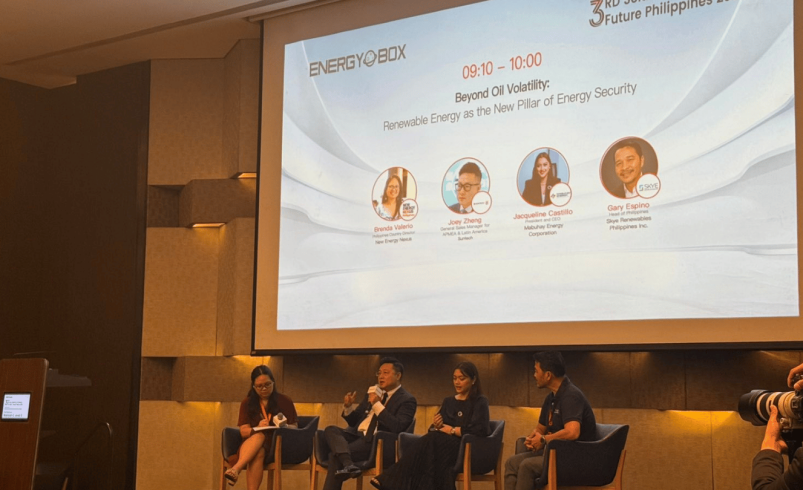
The Philippines must now create a highly flexible grid to go along with its heavy investment on renewables if renewable energy is to become a central pillar within the country, according to industry leaders during the 3rd Solar and Energy Storage Future Philippines 2026 conference held in Manila on May 18.
During the panel discussion titled “Beyond Oil Volatility: Renewable Energy as the New Pillar of Energy Security,” energy executives said the challenge facing the Philippines is no longer simply adding more renewable energy projects but ensuring the power system can effectively integrate them.
The discussion comes as the country continues to experience tight power reserves and recurring grid alerts, particularly in the Visayas, highlighting broader concerns about power system flexibility and reliability.

Gary Espino, Head of Philippines at Skye Renewables Philippines Inc., said growing electricity demand and the country’s dependence on imported fuels continue to pose major energy security risks.
“Yeah, I guess in addition to what my colleagues have already said, and we’ve experienced this over the last few days, would be the very, very thin reserves that we have at the moment, given the growing demand of the country,” Espino said. “And I think that will be one of the biggest threat for the Philippines.”
While renewable energy deployment is accelerating, panelists argued that storage is increasingly becoming a critical part of the equation.
Joey Zheng, General Sales Manager for APMEA and Latin America at Suntech, said solar power is rapidly evolving from a standalone generation source into integrated solar-plus-storage systems.
“Today, if we, in order to make this solar itself to be from alternative into the core power solution, for sure the storage will be one of the most important things,” Zheng said.
He pointed to international markets where solar projects are increasingly paired with battery energy storage systems (BESS), saying the trend is expected to expand in the Philippines as renewable deployment grows.
Espino likewise said storage will be necessary if solar is to play a larger role in the country’s power mix.
“In order to declare solar to be close to a baseload, you’re going to need storage,” he said. “Solar is intermittent.”
Beyond storage, panelists repeatedly highlighted the need for faster grid development to keep pace with new renewable energy projects.
Jacqueline Castillo, President and CEO of Mabuhay Energy Corporation, said grid modernization has become imperative as renewable energy investments accelerate.
“No matter how fast you have a lot of RE plants coming in, if the grid couldn’t catch up, then there’s no point,” Castillo said.
She also cited permitting delays, land conversion requirements, and lengthy system impact studies as obstacles slowing project deployment.
For Espino, the issue extends beyond infrastructure and into policy.
“The biggest, my personal frustration is the country not having a long-term energy policy,” he said. “Every six years when a new president is elected, the energy policies shift.”
The panelists agreed that renewable energy remains essential to reducing the country’s exposure to imported fuel volatility. However, they stressed that achieving long-term energy security will require more than simply building new solar and renewable projects.
Instead, they said the next phase of the energy transition will depend on developing storage systems, modernizing the grid, streamlining project approvals, and establishing policies that remain consistent across administrations.
As renewable energy capacity continues to expand, can investments in storage and grid flexibility keep pace with the country’s growing electricity demand?
Follow Power Philippines on Facebook and LinkedIn or join our Viber community for more updates.