PERPI Calls For Major Energy Law Reforms To Strengthen PH Energy Security
- July 3, 2026
- 0
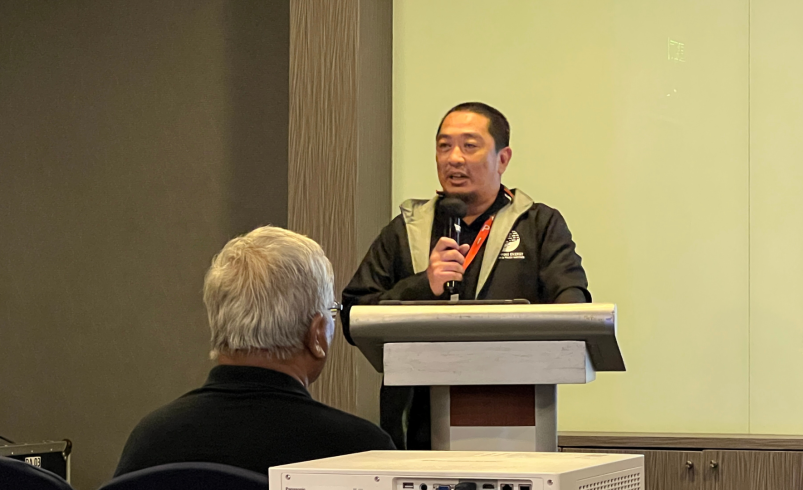
The Philippines should overhaul its decades-old petroleum laws to strengthen energy security, reduce dependence on imported fossil fuels, and use petroleum revenues to finance the country’s clean energy transition, according to Philippine Energy Research and Policy Institute (PERPI) Division Chief Dexter Pajarillo.
During his presentation at the 9th Oil & Gas Philippines Expo 2026, Pajarillo urged lawmakers to particularly amend Presidential Decree (PD) 87, which promotes the exploration and development of the country’s oil and gas resources, and PD 910, which established the Malampaya Special Fund.
For more than 50 years, the Philippines has repeatedly been affected by global oil crises—from the 1973 Arab oil embargo to the Gulf War, the Russia-Ukraine conflict, and recent tensions affecting the Strait of Hormuz—due to its dependence on imported fossil fuels.

He emphasized that the Philippines has repeatedly responded to energy crises with short-term fixes instead of making long-term reforms that would reduce dependence on imported fuel and make the country’s energy system more resilient.
“Every single decade, without fail, the Philippines is hit by global supply and disruption in oil and gas,” Pajarillo said. “If we don’t break the cycle of dependence on imported fuel and volatile, we aren’t just looking at the crisis of the past; we are looking at a blueprint for our future.”
Climate Safeguards, Indigenous Rights Highlighted
According to Pajarillo, the proposed amendments to PD 87 include mandatory climate compatibility assessments for all new oil and gas projects.
Developers would be required to demonstrate that their projects align with the Philippines’ commitments under the Paris Agreement and support the country’s path toward net-zero emissions.
The amendments would also require Free, Prior and Informed Consent (FPIC) from Indigenous communities before projects can proceed on ancestral lands, giving them the legal right to approve or reject energy developments affecting their territories.
“Energy security can never be built on displacement of our most vulnerable communities or the destruction of our climate future,” he stressed.
By requiring climate assessments and the FPIC from Indigenous communities, Pajarillo said the revised PD 87 would better protect both people and natural resources.
Malampaya Fund Eyed for Clean Energy Investments
Pajarillo also highlighted the Malampaya Special Fund, created under PD 910, which he said has long been criticized for its lack of transparency and for being used for purposes not always directly related to energy development.
He said PERPI’s proposed amendments would “ring-fence” the fund, so it can only be used for energy transition purposes. Funds would be divided into two parts: 40% for a long-term Future Generations Endowment and 60% for a Clean Energy Transition trust (CETT).
Pajarillo explained that the CETT is not just a passive bank account but an “active market engine” designed to support the country’s energy transition and attract private investment into renewable energy projects.
“We are not funding projects, we are engineering financial bridge,” he stressed.
PERPI’s proposal outlines several clean energy investment projects funded by the CETT and the endowment fund.
These include using electric public vehicles as mobile batteries that can store and supply power back to the grid, especially during peak demand. It also proposes replacing diesel-based power in remote islands with community-owned solar microgrids.
In urban areas, smart grids would integrate many small energy sources into one coordinated system. The plan also supports retraining fossil fuel workers for renewable energy jobs to ensure a fair transition.
Finally, it explores ocean and tidal energy as an additional clean and reliable power source.
“By modernizing our laws, ring-fencing our resource revenue, and investing it in these five vectors, we don’t just secure our energy, we build an equitable, electrified future for every Filipino,” Pajarillo said.
What additional policy reforms are needed to build a more secure, sustainable, and equitable energy future for all Filipinos?
Follow Power Philippines on Facebook and LinkedIn or join our Viber community for more updates.