Philippines awards third natural hydrogen exploration contract
- July 24, 2026
- 0
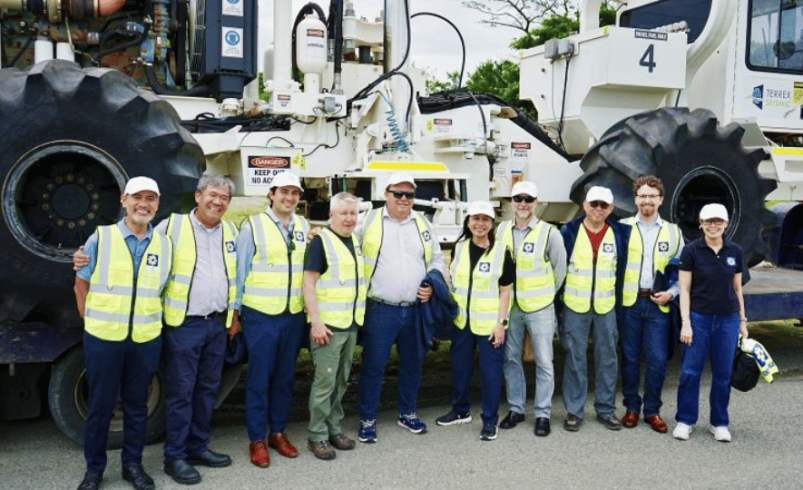
Photo credit: Koloma
Philippine President Ferdinand R. Marcos Jr. has signed the country’s third service contract for natural hydrogen exploration, expanding the government’s push to assess the Philippines’ indigenous hydrogen resources as part of its long-term energy security strategy.
The Department of Energy (DOE) announced Friday that Service Contract (SC) No. 92 grants US-based clean energy firm Koloma, Inc. the exclusive right to explore for naturally occurring hydrogen in western Zambales Province.

The new award follows two natural hydrogen service contracts granted to Koloma in October 2025 after the Philippines conducted what the DOE described as the world’s first competitive bid round for natural hydrogen exploration. With SC No. 92, Koloma’s exploration areas now span more than 4,100 square kilometers across Central Luzon and western Zambales.
The DOE said the latest contract supports the government’s efforts to diversify the country’s energy mix by evaluating naturally occurring hydrogen as a potential domestic energy resource that could reduce reliance on imported fuels.
“Expanding our indigenous energy resources remains central to our pursuit of a secure, reliable, and sustainable energy future,” Energy Secretary Sharon S. Garin said.
“The award of Service Contract No. 92 builds on the ongoing exploration activities in Central Luzon and reflects our commitment to responsibly evaluating the country’s natural hydrogen potential. Should commercially viable deposits be confirmed, natural hydrogen could become an important addition to the Philippines’ future energy mix, strengthening energy security, attracting investments, creating new economic opportunities, and providing a zero-emission fuel source for the power sector,” she added.
Natural hydrogen, also known as geologic or white hydrogen, occurs naturally beneath the Earth’s surface and, unlike conventional hydrogen, does not require industrial production. If commercially recoverable deposits are confirmed, it could offer a low-carbon energy source for power generation and other industrial applications.
The DOE said geological studies have identified parts of Central Luzon as among the world’s most promising areas for naturally occurring hydrogen, positioning the Philippines as an early mover in the exploration of the emerging resource.
Koloma Chief Executive Officer Pete Johnson said the company will continue working with the Philippine government as exploration progresses.
“We are honored to deepen our partnership with the Government of the Philippines to pursue what could be a transformative opportunity for the country in terms of energy security and economic growth. We are grateful for the government’s vision and leadership in advancing natural hydrogen exploration,” Johnson said.
According to the DOE, Koloma has already begun two-dimensional (2D) seismic surveys under its first two service contracts and is using advanced geoscience tools, proprietary data, and exploration technologies to evaluate the country’s natural hydrogen potential.
The agency said it will continue promoting investments in emerging energy technologies and indigenous energy resources as part of its strategy to strengthen the country’s long-term energy security while reducing dependence on imported fuels.
What do you think about the Philippines’ push into natural hydrogen exploration? Could indigenous hydrogen become a meaningful part of the country’s future energy mix? Share your thoughts in the comments below.
Follow Power Philippines on Facebook and LinkedIn or join our Viber community for more news and updates on the Philippine energy sector.